
VOA VICTORY: High profile landlord wins council tax change appeal
Rochester landlord and letting agent, Maxine Fothergill, has won an appeal against Medway Council to impose additional council tax charges.
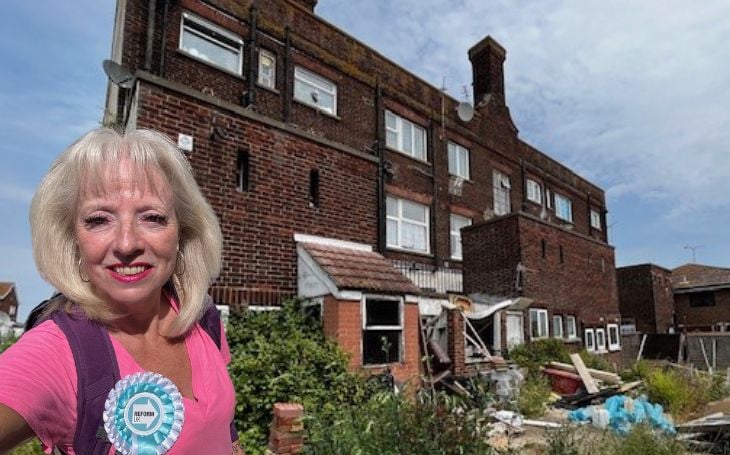
Maxine Fothergill, owner of property management firm, Amax Estates and Past President of ARLA has successfully appealed a decision by Medway Council to impose council tax charges on two properties that had been left uninhabitable for over 20 years.
This triumph, which comes after months of legal battles and a magistrates’ court summons, marks a significant achievement for Maxine, but potentially other landlords who are facing inflated council tax charges.
The case involved two neighbouring two-bedroom ground-floor flats in Rochester purchased by Maxine in June 2023, which she planned to refurbish. They had been left in a state of severe disrepair due to water and sewage ingress from defective balcony walkways above.
 Despite the properties being uninhabitable, Medway Council initially demanded the full council tax payment before increasing the demand by 300%, claiming that the additional amount was due because the properties had been unoccupied for several years.
Maxine, who represented herself throughout the lengthy legal process, appealed to the Valuation Tribunal for England, arguing that the flats were uninhabitable and beyond reasonable repair. The extensive damage included collapsed ceilings, damaged floor joists, wet and dry rot, missing window frames, and theft of wiring and pipework. Additionally, vegetation had grown inside the properties due to years of vacancy.
Landmark ruling in the PRS
On 23 December 2024, the Valuation Tribunal ruled in Maxine’s favour, ordering the properties to be removed from the council tax valuation list from the purchase date retrospectively. The tribunal concluded that the flats were incapable of being reasonably repaired due to their ongoing structural issues, which had resulted from the defective balcony walkways.
The ruling brings to light the growing issue of council tax charges on uninhabitable properties, particularly those affected by long-term structural damage that prevents them from being used as dwellings, and serves as a warning to councils to ensure that property owners are not unfairly charged.
This decision sets a precedent for others in similar situations who are being unfairly taxed on properties.”
Maxine commented: “I am thrilled with this outcome. It’s a huge relief to have my case heard and acknowledged. These properties have been in a state of disrepair for decades, and I should not have been held liable for council tax charges on uninhabitable buildings. This decision sets a precedent for others in similar situations who are being unfairly taxed on properties that are in a state of disrepair.”
This success follows last years decision to no longer seek to re-band individual rooms in Houses in Multiple Occupation (HMOs) as single dwellings for council tax purposes.









Not really a success story but one evidently suggesting if you have the time and money you can avoid responsibility whilst two properties continue to languish in disrepair. Time and money better spent doing the properties up over the last two years instead of arguing about whether or not the owner is responsible for local authority charges may have allowed a better defence than one of complacency.