Midlands council pioneers blitz on estate agents and landlords
Nottingham adopts groundbreaking three-policy package targeting everything from ground rents to EPCs and banned fees with fines up to £150,000.

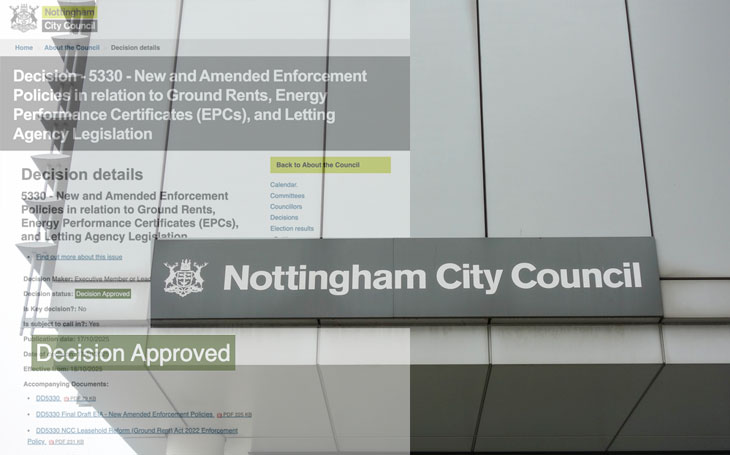
Nottingham City Council has become the first authority in the country to adopt a comprehensive enforcement package, spanning ground rents to the full suite of letting agency regulations.
The move is designed to strengthen the council’s powers to crack down on poor standards, unlawful charges and inefficient buildings in the private rented and leasehold markets.
Currently, Nottingham says, many breaches go unpunished because they fall outside the remit of national bodies like the National Trading Standards Letting Agency Team. Its new policies will give local officers direct powers to pursue non-compliance.
Huge fines
To do this, it has implemented two entirely new enforcement programmes and substantially expanded a third, with penalties ranging from £2,000 to £150,000. Income from fines will then be retained and used to fund further enforcement.
The first targets landlords breaching the Leasehold Reform (Ground Rent) Act 2022, to prevent new long-term residential leases from including unfair ground rent charges, with penalties of up to £30,000.
The first targets landlords breaching the Leasehold Reform (Ground Rent) Act 2022.”
The second covers letting agents failing to comply with the redress scheme membership, client money protection, banned tenant fees and transparency requirements under the Consumer Rights Act 2015. First offences attract fines of £5,000, rising to £30,000 for repeat breaches within five years.
The council has also expanded its existing Minimum Energy Efficiency Standards policy to cover commercial properties. Domestic EPC breaches carry fines of between £2,000 and £4,000, but commercial landlords face penalties as high as £150,000.
Increased scrutiny
The changes will affect around 30,000 privately rented properties already under selective licensing, with over 90% of the city’s private rentals currently requiring a licence. The authority first launched its selective licensing scheme back in 2018 and a second five-year scheme followed in December 2023, with additional enforcement staff being funded through licensing fees.
It means estate agents and landlords in the city will be facing increased scrutiny across multiple compliance areas, with each breach potentially attracting substantial penalties.