Wait-and-see policy as Bank keeps rate on hold at 3.75% – industry reaction
Bank Rate left unchanged as rate-setters weigh persistent inflation against economic uncertainty and the Gulf crisis.

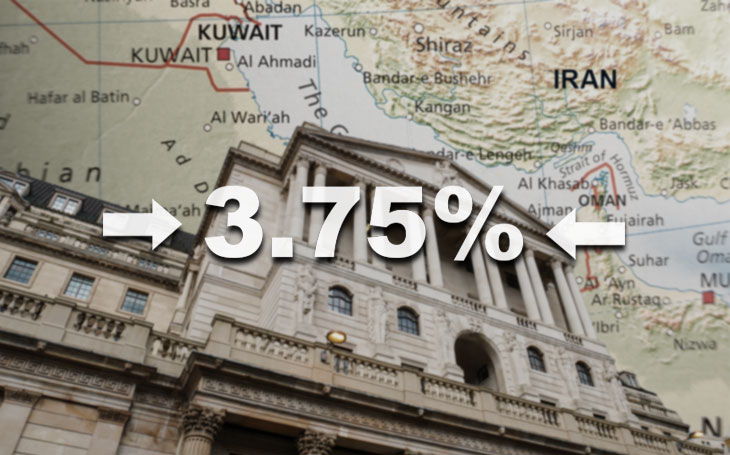
The Bank of England has kept the Bank Rate on hold at 3.75% for the third time in a row, as policymakers take a cautious approach amid increasing economic uncertainty.
The Monetary Policy Committee (MPC) made the decision as it assesses the impact of the Gulf crisis on energy prices, inflation and economic growth.
Among the Bank’s nine rate-setters, a total of eight voted to keep rates on hold. Only one member voted against the grain, in the direction of an increase.
Inflation concerns
At 3.3%, inflation remains some way above the Bank’s 2% target, with higher oil and gas prices linked to the Gulf crisis expected to add further upward pressure in the months ahead.
At the same time, data from the Office for National Statistics shows the economy is weakening, with wage growth slowing, unemployment edging higher, and subdued growth in GDP.
The Bank continues to be pulled in two directions, with inflation proving sticky while growth and household demand show signs of softening.”

Earlier in 2026, there were expectations of rate cuts, but the outlook for rates is now far less certain, and the Bank of England’s Governor Andrew Bailey has said recently that there are now “difficult judgements” to be made.
The mortgage markets have already reacted to the changing outlook, with fixed-rate prices rising earlier in the spring, before easing off in recent days.
Moneyfacts data shows the average two-year fixed mortgage rate climbed from around 4.83% earlier in the year to a peak of 5.90%, and is now closer to 5.81%, with five-year deals following a similar pattern.
Between now and its next meeting on 18th June, the MPC will be keeping a close eye on incoming data on inflation, wages, economic growth and energy prices, which will form the basis of its next rate decision.
The money markets are now pricing in up to two further Bank Rate increases this year, which would take it to 4.25%, with a further increase next year to 4.5%.
Industry reacts

Nick Leeming, Chairman of Jackson-Stops, says: “The Bank of England’s decision to hold interest rates provides a welcome sense of stability for the housing market, offering reassurance after a sustained period of elevated borrowing costs following the inflation shock.
“This is not a comfortable pause. The Bank continues to be pulled in two directions, with inflation proving sticky while growth and household demand show signs of softening. That balance is keeping policymakers cautious about signalling any imminent policy easing.
“For the housing market, the implication is that borrowing conditions are likely to remain elevated for longer than many had anticipated earlier in the year. While mortgage pricing has already adjusted to a more stable rate environment, expectations for meaningful near-term relief in borrowing costs are likely to remain constrained.
For the housing market, the implication is that borrowing conditions are likely to remain elevated for longer than many had anticipated earlier in the year.”
“That said, the market is continuing to adapt to these conditions rather than being constrained by them. Buyers remain active, albeit more selective and price-sensitive, with a clear focus on long-term value. At the same time, we are seeing an uptick in instructions in key commuter hubs and lifestyle markets. When property is priced accurately, it is selling.
“Looking ahead, the balance the Bank strikes between persistent inflation and moderating growth will determine the direction of travel for interest rates over the remainder of the year. Overall, while activity remains measured, underlying market resilience continues to provide a platform for stability and gradual confidence to build as conditions evolve.”

Kevin Shaw, National Sales Managing Director, LRG, says: “Today’s decision to hold interest rates is the news many buyers, sellers and agents were hoping for. It does not remove uncertainty from the market, but it does remove an immediate threat.
“The Bank had a difficult decision to make against an unusually unsettled backdrop. The on-off ceasefire in Iran is changing by the day, and the interest rate outlook has turned turtle in a remarkably short period: just two months ago, we expected two interest rate cuts; since the war in the Middle East began, two rises over the course of the year appeared a likely scenario.
“The important point is that the situation looks less fragile than a month ago. Assuming the Middle East situation does not escalate, today’s hold suggests some easing of concern around the path of rates for the rest of the year. The fears of further rises being discussed in early March now feel less certain.
“From LRG’s perspective, the property market has remained resilient. Buyer activity and sales held up well throughout April, instructions are 5% higher, and we are continuing to see momentum despite the wider uncertainty. Today’s decision should help sustain that confidence.
As property professionals heave a sigh of relief today, they must also think ahead to how a future rise will impact.”
“That said, the risk remains. The next Monetary Policy Committee meetings on 18 June and 30 July now become particularly significant. Much will depend on inflation, employment and whether global events continue to feed through into energy prices and household costs.
“The concern is that a rise later in June or July could coincide with the market entering its quieter summer season. As property professionals heave a sigh of relief today, they must also think ahead to how a future rise will impact. But for now, a hold gives the market room to keep moving.

Joshua Elash, Director of specialist lender MT Finance, says: “Holding base rate at 3.75 per cent was the right thing to do in the current climate.
“The conflict in Iran has lasted longer than many expected and has already impacted inflation and energy prices. That the MPC continues to stand firm and not rush decisions is a good thing.
“This will hopefully provide some form of stability for lenders and borrowers alike.”

Ben Nichols, Managing Director of RAW Capital Partners, says: “There was some talk of a rate hike ahead of today’s decision, so the market will be breathing a small sigh of relief that it has held steady for now. The conflict in the Middle East has clearly added some upward pressure to the inflation outlook, particularly around energy costs, but growth has to remain part of the conversation too. On that front, after a challenging few years, it’s encouraging to see the Bank avoid adding further pressure to the economy.
“For the property market, it also gives brokers and borrowers a bit more certainty in the short term. We’ve already seen some lenders start to reduce rates after initially pricing in more risk; hopefully, today’s decision supports that trend and gives brokers and borrowers more confidence to move ahead with their plans.
“That said, the speed at which rates have risen since the start of the conflict has naturally affected sentiment, so lenders need to keep providing clarity and flexibility, while listening closely to the challenges brokers are seeing on the ground.”

Verona Frankish, CEO of Yopa, says: “The property market hasn’t stalled, it’s simply found a more sustainable rhythm and today’s decision to hold the base rate will only help sustain this measured level of momentum moving forward.
“As the year progresses, we expect this steady level of activity to continue, with the prospect of rate reductions later in the year likely to provide a further boost to market confidence.”

Amy Reynolds, Head of Sales at Richmond estate agency Antony Roberts, says: “While a hold from the Bank of England was expected, as ever, it’s the tone and forward guidance in the minutes that is just as important.
“As far as the housing market is concerned, the underlying need to move remains strong and, for well-priced, high-quality homes, demand continues to hold up. In terms of pricing, the closer the asking price is to true market value, the greater the likelihood of securing a successful sale.
“Buyers are not stretching themselves to make offers they don’t believe will be accepted – particularly in this rate environment – they are simply choosing alternative properties. While the wider economic background may temper the pace of house price growth, we are seeing a more price-sensitive market where realism and accurate positioning are key.”

CEO of Foxtons, Guy Gittins, says: “Following the increase in inflation to 3.3% this month, a hold on the base rate provides a welcome degree of stability for the property market. It also gives buyers greater certainty around borrowing costs when making long-term financial decisions.
“The market isn’t moving at the same pace as 2025, due to the Q1 boost we experienced last year from the stamp duty holiday ending. When compared to 2024, we’re seeing a stable and improving landscape, with resilient buyer interest and viewing numbers at Foxtons up in April when compared to March 2026.”

Jeremy Leaf, north London estate agent and a former RICS residential chairman, says: “Although it is likely interest rates will go up again before they start coming back down, the hold today is a nod to the inflationary pressures which are building due to the impact of war in the Middle East. Certainly, the Bank did not want to do anything which would compromise what little growth we have seen in the economy recently, which would clearly prove to be self-defeating.
“As far as the impact on the property market is concerned, the effects are likely to be fairly minimal, although encouragingly, we have noticed some mortgage costs starting to creep down again. This will certainly help to improve confidence, which remains at a relatively low ebb.”

Jonathan Samuels, CEO of Octane Capital, says: “Today’s decision to hold the base rate was widely expected and reflects the Bank of England’s ongoing challenge in bringing inflation fully under control.
“Persistent pressures continue to limit the Bank’s room for manoeuvre, and the question now is whether it can afford to be more bullish in signalling a path toward cuts.
“Caution remains the priority, but without clearer forward guidance, there’s a risk of prolonging subdued activity across interest rate-sensitive sectors such as the property market, where confidence hinges on both stability and visibility.”

Chris Hodgkinson, Managing Director of House Buyer Bureau, says: “Another hold on interest rates is unlikely to do much to lift property market sentiment.
“The market is already treading with great caution against a backdrop of economic and geopolitical volatility and, while today’s decision provides a degree of certainty, it also prolongs the current sense of inertia.
“Buyers and sellers have been waiting for a clearer signal that borrowing costs are on the way down and, without it, many will continue to sit tight. As a result, this ongoing hold risks sowing further uncertainty into a market that’s already lacking confidence, and it certainly won’t be enough to jump-start activity.”

Islay Robinson, CEO of Enness Global, says: “Today’s decision has already been largely priced into international capital flows and is unlikely to move the dial in the short term.
“What continues to support appetite for UK real estate, particularly at the prime and super-prime level, is the relative value on offer when benchmarked against other global gateway cities, alongside the ongoing appeal of sterling-denominated assets.
“Where the Bank’s stance does matter is in shaping currency stability and broader market confidence, with a clear and measured approach helping to reinforce the UK’s position as a safe haven for international capital, even in a higher-for-longer rate environment.”

Charlie Evans, Money Expert at Compare the Market, says: “Today’s decision by the Bank of England to hold interest rates suggests policymakers are continuing to take a cautious approach as they monitor inflation.
“For mortgage borrowers, it means little immediate change to repayments, but those nearing the end of fixed deals may still face higher costs and should consider reviewing their options early. Credit card and loan rates are also unlikely to shift significantly in the short term, so comparing deals remains important. For savers, a pause in rate movements could see providers ease back on improving offers, making it a good time to check whether their savings are earning a competitive return.”

Ryan McGrath, Director of Second Charge Mortgages at Pepper Money, says: “Today’s decision to keep the base rate unchanged reflects the delicate balancing act the Bank of England is currently facing, as ongoing global volatility, rising inflation, and renewed energy pressures disrupt earlier hopes of rate cuts.
“For homeowners, a continued hold prolongs this period of elevated borrowing costs. While stability is welcome, households are having to think very carefully about how they manage their finances. For those who need to raise additional capital, refinancing an entire property at today’s rates can often mean abandoning a highly competitive fixed deal, resulting in a significant step up in monthly payments.
“As a result, we are seeing a sustained shift in how borrowers approach their financing. Second charge mortgages are increasingly viewed as the most practical way to access funds. They allow homeowners to unlock equity for essential purposes like renovations or debt consolidation without disturbing their existing, lower-rate mortgage. This ability to preserve a favourable primary rate is a key reason why second charge lending has become a mainstream funding option for borrowers.”

Mark Harris, chief executive of mortgage broker SPF Private Clients, says: “Holding base rate once again was always thought to be the most likely outcome of today’s meeting of the MPC, given the Middle East conflict and concerns as to what impact this might have on inflation. However, while eight members voted for a hold in base rate at 3.75 per cent, one member favoured a quarter-point increase to 4 per cent.
“A steady approach, rather than a knee-jerk reaction to raising rates, is important for overall market stability and confidence, which is why we welcome today’s decision.
“The good news for borrowers is that irrespective of today’s vote, some of the bigger lenders are trimming their mortgage rates in light of falling Swap rates, which underpin the pricing of fixed-rate mortgages, and a return to service standards being met. Barclays, HSBC and NatWest, among others, are all reducing their mortgage rates this week. With base-rate trackers falling below 4 per cent, those who don’t need the certainty of a fixed-rate mortgage are increasingly considering other options.
“With so much global uncertainty, borrowers coming up to take out a new mortgage or refinance would be wise to secure a rate sooner rather than later. Most lenders will let you reserve rates up to six months before required, and if, by the time you come to take out your mortgage, rates have fallen, you should be able to switch onto a cheaper deal at that time. However, if rates have risen in the meantime, you will be glad you took action when you did.”

Colin Bell, Founder and COO of lender Perenna, says: “The market is already pricing in hikes further down the road, so while a hold might appear positive on the surface, the reality for homeowners is that mortgage rates could continue to creep upwards.
“This is ultimately a symptom of a wider problem. For many households, the stress doesn’t come from today’s decision alone, but from a complete lack of clarity around how much their monthly repayments will increase the next time they remortgage. This is also occurring alongside a resurgence in household inflation, increasing pressure on everyday living costs, an area where consumers have limited ability to shield themselves.
“Short-term fixes have a valuable and crucial role to play in a functioning mortgage ecosystem, but they cannot be the be-all and end all. Plenty of families would massively benefit from a longer fix, protecting them from the impact of these decisions and allowing them to save and invest with confidence.”

Matt Smith, Rightmove’s mortgage expert, says: “A Bank Rate hold is actually positive news today, particularly for those on a tracker mortgage, given a rate increase was on the table. It’s probably the most uncertain we’ve been about how the Bank will vote for a while and reflects how uncertain the geopolitical landscape is right now, and how up and down swap rates have been.
“Despite the uncertainty, lenders have been competitive where possible with moderated rate cuts to support what is typically one of the busier points of the home-moving calendar. However, margins are tight, and if swap rates increase further, we could see some of these moderated cuts from lenders either paused or even partially rolled back. What happens next will mostly depend on how the situation in the Middle East continues to play out, which, as we’ve seen, can change almost daily.”

Simon Gammon, Knight Frank Finance, says: “The vote came in as expected, which should provide a degree of stability for mortgage markets. However, while headline rates appear broadly steady, there is considerable jostling for position among lenders. Those offering the most competitive rates are quickly inundated with demand and often need to reprice higher to manage volumes.
“This dynamic increases the risk of mortgage rates moving sharply on any negative news. Margins are extremely thin, meaning lenders have limited capacity to absorb volatility, and the combination of strong borrower demand and rapid repricing can create a snowball effect that amplifies rate movements.
“Borrowers should use this period of relative stability to lock in a deal – most can be renegotiated if rates fall back. The right deal for you will depend on your financial circumstances and appetite for risk, given the uncertain outlook. The gap between tracker and fixed rates is now notably wide, with fixed rates generally above 4.5% while some tracker products remain below 4%.”

Jinesh Vohra, CEO of Sprive, says: “As expected, the Bank of England have voted to keep the base rate at 3.75%, giving some short-term relief for homeowners, however, rising fuel costs and inflation linked to global tensions mean the government will remain cautious.
“For homeowners, that means mortgage rates are unlikely to ease just yet, and there are suggestions that further rate rises later this year are still very much on the table.”