Housing Market
News covering issues affecting the UK residential property market, house prices, interest rates and buying and selling trends.
-

All rise: haart reports February market surge
Instructions, viewings, transactions, new buyers, house prices, rents, new tenants and purchasing landlords all rose in February 2018, with 15 buyers chasing every property for sale.
Read More » -

Savers investing an average of £25 a week in ISAs
Millennials surprisingly engaged in regular investment, but will it build a deposit to buy a home?
Read More » -

Mortgages at their most affordable for 10 years, says Halifax
Halifax announces best home loan affordability for a decade, with borrowers spending less than a third of their disposable income on mortgage payments.
Read More » -

64% of London tenants still target homeownership
Latest measure of confidence and intent shows two thirds of London’s private tenants still want to own their own home, despite confidence dip.
Read More » -

Strong home mover demand pushes up average asking price by 1.5%
Newly marketed properties in the UK have risen by an average of £4,503 says Rightmove, with prices highest in the first timer and second stepper sectors.
Read More » -

Spring Statement: Hammond reveals where taxpayers’ billions are being spent on extra homes
Philip Hammond updated MPs during his Spring Statement today about the government’s progress towards building more homes in the UK and revealed where and how part of the £44 billion committed to the effort is now being spent. This includes £4.1 billion being distributed to 44 “forward thinking” local authorities via the government’s Housing Infrastructure Fund to help build more homes, and that £220 million is to be spent on supporting small house builders. Also, London is to have £1.67 billion to spend on 27,000 additional affordable homes by 2020/21. First time buyers The Chancellor also said that 60,000 first time buyers had been helped on to the property ladder so far by his Stamp Duty changes in last year’s Autumn Budget, which abolished the duty for homes bought by first timers under £300,000. Philip Hammond also referred to the work of Oliver Letwin MP, who is leading a government investigation into why it takes so long for homes to be built. House building delays In a letter deposited in the Commons Library, he reveals that his initial investigations blames the ‘build out’ stage rather than land banking, which many affordable homes campaigners believe is the real culprit. Instead, Letwin…
Read More » -

First tenants sign up to Open Banking rent-reporting service
The recent Open Banking initiative that promised a ‘revolution’ in the way bank account data can be used by third parties is already making inroads into the private rented sector, it has been claimed. Proptech firm CreditLadder says the first tenant has now signed up to its Open Banking-enabled rent reporting service and that over a thousand tenants have followed suit. The company, which calls itself a credit improvement platform and has processed £14m of rents since it launched, asks tenants to allow their bank account statements to be read each month by CreditLadder. It then notifies partner reference agency Experian, the largest in the UK, about each payment including whether the rent was paid on time and in full. This payment track record is then added to their credit history by Experian. Letting agents The service, which is being offered to tenants for free, generates its income both through a premium tenant service and a paid-for package for letting agents. CreditLadder says it already works with 700 agents branches in the UK. “When CreditLadder launched its Open Banking service last month we were acutely aware that the take up maybe held back given the newness of the technology,” says…
Read More » -
Landlords enjoyed £86,600 buy-to-let bonanza last year
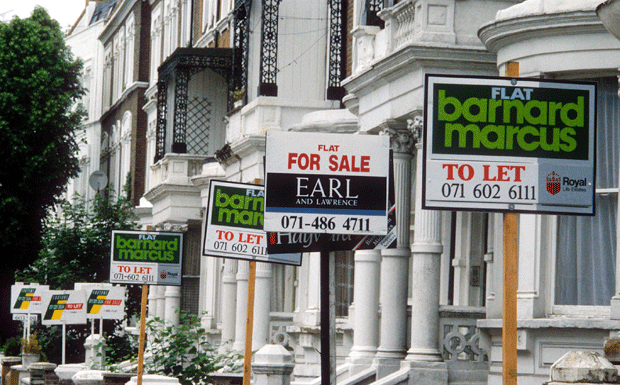
Landlords who sold a buy-to-let property last year made a capital gain of £86,660 on average in the UK and had owned it for just under nine years, it has been revealed. But the capital gains made in London put these national figures to shame. Landlords selling up in London last year made a capital gain of £254,000 on average per property, says Countrywide. Its latest buy-to-let research reveals that, therefore, a landlord who invested in property within London eight years ago will have made three times more money from selling their property than those outside the capital. Eight of the top ten places where landlords have made the largest capital gains from their buy-to-let properties are in London and include Brent, Waltham Forest, theCity of Westminster, Haringey, Lambeth, Pendle, Islington, Kensington & Chelsea and Southwark Buy-to-let gains In these areas landlords who sold up last year enjoyed huge capital gains including, in Westminster and Kensington & Chelsea, gains of over half a million pounds on average. Also, in these areas of London 28% of landlords who sold up last year doubled their original investment. “Even in areas where price growth has lagged behind, most landlords have made a profit…
Read More » -

Government’s first time buyer Stamp Duty give-away has failed in South, claim surveyors
The government’s attempt to kick-start the first-time buyer market by removing Stamp Duty and Land Tax (SDLT) for all but the wealthiest has proved a damp squib in London and the South, surveyors have claimed. In last November’s Budget Chancellor Phillip Hammond eliminated SDLT for 80% of first time buyers, and cut the duty for 95% of those who pay it. But the Royal Institute of Chartered Surveyors (RICS) says in its latest property market snapshot that new buyers’ enquiries fell for the eleventh month in succession. “This would appear to suggest that the government’s attempt to breathe fresh life into the market through eliminating the stamp duty charge for most first-time buyers in the Budget is not having a significant impact on overall demand,” says RICS’ Residential Market Survey for February. Affordability is the key to demand among first time buyers, the figures show. The SDLT stimulus appears only to be working in the north of the UK where house prices are more affordable; the number of enquiries to agents from first-steppers increased in Scotland, Northern Ireland, Yorkshire, Humberside and the North, but stalled elsewhere. RICS also says the number of properties available to sell has continued to drop.…
Read More » -
37% more home buyers surge into property market during January
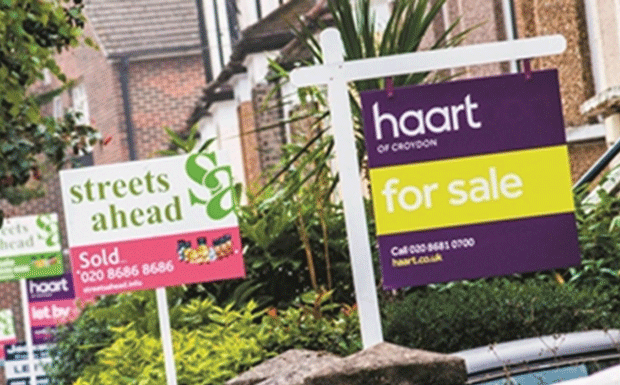
Every estate agent knows the weeks after the New Year can be some of the busiest for the property market but 2018’s have been bumper ones, it has been claimed. NAEA Propertymark says the number of house hunters registered with agents increased by 37% during January to an average of 367 per branch, up from 268 in December. This is the highest monthly figure since September last year. But such good news for agents comes at a cost for first time purchasers. The increased number of buyers has mainly been second steppers, the NAEA says, and first-time buyer activity dropped off as they have faced competition from other types of buyers during the New Year rush for properties. Supply has also increased, NAEA says, up from 33 properties per branch in December to 36 during January. The fall-off in first-time buyer activity ends a year of improvement in their numbers during 2017, which UK finance recently revealed had reached their highest numbers since the financial crash of 2007/8. “As we usually see in January, buyers and sellers have re-entered the market after the festive slow-down and triggered an uplift in the number of sales agreed,” says Mark Hayward, Chief Executive,…
Read More »