Housing Market
News covering issues affecting the UK residential property market, house prices, interest rates and buying and selling trends.
-

Property transactions go from ‘strength to strength’
Residential property sales in the UK hit an 18-month high in August, following a 3.1 per cent month-on-month rise, the latest figures published by HMRC have revealed. The seasonally adjusted data shows that 106,480 property transactions took place in August – more than any month since February 2014. It is the third month in succession the home sales of more than 100,000 have been recorded, which is welcome news for agents. But sales still remain significantly below the monthly sales of close to 150,000 recorded at the height of the property boom in 2006. The seasonally adjusted estimate of the number of residential property transactions in August rose by 5.7 per cent compared with the corresponding month last year. Peter Rollings (left) CEO of Marsh & Parsons, commented, “Taking into account seasonal adjustment, property sales are going from strength to strength, and showing great improvement from this time last year. “With the spectre of higher interest rates being kept at bay, buyer demand is in full swing and summer sales have continued to blossom in August. After slightly fewer home sales than we would expect in a typical July, buyers last month were showing a new enthusiasm and readiness to…
Read More » -
Shadow Housing Minister vows to boost homeownership
Labour’s new Shadow Minister for Housing and Planning, John Healey (right), has said that halting the decline in homeownership levels in this country is a major priority for the Labour party. Fresh Government data shows that despite the introduction of various housing schemes, such as Help to Buy, the level of homeownership has fallen from 67.4 per cent to 63.3 per cent over the last five years, while the number of families living in the private rented sector has risen by 2.5 million. Research by the Labour Party, based on official Government statistics, suggests that under the Coalition Government there was a 50 per cent decline in the number of young people owning their own property, with just 800,000 people under the age of 34 now owning their own home. This is owed in part to tougher mortgage lending conditions, a lack of house building and high property prices in some parts of the country. Speaking to the press ahead of Labour’s annual conference in Brighton this week, Healey said, “Homeownership has declined each and every year since 2010 and the number of people getting mortgages and buying homes is 10 per cent less than it was in 2010. There…
Read More » -

Lib Dems vow to build 20,000 affordable homes
The Liberal Democrats has announced plans to develop 20,000 affordable homes in Wales by 2021 if the party is in Government after the 2016 assembly election. Lib Dem AM Peter Black (left) said his party would tackle the “crippling undersupply of housing” in Wales by using new borrowing powers and by abolishing plans for an M4 relief road. The target to build 20,000 affordable homes over the five-year period is double that set by the existing Labour Government in Wales. After launching a housing supply pact with the with Community Housing Cymru last year promising to build 10,000 new affordable homes during the terms of the Government, Housing and Regeneration Minister, Carl Sargeant, said, “Increasing the supply of homes in Wales is my top priority and I am committed to working with developers, housing associations, local authorities and financiers to bring forward innovative schemes that will increase the supply of good quality affordable homes.” Over half of the Welsh Government’s affordable housing target – set at 7,500 homes – was met within the first two years in power, with most properties delivered by housing associations. Meanwhile, Adam Hesse, Director at Home Counties land broker Aston Mead, has expressed his concern…
Read More » -
Government aims to deliver 1m new homes
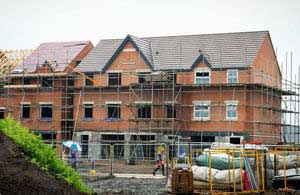
The Government announced this week that it wants to deliver 1 million new build homes in England by 2020, in an effort to tackle the growing housing crisis. The mounting supply-demand imbalance in the market is driving up both property prices and rents across many parts of the country, with new research suggesting that the average price of a residential property Britain could reach a whopping £300,000 by the end of the year, if price growth in the property market continues at its existing pace. Rightmove’s latest House Price Index revealed that the average price of a home hit a new national high of £294,834 in September, owed mainly to a lack of housing stock coming on to the market. Miles Shipside (left), of Rightmove, commented, “High demand, lack of suitable supply, and increasingly stretched affordability are leading to some extremes in market forces in different sectors and parts of the country.” The National Housing Federation estimated that 974,000 new homes were needed between 2011 and 2014 to meet demand, and in reality that figures looks likely to rise. Housing Minister Brandon Lewis said this week that the Government is determined to deliver 1 million new homes during the course…
Read More » -

Significant rise in number of new homes in Scotland
There has been a sharp increase in the volume of new homes built in Scotland, according to official figures. The latest housing statistics from the Scottish Government haveunveiled that the number of new homes completed across the private and social sector rose 9 per cent to 16,281 between April 2014 and March 2015, compared to the same period in 2013-14. Based on the latest data, the Scottish Government is well on track to exceed its five-year target to deliver 30,000 affordable homes by March 2016, as part of the Affordable Housing Supply Programme. Figures to the end of June 2015, show that a total of 28,048 affordable homes have now been delivered –93 per cent of the 30,000 target “By targeting resources at making private sector homes more affordable, through schemes like Help to Buy (Scotland), we have seen the number of private sector completions rise significantly,” said Scottish Housing Minister Margaret Burgess (left). House builders have welcomed the 9 nine per cent rise in the total number of new homes built across Scotland, but have called for greater early clarity on the details of the successor to the hugely successful Help to Buy (Scotland) scheme if such an increase…
Read More » -

UK house prices look set to soar
The UK is the fourth best place in the world to invest in residential property, owed largely to a general housing shortage and the country’s economic growth, according to research by Savills. The results from the study, based on economic performance and growth prospects alongside population growth, found that the UK housing market, which has seen prices soar on average by 20 per cent since 2010, was ranked behind only the US, United Arab Emirates and Singapore as the best place to make a return on rents and increasing property values. “When a growing population, growing affluence and limited housing or land supply converge, we would anticipate real house price growth,” said Yolande Barnes (left), Director of Savills World Research. A separate residential market report from the Royal Institution of Chartered Surveyors (RICS) also says that the growing gulf between supply and demand is driving residential property prices higher and the organisation now predicts that house prices are set to rise by 6 per cent in 2015. The RICS price indicator reached a 15-month high in August, with a net balance of 53 per cent more respondents reporting price increases, with growth being recorded across all parts of the UK.…
Read More » -

Britain’s biggest landlord increases rents 33%
One of the UK’s largest and most controversial private landlords is reportedly increasing rents across his 900 buy-to-let properties in Kent by up to 33 per cent. Fergus Wilson (left) told the press that when he let a three-bedroom mid-terrace home in Maidstone, Kent, last weekend, he managed to increase the rent from £900 a month to £1,200, thanks to a high demand from tenants, fuelled largely by an influx of eastern European migrants. He will now be seeking similar rent hikes across his residential property portfolio. He commented, “I will not be asking them to leave but will serve them with a Section 13 Notice to increase the rent so that they have the opportunity to move to another landlord should they wish. That is if they can find a house of the same quality and a price they can afford. By the time they have paid out fees etc, some will take the view there is not much in it.” Wilson said that he was increasing rents to ensure that his property empire remains profitable in light of the recent tax relief changes announced by Chancellor George Osborne, who has made it his goal to create what he…
Read More » -

Supply of rental housing on the rise
The number of available private rented properties rose in July, the latest Association of Residential Letting Agents (ARLA) monthly Private Rental Sector (PRS) Report has revealed. ARLA registered letting agents, which managed an average of 189 properties per branch in July, compared to 178 in June, have continued to see increases in the cost of renting for tenants. Some 37 per cent of agents reported that rents rose between June and July; the highest number since tracking began in January, when levels were at 27 per cent. The report also revealed that tenants in the West Midlands have been affected the most by rent increases, with 64 per cent of agents reporting that rents had increased in July, followed by the East of England where 53 per cent of agents witnessed rent rises. In contrast, less than a quarter – 21 per cent – of tenants in the North West experienced an increase. But despite the rise in the volume of available private rented homes in July, it would appear that higher rental prices are deterring some tenants from moving home, with demand across the UK having fallen marginally in July to 35 prospective tenants registered per ARLA branch, down…
Read More » -

Young investors set to fuel buy-to-let boom
Many young people may be struggling to get a foot on the housing ladder, but that does not mean that they do not recognise the potential benefits of investing in residential property. Fresh research provided by letting agent Rentify shows that nearly half – 49 per cent – of 18-39 year olds believe that acquiring buy-to-let property represents the best investment option in the UK today, with almost 4million people in this age group actively seeking to buy an investment property. With buy-to-let landlords having benefitted from a booming property market earning returns of up to almost 1,400 per cent since 1996 – capital growth and returns combined – it is easy to understand why it is an investment type that appeals to many people across all age groups, not just the young. George Spencer (left), CEO at Rentify said, “The fact that 49 per cent of first-time buyers would consider investing in buy-to-lets is fantastic and shows that there are more options out there and more people who want to get on the ladder.” But-to-let continues to beat returns on all other mainstream investments, including commercial property, UK government bonds, shares and cash, and that trend looks set to…
Read More » -

First-time buyer activity hits pre-recession high
There was a sharp increase in the volume of first-time buyers in the UK in July, as the prospect of a rise in mortgage borrowing costs encouraged more young purchasers to acquire their first home. The latest First Time Buyer Tracker index from Your Move and Reeds Rains reveals that the number of first-time buyers reached their highest level in July since the recession, paying £161,985, on average, which is 8.9 per cent higher than in the corresponding month in 2014. Overall, there were 29,700 sales of residential properties to first-time purchasers in July, up 4.9 per cent month-on-month. This is in spite of the fact that the average first-time buyer now requires a deposit of £27,975, which is up 10 per cent compared with July 2014’s figure of £25,429. While rising deposit costs may have deterred some prospective purchasers in recent months, increasing real wages have enabled some first-time buyers “to shoulder the short term burden of a slightly higher deposit” to spare the risk of losing out on a good mortgage deal, according to Adrian Gill (left), Director of estate agents Your Move and Reeds Rains. He added, “This month’s particularly high transaction rate is also partially due…
Read More »