
Search Results for: property tax
-
Latest property news

Housing White Paper: building great expectations?
There’s a sense of excitement, The Housing White Paper lands in my inbox; will it give a Spring bounce to our housing market? The screen goes grey as 104 pages flip past, am I missing something? A new thought, idea, plan or action? Theresa May, Prime Minister, couldn’t be in Parliament today as she is busy with Israeli Prime Minister Netanyahu, which is understandable, she cannot be everywhere, and her Secretary of State for Communities and Local Government is qualified to present this hugely important document. Mrs May says, “Our broken housing market is one of the greatest barriers to progress in Britain today. Whether buying or renting, the fact is that housing is increasingly unaffordable – particularly for ordinary working class people who are struggling to get by. “Today the average house costs almost eight times average earnings – an all-time record. As a result it is difficult to get on the housing ladder, and the proportion of people living in the private rented sector has doubled since 2000. “These high housing costs hurt ordinary working people the most.” All fine and well, but what is the grand plan? It isn’t grand, it doesn’t even seem to be a…
Read More » -
Latest property news

Government to bring in ‘self-assessment’ for business rates
The 400-year old £26 billion business rates system is about to be turned on its head for the UK two million business premises owners, according to property consultancy Colliers. It says that following consultations on how to improve the creaking and out-dated system, the government favours a self-assessment system akin to the ‘tax return’ one used for income tax. Business rates for the UK’s 15,000 or more estate agency branches are based on rental valuations calculated every five years and, many agent owners often complain, are wildly inaccurate. In response to this the government launched a ‘Business rates: delivering more frequent revaluations’consultation in March last year. If Colliers’ prediction is true, a self-assessment style system will turn a 400-year-old tax regime on its head, although Colliers notes that it will place ‘the burden of red tape on to the ratepayer to make a correct assessment or face significant penalties’. “The official line is that the Government is looking at all the options,” says John Webber, Head of Rating, Colliers International (pictured). “However, my sources have confirmed that the ‘Big Four’ accountancy firms have been consulted on how to make self-assessment work and what lessons could be learned from personal taxation.…
Read More » -
Latest property news

Stamp Duty surcharge hitting landlords hard, says Countrywide
The government’s assault on the buy-to-let market is having the desired effect on landlords, latest research from Countrywide reveals. It has revealed that since the additional three percent Stamp Duty was introduced in April last year 56 per cent of all purchases the company handled where a landlord and first time buyer competed for a property, the first time buyer won. Johnny Morris, research director at Countrywide (pictured, lefgt), said: “Given their inability to spread the higher rate over a longer period, these micro developers have been the buyers hit hardest by the higher rates. Across the country as a whole, their numbers are running at around half the levels they were.” Countrywide undertook the research between April and December last year and says some 9,000 fewer people buying their first home lost out to landlords than during the same period last year. The shift in activity within the market is down to fewer landlords being prepared to commit to a purchase once a bidding war over a property starts as a raft of measures, including extra Stamp Duty, have dampened landlord enthusiasm for purchasing more properties. This includes a severe reduction in the amount of mortgage interest relief they…
Read More » -
Latest property news

Tenants not planning to buy
A growing number of tenants are not planning to buy and will probably rent for the long term, with little likelihood of buying a home. As letting agents experience growing demand, will there be enough properties? 38.4 per cent of tenants surveyed by The Deposit Protection Service said that they plan to remain in a rented home rather than buy property, The Deposit Protection Service (The DPS) has said. Most of those who said that they do intend to buy a property said it wouldn’t be likely within the next 12 months. 25.5 per cent said they hoped to own within six months, but 62 per cent said they didn’t expect to within the next year. The 1,000 tenants surveyed have their deposits registered with The DPS. Julian Foster, Managing Director of The DPS, said, “Renting is a vital part of the housing sector, and a significant proportion of the UK population choose to be tenants as it better suits their life plan or lifestyles. “However, buying a house is a significant financial undertaking, and renting will often also suit those who are saving for a deposit before accessing a mortgage. “The UK needs a flexible residential sector that suits the varied life choices and…
Read More » -
Features

Kate Faulkner asks if 2017 will be a good year for agents
Designs on Property tracks and summarises the monthly property indices. Kate Faulkner says, “Local demand and supply factors have a dramatic impact on the huge variations in towns’ and cities’ year-on-year growth.”
Read More » -
Features

Buy-to-let, what happens next?
Scott Hendry, director at specialist finance provider Together, discusses what to expect from the buy-to-let sector after a challenging 2016.
Read More » -
Latest property news

Has the London rental market topped out?
The pressures and costs of living in the capital are persuading many tenants to look elsewhere to live as demand within the London rental market ‘slides’, it has been claimed. According to the National Landlords Association (NLA) the number of landlords in central London reporting a rise in tenant demand has dropped from 45% to 17% compared to January last year. But figures from the Council of Mortgage Lenders also suggest that the reduction in demand among tenants is down to increased number of first time buyers in the market, something that Prime Minister Theresa May put at the heart of her vision for Britain when she came to power last year. The CML’s latest figures show first time buyer mortgage borrowing increased by 9% in November, year-on-year. But London’s rental market problems, coupled to looming tax increases for landlords, are either driving many investors out of the market, or frightening them off new property purchases. The CML say that landlord borrowing has fallen by 10% year on year. The NLA says just 5% of London landlords say they plan to buy further properties this year, down from 15% last year, while outside London confidence is much higher. In the North…
Read More » -
Features

Time to wage war on fair pay?
Property businesses have found themselves in very hot water with HMRC for failing to pay staff the National Minimum Wage, with sums running into hundreds of thousands of pounds. Adam Bernstein reports.
Read More » -
Features
Cautious landlords hedge their bets
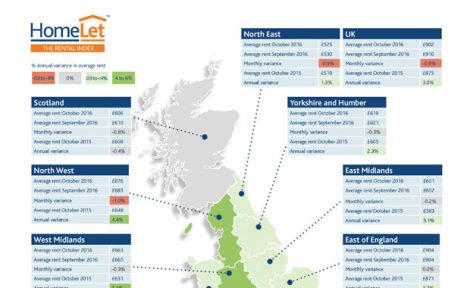
Cautious landlords seeking to balance tenant affordability with the need to generate returns are easing back on the rate at which they raise rents, HomeLet’s latest research shows. Across the UK, rents on new tenancies were just three per cent higher in October than in the same month of last year. With the average cost of renting a home now £902 a month, October was the second successive month in which rents rose by an average of only three per cent; in March rental inflation was 4.5 per cent a year. Landlords are aware that their properties must be affordable, as their own costs rise – the higher Stamp Duty rates on buy-to-let purchases and forthcoming reduction in tax relief on buy-to-let mortgage interest – they have so far been reluctant to ask tenants to pay significantly more. This caution may reflect anxiety about the uncertain economic outlook, with the Bank of England forecasting lower economic growth and higher inflation. Landlords are also aware that wage settlements have generally lagged inflation over the past two or three years, squeezing tenants’ disposable income. The restraint shown by landlords has encouraged tenants to remain in their properties for longer – now averaging…
Read More » -
Features

Don’t get washed up by money laundering rules
After Channel 4’s exposé, From Russia with Cash, RICS expelled a member for his role in money laundering, so, says Andrea Kirkby, you need to appreciate the risks and comply with the rules.
Read More »