Buyer successfully appeals £168,000 HMRC bill for ‘uninhabitable’ property
David Hannah says his client's case fuels debate about the ‘uninhabitable’ definition and has slammed HMRC, The Law Society and the Chartered Institute of Taxation for deterring tax claims.

Cornerstone Tax has successfully appealed a Stamp Duty claim against HMRC after it pulled the tax collector up over ‘uninhabitable status’ saving its client £168,000.
The Stamp Duty expert’s client acquired a property in a dilapidated state at completion, requiring a complete renovation both internally and externally.
UNINHABITABLE STATUS
At the time they claimed ‘uninhabitable status’ and provided evidence to highlight that the property was suffering from numerous serious defects as well as hazards on the effective date of the transaction which made it too dangerous to live there.
Amongst a host of defects not only did the property have severe damp and toxic mould issues throughout but water damage had also destroyed internal partition walls. Missing banisters and stair rods created other safety risks and faulty wiring needed to be replaced throughout the property.
Ceilings were being propped up using acro-props to maintain the structural integrity of the building and asbestos was found in eight locations with the material score ranging between 2 to the maximum score level of 12.
Financing was also an issue with high street lenders and private banks not willing to lend against the property while the valuation report provided to the specialist lender stated that the property was at “the stage where it is not suitable for habitation”.
HMRC OBJECTED
HMRC objected and the matter went to appeal. Earlier this month the case was heard and decided in the appellants favour at the First-tier Tribunal (FTT) on 13 June 2024.
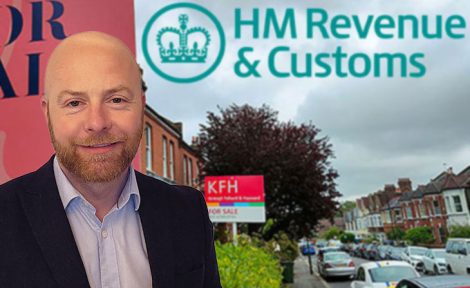
David Hannah (main picture), Group Chairman of Cornerstone Tax, says the case highlights the ongoing debate for what constitutes as ‘uninhabitable’ in matters concerning stamp duty and that the likes of HMRC, The Law Society and the Chartered Institute of Taxation should stop putting out propaganda deterring legitimate claims.