TOWN AND CITY TRACKER: Property prices rising at lower rate
Kate Faulkner reports on local property prices, revealing that prices are stagnating or seeing only small rises or falls.
 With the number of regions from all the indices showing property prices are rising at a lower rate, more are seeing falls or prices just stagnate, we are seeing a similar picture with the 30 cities we track.
The table below highlights the stark contrast between the strongest-performing cities. Belfast, Liverpool and Bradford stand out as top performers across both the Land Registry and Hometrack data. Glasgow continues to show solid growth.
This month, for the first time that I can remember, there are only a few differences in the rankings: the Land Registry places Newcastle within its top five, while Hometrack’s data suggests Manchester takes that position instead.
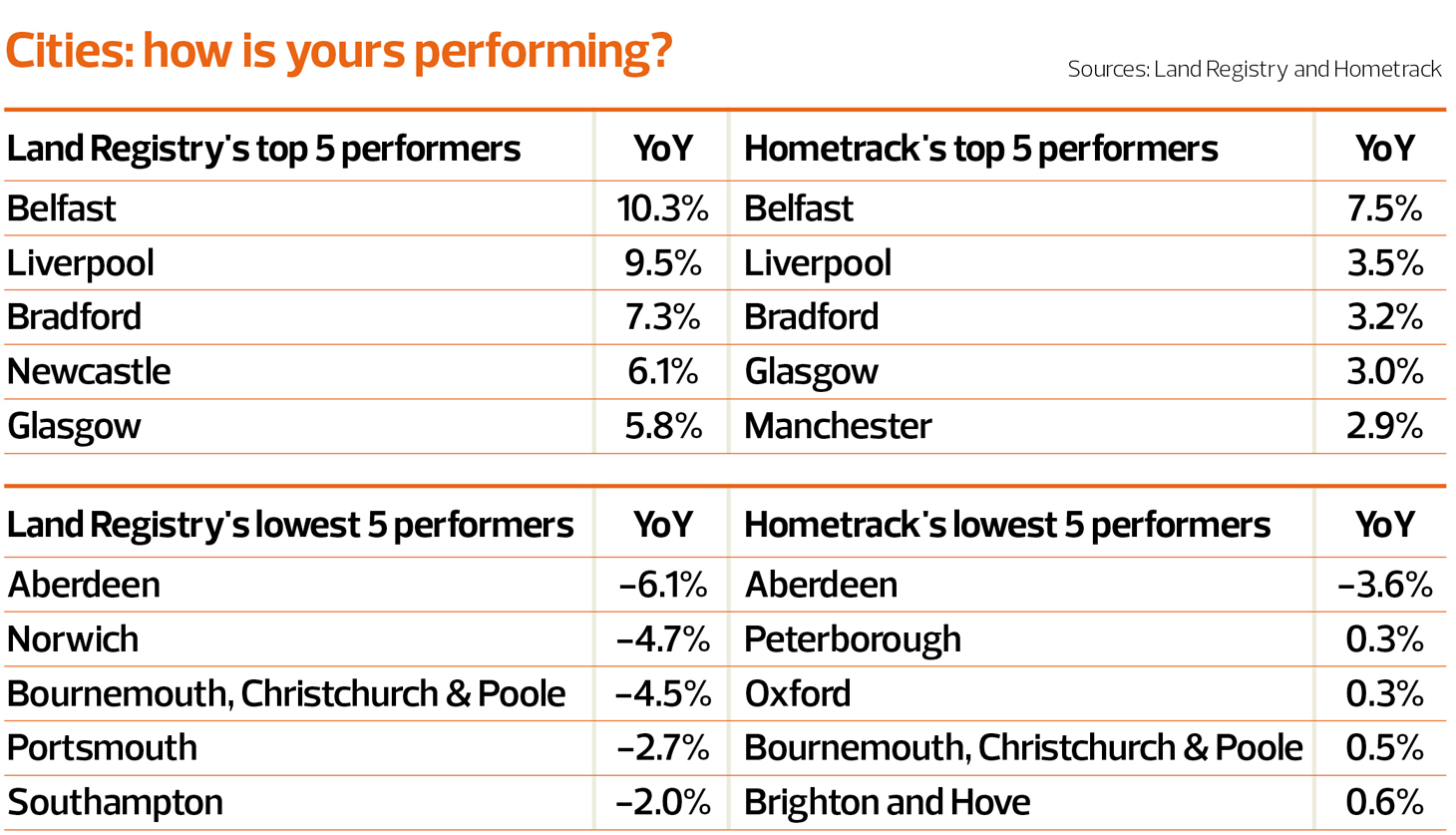
If we take the highest performers – Belfast, with year-on-year price rises of 10.3%, and Liverpool, 9.5% – it’s a big difference in performance compared with Aberdeen, which is seeing 6.1% falls, closely followed by Norwich.
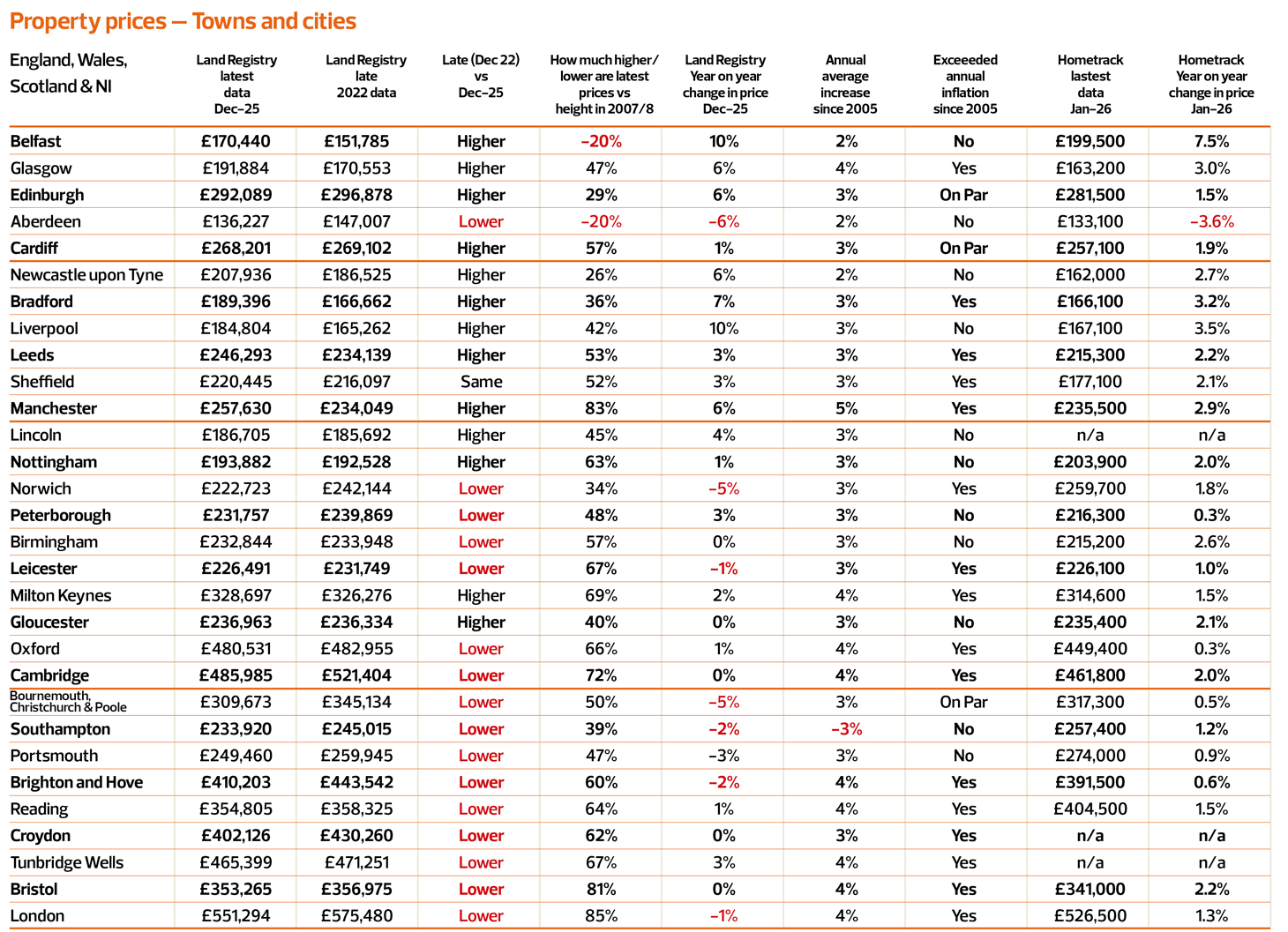
The other interesting data from the Cities index this month is that some property price averages, based on the Land Registry data, have fallen back below their 2022 levels before the Liz Truss government and interest rates rose so rapidly.
These include Bristol, Oxford and Birmingham.
Although prices haven’t dropped dramatically, the data clearly shows that growth is no longer as strong as it once was across most parts of the country. Higher interest rates, ongoing cost of living pressures, and shifts in what buyers are looking for in a home are all having an impact.
As a result, property prices in many areas – and across a range of property types – are either growing very slowly, remaining flat, or in some cases starting to edge downwards.
Meanwhile, we are still seeing property prices in 14 out of 30 of our cities below, not grow in line with inflation since 2005 – so essentially falling in value, in real terms.
Appendix: City/town property indices price tracking
For city/town tracking, we use Land Registry (government data) and Zoopla/Hometrack. The Land Registry data is useful because we can analyse how property prices have changed over time and this helps us to put today’s price information into context.
The Zoopla/Hometrack data is useful as they take into account the change in mix of property transactions during the pandemic to houses away from flats. This has meant the likes of the Land Registry and other indices have over exaggerated price changes year on year.