Inflation rises as Middle East conflict drives up prices
Price rises have hit fuel and transport hardest but are expected to soon spread to the rest of the economy.
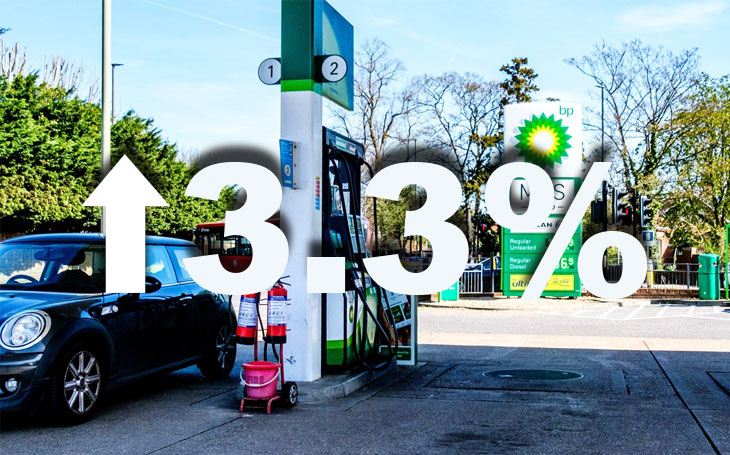
The conflict in the Gulf pushed up UK inflation to 3.3% in March, according to the Office for National Statistics and CPIH, which includes owner-occupiers’ housing costs, which rose to 3.4%.
Transport was the main driver of the increase, with prices rising by 4.7%, the highest since late 2022, as the blockade of the Strait of Hormuz and the damage done to production facilities fed into petrol and diesel costs. Housing and household services rose to 4.3%, and food inflation increased to 3.7%.
The rises were partially offset by a 0.8% reduction in the price of clothing and footwear during the year, which were some of the biggest fallers.
What we can’t escape, honestly, is the impact of a huge increase in oil and gas prices, which are a direct result of the war in the Middle East.”
The ONS’ figures offer the first real glimpse of the impact of those higher energy costs, with further pressure expected as those increases pass through to goods, services and wages.
The Bank of England is now expected to keep the Bank Rate on hold rather than making the cuts that were predicted only a month or two ago while it assesses the situation. The Bank’s rate setters, the Monetary Policy Committee, next meet on 30th April.
Industry reaction:

John Phillips, CEO of Just Mortgages and Spicerhaart, says: “As predicted, inflation has gone up in March, but perhaps not as high as many would have expected. There’s no doubt that this is still very much in our future, with the conflict still ongoing and both oil and commodity prices feeling the effect. Right now, the illusive 2% target feels like a pipedream with inflation set to travel further in the wrong direction. What this means to the bank rate is yet to be seen. Any plans for a rate-cutting party next week should be firmly on ice. If anything, we’ll just be grateful to avoid any hikes.
“While we’re certainly feeling it at the petrol pumps, the conflict in Iran hasn’t seemed to slow down movers and buyers – neither has the Easter half-term disruption. We are still posting really positive numbers for buyer registrations, valuation requests and for mortgage appointments. While remortgages continue to drive activity, we are still seeing really encouraging purchase numbers. It comes down to controlling what we can control, and for advisers, that means being present and visible, staying in close contact with customers and lenders, and delivering that five-star service for those looking to navigate the market.”

Daniel Austin, CEO of ASK Partners, says: “Today’s uptick in UK inflation will raise fresh concerns across the property market, which is still waiting for the full economic impact of the Iran conflict to feed through. Households, buyers and developers recognise that current data is unlikely to reflect the secondary effects of the war, which are expected to place further upward pressure on prices. The UK mortgage market is already showing signs of strain, with nearly 1,000 products withdrawn since the conflict began.
“Investment activity is therefore likely to remain concentrated in structurally resilient, income-driven segments such as build-to-rent, co-living, logistics, self-storage and data centres, where chronic undersupply continues to underpin demand.
“A sustained and credible downward path for inflation, now looking increasingly unlikely, remains the key catalyst for unlocking stalled development. The Bank of England’s decision to hold rates underscores the uncertainty surrounding the inflation outlook, particularly amid ongoing geopolitical pressures. Until greater clarity emerges, both developers and investors are expected to remain defensive, with capital favouring disciplined, income-focused strategies. In this environment, real estate debt continues to offer a pragmatic route to deployment while helping to mitigate downside risk.”

Rob Morgan, Chief Investment Analyst of Charles Stanley Direct, part of Raymond James Wealth Management, says: “Today’s inflation figures lay bare the initial consequences of an energy price spike in the wake of conflict in Iran and the closure of the Strait of Hormuz. Having held at 3% in February, CPI inflation accelerated in March to a year-on-year figure of 3.3%, overwhelmingly driven by petrol and diesel costs.
“Yet this is just the start. The impact on household gas and electricity bills won’t be felt until July once the Ofgem price cap has been set, and a rising tide of goods and services costs is now on its way.”
“As the energy price shock further works its way through the economy, we will likely see a further ratcheting up of inflation that puts the Bank of England in a difficult position when it comes to setting interest rates.
“The longer the conflict drags on, and energy exports remain disrupted, the more central banks worldwide will be inclined to raise interest rates. If second round inflation effects begin to show up in earnest, the Bank of England may feel compelled to follow suit – even if only modestly.”