Pace of landlord sales is slowing – Hamptons
New rules on selling former rental homes may be deterring landlords, according to Hamptons data.
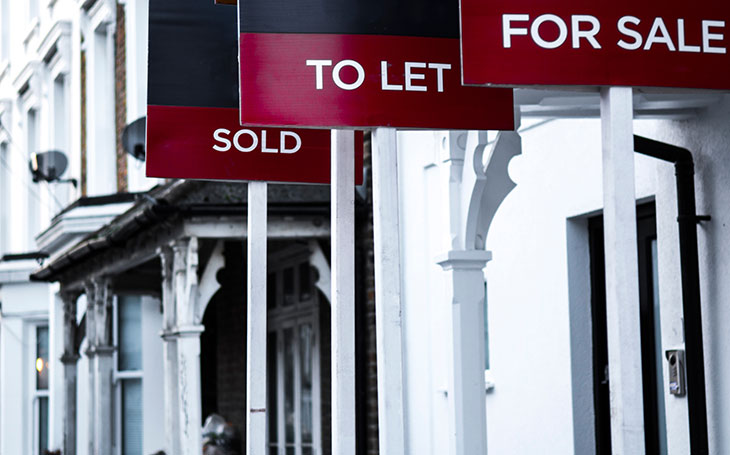
Landlord property sales have slowed in the immediate aftermath of the Renters’ Rights Act, leaving potentially 100,000 homes in limbo, industry data has revealed.
The latest Hamptons Monthly Lettings Index, based on Connells figures, shows that the pace of landlord sales slowed in June following a spike in activity in the run-up to the controversial rental reforms.
June marked the first time since 2019 that landlord purchases exceeded landlord sales, Hamptons said.
Landlords accounted for a relatively muted 10.2% of all purchases in June 2026, while previously rented homes made up 9.2% of homes listed for sale.
Hamptons suggests this could be due to a slower sales market but also new rules under the Renters’ Rights Act where landlords could be banned if they take possession of a property to sell it but then fail to find a buyer.
Nationally, 9.2% of homes listed for sale last month had previously been advertised for rent within the past five years – a drop from 11.3% at the same time last year.
Sales slowdown
Addressing the reasons for the sales slowdown, Hamptons suggests this could be because many landlords have already sold and the cost of failing to sell is higher.
As of 1st May 2026, landlords who serve a Ground 1A notice to sell face a mandatory 12-month ban on re-letting the property, even if they are unable to find a buyer.
This means a failed sale now comes with a much higher cost as landlords risk being left with an empty property that cannot be re-let for a year.
Hamptons’ analysis of homes listed for sale by landlords in 2025 shows that 51% failed to sell, rising to 60% among flats.
Had the new rules been in place last year, an estimated 80,000 to 100,000 unsold rental homes would have been legally barred from returning to the rental market for 12 months, reducing the number of homes available to rent, Hamptons said.
The reduction could also be due to a slower sales market making landlords more cautious about serving notice to sell. With properties taking longer to find a buyer, and some failing to achieve their asking price, landlords face a greater risk of being left with an empty home that cannot be easily returned to the rental market.
Flat market
Hamptons said this issue is concentrated around flats.
Across Britain, 24.4% of flats marketed for sale in June had previously been rented, compared with only 7.8% of houses.
In June, the typical flat took almost a month longer to sell than a house. The average flat went under offer after 85 days, compared with 59 days for a house.
In London, this has compounded a longer-running decline in landlord sales, following several years of weaker property values and lower transaction volumes.
The regional breakdown
Landlord exits remain most concentrated in London and the South of England, according to the research.
Hamptons said higher property prices, lower yields and higher mortgage costs have put the greatest pressure on investor returns in these markets.
In London, one in five homes listed for sale in June had previously been let within the last five years, at 20.3%.
This was more than double the share recorded in the South East, where 9.5% of homes listed for sale had previously been rented.
The biggest year-on-year falls in landlord sales have been in northern markets, Hamptons said, where stronger yields mean buy-to-let returns remain more resilient.
Rental growth
Meanwhile, rental growth on newly let homes continues to edge up.
Across Britain, the average rent on a newly let home reached £1,392 a month in June, 1.6% higher than a year earlier, Hamptons said.
This is the strongest annual growth recorded for new lets in 13 months.
The recovery has been led by markets in the North.
The North East recorded the strongest growth, with newly agreed rents up 4.3% year-on-year to £859 per month.
In contrast, rental growth in Inner London continued to slow, falling from 1.6% in May to 0.4% in June.
However, in some good news, Outer London returned to positive annual growth for the first time in 12 months, with rents up 1.9% year-on-year.
Across the whole rental market, including both new lets and ongoing tenancies, rents rose by 2.2% annually last month although this has slowed, Hamptons said.
Rents on the rise
For existing tenants whose rent increased in June, the average uplift was 5.4%. This is broadly unchanged in the past 12 months, although fewer tenants are seeing their rent rise than before the Renters’ Rights Act came into force.
Scotland recorded the largest rent increases among existing tenants whose rent rose, with an average uplift of 8%.
After Scotland, the largest increases were typically seen in the North of England and the Midlands, where rents have been rising more quickly than in London and the South.
 Commenting on the data, Aneisha Beveridge, Head of Research at Hamptons, says: “The Renters’ Rights Act has been a long time coming, and most landlords who wanted to leave the sector because of it have probably already done so.
“While the new rules may have encouraged some landlords to sell, the bigger shift has come from years of tax changes and higher mortgage costs, which have gradually reduced the number of landlords in the market.
“What’s changed more recently is the balance of risk. A tougher sales market and the introduction of a 12-month re-letting ban mean selling has become a more complicated proposition for landlords.
“For many, the prospect of being left with an empty property that can’t easily return to the rental market has made holding on to an investment look more attractive.”
While the new rules may have encouraged some landlords to sell, the bigger shift has come from years of tax changes and higher mortgage costs.”
For those landlords who have chosen to sit tight, Beveridge suggests there are signs that their decision may start to pay off.
She adds: “Yields have improved over the past couple of years as rents have risen faster than house prices, giving investors more headroom to absorb higher borrowing costs.
“At the same time, rental growth is picking up again, with rents on newly let homes rising at their fastest pace in more than a year. While challenges undoubtedly remain, conditions for landlords arguably look better than they did 12 months ago.”