Former Bank of England Deputy Governor argues for Land Value Tax
Land is a good thing to tax because it can't be taken abroad or moved offshore, it is argued - ahead of Andy Burnham's appointment as the new Prime Minister.
The former Deputy Governor of the Bank of England has argued a case for a new Land Value Tax – but warns that it may take up to five years to be introduced.
Speaking on Radio 4’s Today Programme, Sir John Gieve was asked if there was a case for a Land Tax to be introduced.
Sir John replied, saying: “The basic case is that it is very difficult to move land, so land is a good thing to tax because you can’t take it abroad or move it offshore – so you should be able to collect it.”
Land is a good thing to tax because you can’t take it abroad or move it offshore.”
He went on to say: “Second, we have a number of taxes, particular Council Tax and Stamp Duty, which have all sort of perverse effects that are based on historic values that are now utterly out of date – and it is crying out for reform.
He adds: “But you have to design it well, introduce it in stages to minimise the losses and so on, so it a three to five-year project.”
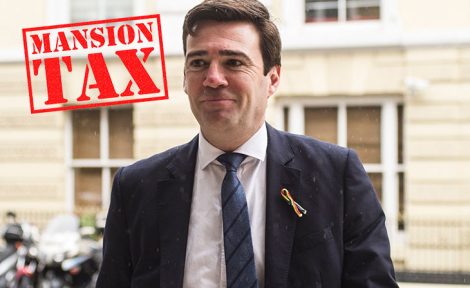
Andy Burnham
It comes as Andy Burnham prepares to officially become the country’s new Prime Minister on Monday.
Burnham may decide to change a number of property taxes.
It is understood that Burnham is a fan of a system that replaces both Stamp Duty and Council Tax with an annual property tax of 0.48% of a home’s value. It would equate to £1,440 a year on a £300,000 home.
It would have a far bigger impact on areas such as London and the South East, where property prices tend to be higher.
Modern realities

Andrew Lloyd, Managing Director at Search Acumen, says: “In property, where margins are often wafer-thin, political uncertainty has a habit of upsetting the deal’s applecart.
“In that respect, Burnham’s appointment is a welcome alternative to a drawn-out summer leadership contest. But with little detail on his policy agenda, businesses still face the impossible task of preparing for the unknown.
“Initial ideas that have been floated include a new land tax to replace Council Tax and Stamp Duty – a potential watershed moment for housing and a genuine attempt to align property taxation with modern economic realities.
“But the ambition of what would lie ahead shouldn’t be underestimated. The fact that council tax valuations haven’t been updated for 35 years shows just how politically and financially difficult such a reform would be.”