
Asking prices hit by larger than usual summer drop – Rightmove
"An unusual number of distractions have kept the minds of some potential buyers occupied, namely the World Cup and hot weather," says Rightmove's Colleen Babcock.

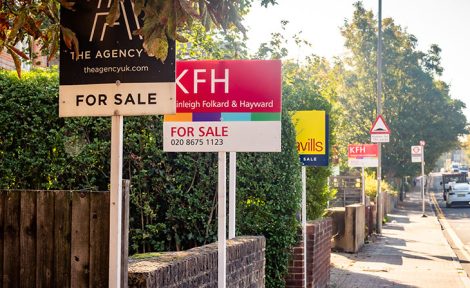
Average asking prices of newly-listed homes have dropped by more than usual this month, the latest Rightmove House Price Index has revealed.
The portal has blamed a range of factors for the lower levels of growth, ranging from the World Cup to the heatwave, higher interest rates and political change.
Its latest report shows the average asking price of newly-listed homes for sale has dropped by 1% or £3,832 this month to £372,359.
The biggest average monthly fall is for second stepper homes, down 0.9%, while top of the ladder and first-time buyer property asking prices have fallen by 0.5% and 0.6% respectively.
That is a substantially larger than the average July drop compared with the 0.2% recorded at this time of year over the past decade.
A new Prime Minister also presents an opportunity to make housing a renewed priority.
Additionally, the number of available homes for sale is 1% below this time last year, but still very close to a 12-year high for the time of year, Rightmove said.
Market activity levels also remain below this time last year, with this year’s mortgage rate increases as a result of the unexpected war in Iran contributing to challenging conditions, the property website suggests.
The number of sales agreed in the first half of the year was 6% lower than the same period in 2025, however it was level with the first half of 2024.
FEELING THE HEAT
Rightmove suggests new sellers are trying to tempt summer buyers who are facing many distractions such as the the World Cup, the unusually hot summer and the traditional summer holiday season.
Its analysis shows that the first heatwave in May caused a temporary 8% drop in buyer demand before rebounding, while June’s heatwave caused a similar temporary decline of 6%, followed by a 4% dip during the current July heatwave.
Highlighting how price-sensitive buyers are in the current market, new Rightmove research also shows the importance of getting the asking price right from the outset.
Three quarters of homes that have successfully sold and completed this year did so without an asking price reduction. Homes that do require an asking price reduction spend an average of 127 days on the market, compared with just 36 days for those that sell without a reduction.
REALITY CHECK
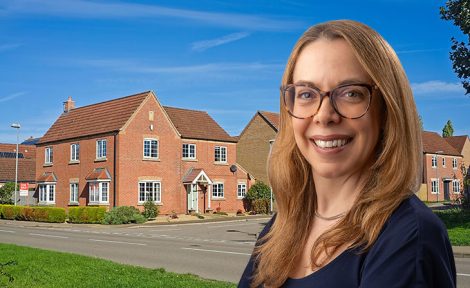
Colleen Babcock (pictured), property expert at Rightmove, says: “This month’s larger-than-normal price fall reflects the reality of a market where buyers have plenty of choice and sellers are having to work harder to stand out and attract them.
“They’re also competing with an unusual number of distractions which have been keeping the minds of some potential buyers occupied, namely the World Cup and the hot weather.
“While these diversions are short-term, they’re adding to what is already a distracting summer holiday period to create a challenging selling environment.”
New Labour leader and soon-to-be confirmed Prime Minister Andy Burnham is also being urged to put housing high on his list of priorities when he enters Downing Street.
Babcock adds: “A new Prime Minister also presents an opportunity to make housing a renewed priority, with action needed to support affordability, mobility and the delivery of more homes.”

Commenting on the index, Nathan Emerson, Chief Executive of Propertymark, says: “While the year initially started with optimism in the housing market, global unease has in many ways dominated the agenda ever since.
“Rightly so, many consumers have been exercising greater caution with their spending to help ensure household budgets are better protected against unforeseen increases in expenditure.
“In recent months, we have witnessed mortgage borrowing dip significantly, alongside a lower volume of new mortgage approvals.
“All eyes will be firmly focused on the Bank of England at the end of the month as it makes its next decision on the Bank Rate, something that will very much set the tone, especially for those considering their next house move or who have tracker mortgage products.”

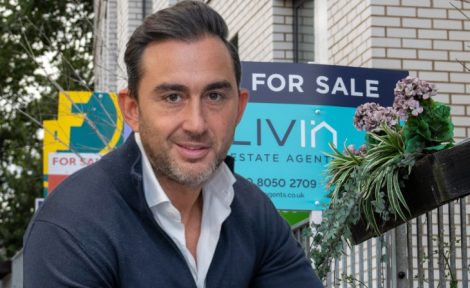
Jeremy Leaf, north London estate agent and a former RICS residential chairman, says: “These figures are particularly timely as they reflect whether sellers’ asking prices have responded realistically to the recent dip in buyer demand. The answer is ‘not bad but could do better!’
“Continuing uncertainty prompted by present domestic political upheaval and possible resultant uplift in some taxes – or maybe even reductions to others – is adding to previous concerns about the Iran war’s impact on interest rates and the cost of living.
“Bearing in mind approximately four out of five sellers are also buyers, we are finding it is only homeowners who recognise the importance of concentrating on the difference between selling and buying prices, not the headline figure, which is looking increasingly unlikely to be achieved.”

Tomer Aboody, founding director of specialist lender MT Finance, says: “Wall-to-wall sunshine, combined with World Cup fever, are not good for housing market activity and with schools now breaking up for the summer, distractions are likely to continue for a while yet.
“This is having an impact on asking prices, with sellers having to price sensibly in order to attract buyer attention. Buyers are adopting a more cautious approach and are not prepared to pay over-the-odds, particularly when they have so much choice.
“Affordability remains a concern as the Iran War keeps mortgage rates higher for longer. However, lenders are keen to lend and needs-based buyers are taking advantage of higher leveraged deals in order to buy. The housing market could do with some encouragement from the new Prime Minister, in the form of lowering stamp duty, which would boost transactions and benefit the wider economy.”









I would say that analysis is way off. One of the primary reasons for a dip in the housing market is political uncertainty. There aren’t many people who would look at buying a property when there is political turmoil at home and abroad.
Major sporting events do not stop housebuying.