Your First Home won’t close Bank of Mum and Dad
Mortgage experts warn there are still buyers who can’t afford larger deposits outside of the scheme.

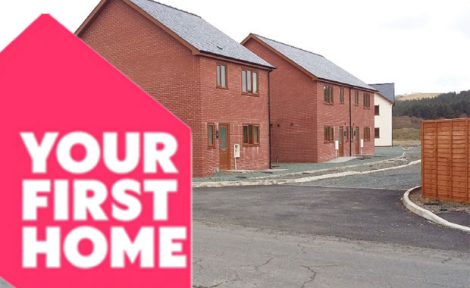
The Government’s soon-to-be launched Your First Home scheme won’t fully replace the Bank of Mum and Dad, it has been claimed.
Further details of the Your First Home scheme will be revealed in the Budget later this month.
So far, it is known that the revived Help to Buy housing initiative will support first-time buyers with a Government-backed equity loan on top of a 2% deposit for a new-build.
But while this could cut the money parents need to provide for deposits, financial experts warn the Bank of Mum and Dad isn’t going away.
Figures from Heron Financial, covering 12 months to 4th October 2026 show that 34% of its first-time buyer clients used a gifted deposit or inheritance.
It only applies to new-build from signed-up developers, so it’s far narrower than a gift that works on any property.”
That is broadly in line with the Government’s English Housing Survey 2024–25, which found 31% of recent first-time buyers had received help from family or friends.
Family cash made up a median 59% of the deposit, Heron Financial said.
It covered more than half the deposit in 57% of cases, while in almost a quarter, 23%, family covered almost the whole deposit.
Without family money, 71% of those buyers would still have had at least a 2.5% deposit of their own, the minimum required under the Government’s Your First Home scheme.
More than three out of five, at 62%, would still have had at least 5%, while 28% would have had 10% or more.
Across all the first-time buyers in Heron’s data, just one out of 10 would have been left without a 2.5% deposit if family help had been taken away.
Stretched support
The findings have prompted mortgage experts to question how far the scheme could reduce first-time buyers’ reliance on family support.
Matt Coulson, founder at Heron Financial, said: “Roughly a third of first-time buyers lean on family, and where they do, family money tends to cover most of the deposit, often all of it. For a lot of young people, whether you can buy has come down to whether your parents can help, more than what you earn.
“That’s where Your First Home could make a difference. By dropping the deposit to 2.5%, it targets the barrier the Bank of Mum and Dad exists to solve, and on these numbers most would-be buyers could clear that bar on their own. If it works, it loosens the grip family wealth has on who gets to own a home.
“The catch is two-fold. It only applies to new-build from signed-up developers, so it’s far narrower than a gift that works on any property.
“And the deposit was only ever half the problem: a smaller deposit means a bigger mortgage, so at today’s rates the monthly payment still decides whether people can afford it. Fix the deposit and the payment together and it helps. Fix only the deposit and it falls short.”
Marginal support
James Blackler, Managing Director at Oakstead Finance, said Your First Home will only “help at the margins”.
He adds: “Single buyers needing more help than couples, and London buyers needing more than the rest of the country, tells you everything about how skewed this market has become, and it’s exactly what we see day to day advising clients in London.
“A 59% median contribution from family money isn’t a top-up, it’s effectively the deposit, and that’s before you even get to the 23% of cases where family covered almost the whole thing.
“Your First Home will help at the margins, particularly for buyers with decent income but no savings cushion, but I’d be cautious about overselling it.
“A lower deposit threshold doesn’t fix stretched affordability once rates and living costs are factored in. It will shift some transactions forward, but it won’t replace the Bank of Mum and Dad as the dominant force in this market.”