
Bank of England raises interest rate again as expected to 4.5% – industry reaction
Governor Andrew Bailey announces a base interest rate rise for the 12th successive time to deal with inflation – and says inflation is coming under control.

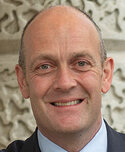
The Bank of England has raised interest rates by 0.25% to 4.5% as expected today, after a majority of the Bank’s Monetary Policy Committee (MPC), headed by Governor Andrew Bailey (pictured) voted for the increase again.
This increase is the 12th successive rise, taking the rate to its highest level in almost 15 years.
The Bank is reacting to a stubborn inflation figure, which remains above 10% despite all the recent interest rate increases.
All eyes will now be on the banks and building societies to see if they will respond to this increase, and raise mortgage rates in response.
Mortgage rates have fallen slightly recently after the chaos last year caused by the Mini-Budget in September.
Since December 2021, the Bank has increased the interest rate from 0.1% to 4.5%.
Not easy
Announcing the hike, Bailey said: “Higher interest rates mean higher costs for some people. We know that is not easy when there is already a lot of pressure on their finances.
“Our aim is to bring back low and stable inflation.”
We expect inflation to then meet our 2% target by late 2024.”
“Low and stable inflation is vital for a healthy economy. An economy in which households and businesses can plan for the future with confidence and money holds its value.
“We expect inflation to fall quickly this year. We expect inflation to then meet our 2% target by late 2024. That doesn’t mean that prices will fall, but they will stop increasing so quickly.”
Industry reaction
 Marcus Dixon, director of UK residential research at JLL, says: “In the absence of more positive news on UK inflation (hopefully revealed when the April figures are released later this month), most had resigned themselves to a further rate rise from the MPC.
“Higher borrowing costs will of course impact both new and existing homeowners coming off fixed rates, but banks had already anticipated rates would rise meaning much of this is already priced into fixed rate deals.
Indeed, the housing market remains more resilient than many had anticipated. The latest results from the RICS Survey show market conditions remain challenging, with agents still expecting prices to fall in the coming months in response to higher borrowing costs and uncertain market sentiment.
“But the outlook for the next 12 months remains more positive.”
 David Hannah, group chairman of Cornerstone Tax, says: “I think it’s a complete mistake to raise interest rates again, this may tip the economy into recession.
“I think the Bank of England should have called a hold on any rise in rates for one month to see what happens to inflation in May.
“We’ve just witnessed the introduction of the 100% mortgage for renters, which means they’ve got no equity.
“Now we’re raising interest rates, putting pressure on affordability, which increases the risk of a property price decline also meaning that those 100% mortgages are going to be in negative equity.”

Adrian Anderson, director of property finance specialists Anderson Harris, says: “The never-ending story of interest rate rises continues today with the Bank of England’s decision to set rates at 4.5%, resulting in yet another blow to borrowers.
“Stubbornly high inflation has seen interest rates continue to soar for well over a year and the landscape has changed once again since the last MPC meeting in March, offering a bleaker outlook for inflation as banks raise mortgage rates and tighten their lending criteria meaning many cannot borrow as much as they could this time last year.
“What next? Who knows, and that is part of the problem. Uncertainty could stall the housing market. High interest rates, and in turn, high mortgage rates, seem to be hanging around for longer than maybe many expected and with 1.4 million households on fixed-rate deals ending this year, concerns over an increase in payment defaults in the future is very real.“
 Marylen Edwards, head of buy-to-let lending at MT Finance, says: “Considering recent events in the global financial markets, this latest rate rise was not unexpected.
“While a reduction in base rate would have been welcome news, it feels as though another increase is necessary at this moment in time to combat stubbornly high inflation and help bring back some much-needed stability.
“Hopefully this will be the last rise before we start to see a plateau.”

Jeremy Leaf, north London estate agent and a former RICS residential chairman, says: “This latest increase in rates comes as no surprise and for that reason, the impact on the housing market is likely to be relatively modest.
“Activity has certainly improved since the beginning of the year although buyers remain cautious about taking on debt.
“Nevertheless, there are many buyers who sense there is an opportunity to take advantage of stabilising, and even softening in some cases, prices.
“Most buyers are telling us they need to see value if they are going to commit and we have noticed many more viewings before offers are forthcoming for those reasons.”

Nathan Emerson, CEO at Propertymark, says: “For those on fixed rate mortgages, this latest increase is likely to have no immediate effect, and for those looking for a new fixed rate, they should also see little change in the market offering due to it being already factored into banks’ pricing.
“However, for those on tracker mortgages, like many landlords in the buy-to-let market, this means another rise in outgoings.
“In the rental sector, a rise in the cost of supplying a home will put further pressure on rents and may see some investors forced to exit the market altogether, further worsening the extreme supply and demand imbalance seen already.
“It is imperative that the UK Government urgently do more to support homebuyers and landlords with their rising costs, especially as interest rates look to remain high into the start of next year.”

Jason Tebb, CEO at OnTheMarket, says: “This 25 basis-point rise, taking rates to 4.5 per cent, was widely expected by the money markets as the Bank of England battles to curb inflation.
“The 12th rate rise in as many meetings will further exacerbate increasingly stretched affordability, and could have an impact on the confidence of the average property-seeker relying on a mortgage.
“That said, with inflation forecast to fall sharply this year, borrowers will be hoping this is the last of the rate hikes.”

Nick Leeming, chairman of Jackson-Stops, says: “While the outlook for household finances remains sombre, persistently high inflation has led the Bank of England to increase the base rate once again.
“Although only incremental, the decision continues to move the dial in the favour of savers not borrowers.
“Adding further grit in the gears for first-time buyers, this news will also be disappointing for anyone needing to remortgage.
“The industry expectation is that the next few months could draw a line in the sand for further rate rises, to ensure the cost of debt does not create more problems than it is attempting to alleviate.”

Simon Gammon, managing partner at Knight Frank Finance, says: “We’re not expecting any substantial moves in mortgage rates as a result of today’s decision. Several large lenders have notched rates up in the past fortnight, but that’s largely to control business levels.
“Borrowers are extremely sensitive to interest rates at the moment so the cheapest on the high street tends to get swamped.
“Mortgage rates are going to come down eventually, but probably not for the rest of this year – at least not by much. The biggest conundrum for most borrowers at the moment is whether to fix for two years or take a tracker.”
Alex Lyle, director of Richmond estate agency Antony Roberts, says: “It is a real shame that the Bank of England felt it needed to raise interest rates again this month, as a hold would have boosted the momentum we have been seeing in the housing market, particularly since Easter.
“Prices have been holding up on large family homes in particular and we have found the volume of sales in the first quarter up considerably compared with the same period last year.
“Yet another interest rate rise, with the potential for more to come, creates uncertainty, which is not good for the market.”

Mark Harris, CEO of mortgage broker SPF Private Clients, says: “As interest rates hit 4.5 per cent, it feels like they are nearing their peak, if not there already, particularly with the Bank expecting inflation to fall sharply from April.
“Fixed rates are influenced by future base-rate movements and therefore not directly linked to what is decided this week. Indeed, several lenders have reduced their high loan-to-value fixed-rate mortgages in the past few days which will benefit first-time buyers, while the pricing of lower LTV deals has risen on the back of higher swap rates.
“The cumulation of 12 successive rate rises is significant. A borrower with a £250,000 mortgage on a tracker pegged at 1 per cent over base rate will have seen their monthly payments rise from £943 in December 2021, when base rate rose from 0.1 per cent to 0.25 per cent, to £1,535 today.”





BOE Base rate increases have played no part in reducing inflation. Full stop!
As we are a global importer our prices are governed by other countries tax regimes (Brexit related – not being per of the common market) and their crises due to lack/cost of energy, water and other global supply costs.
As we can see we are over 10% after 11 increases and there is no shift in demand especially essentials like food, and energy. This is because of global external factors. If we were part of a global community we could have solved this together. But we are not and Britain is becoming more isolated as some countries choose to be like us.
Inflation will continue until the war in Ukraine is over and peace prevails, China and USA tensions finish and the UK joins the EU with a new deal.
The BOE is powerless and rate hikes are to help our government to charge investors to pay for interest rate hikes abroad. Nothing else.