Rising bills drive demand for energy-generating homes
Buyer priorities have shifted when it comes to finding green homes as energy costs rise, says Rightmove's Colleen Babcock.
Volatile energy prices and summer heatwaves have changed what buyers want from a property, Rightmove suggests.
The portal’s 2026 Greener Homes Report found that almost two-thirds of movers, at 63%, would ideally like their home to generate most or all of its own energy.
More than half, at 53%, say recent energy-price rises have increased their interest in technologies such as solar panels and home battery storage, while just 8% would prefer to remain fully reliant on the grid.
Alongside greater energy independence, a year of unprecedented heatwaves has also changed what many people expect from their homes.
The challenge is that many of the improvements needed to make Britan’s homes more energy efficient and climate resilient remain out of reach.”
Almost half – at 45% – say their current home does not cope well in hot weather, while 87% say a home’s ability to stay cool during summer is important when choosing where to live next.
Searches for homes for sale with air conditioning more than doubled this summer, up 104% compared with the same period last year, says Rightmove.
Technologies that can help households generate and manage more of their own energy are also becoming more visible in the housing market.
Since 2022, mentions of heat pumps in newly listed homes have risen by 151%, while mentions of solar panels are up 94%.
Rightmove’s data shows that many of the features associated with both energy independence and climate resilience however remain concentrated in higher-priced homes.
Properties advertised with air conditioning have an average asking price of £947,509, compared with the national average asking price of £367,440. Homes mentioning heat pumps have an average asking price of £545,220, while those mentioning solar panels average £412,901.
Building greener new homes
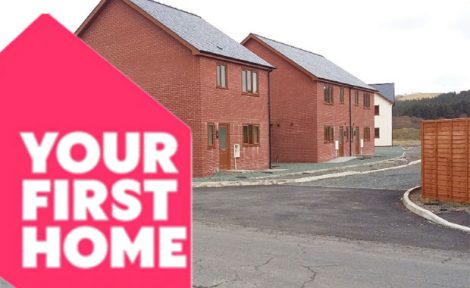
Many of the features associated with greater energy independence and climate resilience are already standard in many of Britain’s newest homes, highlighting the gap between new-build and existing housing stock.
Rightmove’s analysis finds that 89% of new-build homes are rated EPC A or B, compared with just 6% of resale homes. Almost a quarter, 23%, achieve the highest EPC A rating, compared with only 1% of resale properties.
Wales has the highest proportion of EPC A-rated new-build homes at 54%, followed by the North East at 44% and the East Midlands at 31%.
Rightmove suggests there is gap between ambition and action action though.
Three quarters of home-movers surveyed believe more should be done to help households improve the energy efficiency of their home. Yet only 5% of homeowners currently rank green home improvements as a priority.
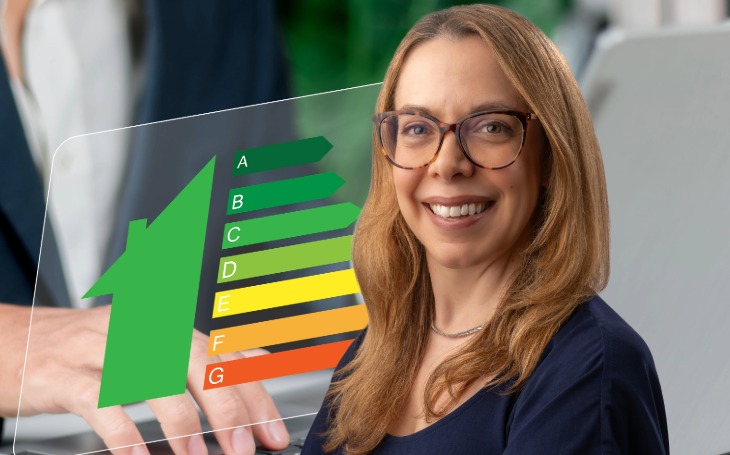
Colleen Babcock (pictured), Rightmove’s property expert, says: “We’re seeing growing interest in homes that give people more control over how their energy is generated, stored and used. Several years of energy price volatility have encouraged more households to think about reducing their reliance on the grid and becoming more energy independent.
“People are also thinking more broadly about how their homes perform, from reducing running costs and improving comfort through to staying comfortable during hotter winters and being better prepared for a changing climate.
“The challenge is that many of the improvements needed to make Britan’s homes more energy efficient and climate resilient remain out of reach for a large proportion of households. Stable, long-term support will be essential to help more people make these changes.”

Ian Harris, President of NAEA Propertymark, adds: “Energy efficiency is becoming a more important consideration for buyers, particularly as households look more closely at the ongoing cost of running a home. However, while many people aspire to live in greener, more energy-efficient properties, that doesn’t necessarily mean it will be the deciding factor when it comes to purchasing a home.
“Buyers still need to balance energy performance with affordability, location and the amount of space they need. For some, a property with a better EPC rating and lower running costs will be a major attraction, while others may be willing to take on a less efficient home if it meets their needs in other ways.
“The challenge is that much of the UK’s existing housing stock will require investment to improve its energy performance. Making those improvements affordable and achievable will be key to ensuring more homeowners can benefit from lower energy bills, rather than greener homes becoming an option available only to those who can afford a premium.
“What is clear is that energy efficiency is becoming a more prominent part of the conversation around buying a home, and the market will need to respond to changing expectations around both running costs and year-round comfort.”