New builds damage local house prices, data reveals
The arrival of a new estates can knock as much as 18.5% off the value of nearby homes in more rural areas, according to analysis carried out by newspaper.
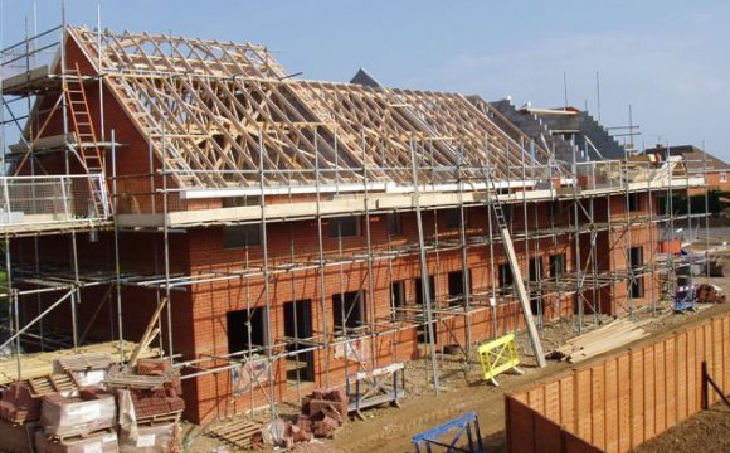
Major new-build estates can drag down the value of nearby homes, with new analysis showing a clear price penalty for existing properties closest to large developments and providing fresh ammunition to local opposition as the Government struggles to meet its pledge to build 1.5 million homes.
£7,000 fall
A Telegraph Money investigation, using HM Land Registry transaction data, found average house prices in the English countryside fell by £7,000 after major developments were built within half a mile, compared with a £3,000 rise for other homes in the area.
Over the past four years, rural homes within eyeshot of new developments dropped 2.7%, while properties in the same towns but further away rose 1.3%.
The paper’s analysis focused on 14 areas across England, from Essex to Yorkshire and Northumberland.
In 10 of those areas, price growth was weaker close to the new-build homes than in surrounding neighbourhoods. In nine of those 10, existing homes closest to the estates lost value.
A new-built complex in eyeshot of their desired property would very much disturb the peace and aesthetics associated with country living.”
The most extreme example was Skelmanthorpe in West Yorkshire. Land Registry records showed 53 new-build sales within a quarter-mile radius in 2024. In the two years before a nearby development, existing detached and semi-detached homes within half a mile sold for an average of £361,000. In the two years after, the average fell 18.5% to £295,000. Slightly further out, prices rose 5.9% over the same period.
As Nigel Bishop, of buying agency Recoco Property Search, explains: “The majority of buyers wanting to purchase a home in the countryside seek quiet and natural surroundings.
“A new-built complex in eyeshot of their desired property would very much disturb the peace and aesthetics associated with country living.”