Nearly a third of adults with ‘complex incomes’ denied mortgages – report
For those in particular on zero hours contracts, it can be more difficult to get a home loan because they are perceived to be a higher risk to lend to.

Nearly a third of adults with non-typical income streams, including those who are self-employed, freelance, or work on zero-hours contracts, have had a mortgage application rejected by a lender, research from The Mortgage Lender (TML) reveals.
Those on zero hours contracts have the biggest rejection rates, with 46% having had a mortgage application denied. Freelancers come second, with 29% having been rejected by a lender, followed by 10% of self-employed people.
COMPLEX
For borrowers who have a complex income, it can be more difficult to get a mortgage because borrowers are perceived to be a higher risk to lend to than those who are paid under a traditional employment contract.
 While more than a quarter of this group have been denied a mortgage in the past, encouragingly 26% of those reapplied.
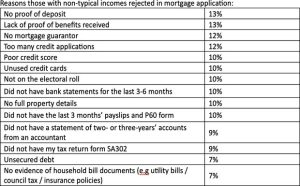
Looking at reasons why those with complex incomes were rejected for a mortgage, 13% said it was because of no proof of deposit.
A further 12% said a lack of mortgage guarantor was the reason, while the same number said they were denied a mortgage as a result of them making too many credit applications.
TAX RETURN
Other reasons include not having bank statements for the last 3-6 months (10%), not having the last 3 months’ payslips and P60 form (10%), not having their tax return form SA302 (9%), not having a statement of two- or three-years’ accounts from an accountant (9%), a poor credit score (10%), and unused credit cards (10%).

Steve Griffiths, Chief Commercial Officer at TML, says: “Getting a mortgage has traditionally been trickier for those who have a more complex income, such as being self-employed, owing to the fact they are viewed to have a less predictable income stream.
“But this doesn’t make them unmortgageable.
“The reality is, as we recuperate from the impacts of the pandemic, and now with the rising cost of living, high inflation and interest rates, affordability continues to be a top concern for those trying to reach their homeownership goals.”