
Increasing numbers of agents facing financial distress
Estate agents are urged to seek help early as research highlights high numbers of property companies are in 'critical' financial distress.
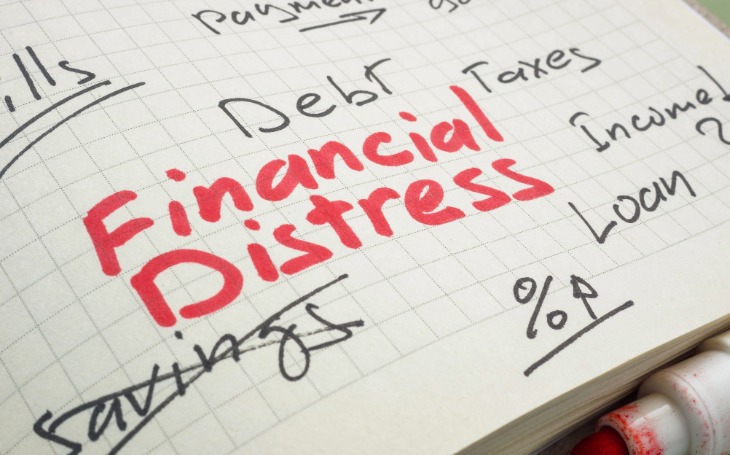
The number of real estate and property services companies in financial distress has increased, research reveals.
Financial and real estate advisory group BTG’s latest Red Flag Alert Index, which monitors the financial health of UK businesses, revealed there were 7,641 businesses within the real estate and property services sector in ‘critical’ financial distress during the second quarter of 2026, up 6.8% year-on-year.
The number of businesses from the real estate and property services sector in ‘significant’ financial distress was 88,855, an annual increase of 9% compared to the same quarter last year.
We are in an environment where the longer companies or developments are left exposed to the market forces, the more we are seeing firms or schemes become insolvent.”
Of the 22 sectors monitored by the Red Flag Alert, real estate and property services had the second highest number of businesses in ‘critical’ and the third highest number of businesses in ‘significant’ financial distress.
The research highlights that real estate agencies have experienced worsening financial distress, with the number of firms in ‘critical’ financial distress up 11.1% year-on-year to 411. The number of real estate agents in ‘significant’ financial distress fell year-on-year by 5.4%.
Tough property landscape
Julie Palmer, Managing Partner at BTG, says: “The landscape for property companies has been particularly difficult of late. Planning delays, regulatory and policy challenges and high costs of borrowing are meaning transactions have slowed dramatically. Add to this rising employment costs and continued uncertainty across the economy and it is no wonder estate agents and property management firms are facing tough times.
“This is having wide reaching impacts on the market, from sales and lettings of existing property to new developments. We are in an environment where the longer companies or developments are left exposed to the market forces, the more we are seeing firms or schemes become insolvent.
“The earlier businesses address their financial distress or the viability of their schemes and portfolios, the more options they may have at their disposal to recover and survive. For the larger and more resilient groups, there could even be an opportunity to rescue firms and schemes out of distress and steer them back on the right track as part of their growth plans.”
Government support
Palmer adds: “Real estate businesses will be looking to the Government for support in its next Budget, not only to alleviate their own costs challenges, but to kickstart the property market. Reforming or removing Stamp Duty has been proposed as means of quickly breathing life into the market from the bottom upwards by thinktanks and the leader of the opposition.
“Many will be looking to the government for their proposal for tackling Stamp Duty and Council Tax, but in practice this could be a long and complex process.
“If we are to navigate towards recovery in real estate, construction and the wider property market, the focus must fall on making borrowing more affordable and attractive to buyers, delivering housing in line with demand and budgets and bringing costs down for firms so that schemes can remain profitable.
“If the market remains stagnant for much longer, and uncertainty and low confidence continue to outstay their welcome, we could see more of the real estate firms already facing distress shutting up shop for good.”
