Property market under pressure as sellers face tougher conditions
Kate Faulkner's latest analysis points to slowing growth and modest price falls, as rising multiple factors weigh on the property market.
 For the first time this year we are seeing some of the property market price indices show year on year falls – albeit not even as much 1%, so fairly insignificant.
However, it’s difficult to summarise anything else from the indices this month apart from the fact that it’s starting to get even tougher out there!
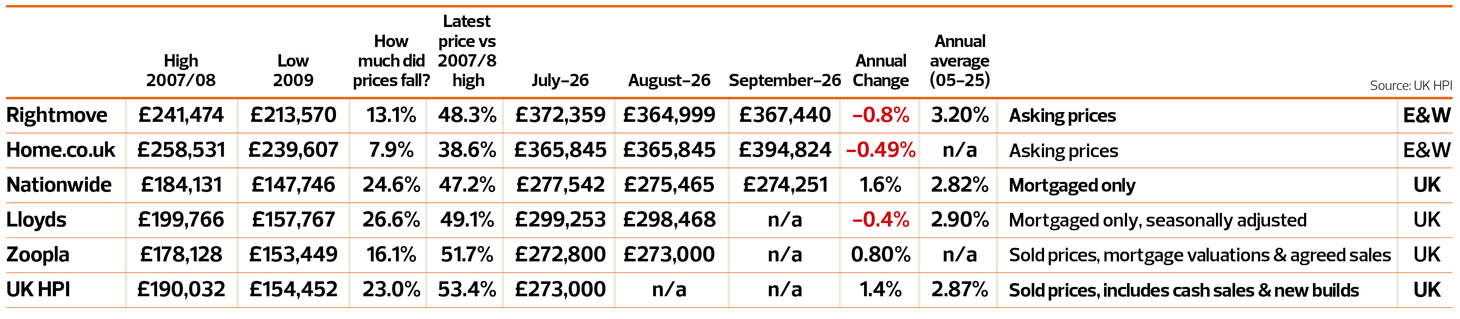
Summary of the latest property market indices headlines
Largest August price drop since 2018 despite mini bounce in buyer demand
Colleen Babcock, property expert at Rightmove, explains how the changes of selling a property can vary dramatically:
“While buyers and sellers are returning to the market after the summer holidays to potentially fuel an Autumn bounce, sellers face stiff competition from a 12-year high number of other homes for sale. With a large crowd of sellers chasing a smaller number of buyers, realism on pricing or a high-quality finish are absolutely key to attracting a buyer and making a sale.
“Whilst almost two-thirds of homes are still successfully finding a buyer, the chances of selling vary significantly depending on where you live. Over 90% of homes that come to market for sale are selling in Scotland versus less than half in London, meaning those who want to sell will have to set their pricing according to local market conditions.”
Prices hold their nerve, the market slows
“A typical sale is taking 22 days longer than it did a year ago – which is almost another month on an already lengthy process.”
Annual house price growth halves in September
Their stats point out it’s not just the location that influences the easy or difficult of a sale, but also the type of property with their index finding the ideal one to sell just now are terraced homes.
Commenting on the figures, Robert Gardner, Nationwide’s Chief Economist, said:
“September saw UK annual house price growth halve to 0.8%, the weakest rate of growth since December 2025. Prices were down 0.2% month-on-month, after taking account of seasonal effects.
“Market activity and house prices have remained subdued in recent months, in part reflecting the uncertain economic backdrop. Geopolitical tensions remain high, with the conflict in the Middle East exerting upward pressure on energy prices, fanning inflation concerns. This in turn has led to mounting financial market expectations of Bank Rate increases, which has maintained upward pressure on the market interest rates which underpin mortgage pricing.”
But Robert is also more upbeat that most suggesting that wage rises are modest which should help keep inflation down and that affordability for buyers is, so far, improving as prices weaken:
“Underlying affordability is improving, as house price growth has been well below earnings growth for some time. These gains have been only partially offset by higher mortgage rates. This suggests that activity should regain momentum in the quarters ahead providing the energy shock fades and confidence returns – especially if market interest rates fall back to pre-conflict levels.”
Average house price edged down in August as market remains subdued
Their new commentator, Andrew Assam, Mortgages Director at Lloyds, put the market into perspective:
“It’s also important to keep recent price movements in perspective. Average house prices remain around 25% higher than they were at the end of 2019, despite the substantial increase to interest rates seen over recent years. The market’s adjustment to higher borrowing costs has been gradual, with wage growth helping to offset some of the pressure on affordability. The recent modest declines in prices are best viewed in that wider context.”
And their view over the coming months is a subdued but not collapsing market:
“We expect the market to remain fairly subdued in the months ahead, but this will likely only have a limited impact on house prices. While affordability remains a challenge, wages continue to grow and employment has held up better than many anticipated. This will help to support demand from those who need or want to move.”
House prices are still rising but they are doing so more slowly, while agents have 5% more For Sale stock than a year ago
As always, Zoopla focuses on the key to the market’s performance over the next few months: whether buyers withdraw from the market. So far, its data shows that:
“Buyer activity is beginning to recover after the summer slowdown.”
However, Richard Donnell, Executive Director at Zoopla, comments that:
“While agents have 5% more For Sale stock than a year ago…the highest mortgage rates for three years are putting pressure on buying power.”