
UK property transactions looking ‘pretty good’
According to the indices so far, the factors which underpin property transactions are looking pretty good, despite the current economic uncertainty.
 Rather than comment on our 30 cities index this month, bearing in mind the uncertainty that surrounds the economy and peoples finances this year, I thought it would be more useful to look at the key measures that affect buyers, sellers, and ultimately, property transactions.
2026 isn’t panning out to be the year we expected and hoped for. A ‘normal’ year would be nice, but with Trump around for a few more years, sadly it’s likely to be a while before we have a calm year without any economic shocks!
However, it’s easy to get caught up in doom and gloom when you look at the reports that are going out at the moment. What really counts is:
- Availability of properties for sale
- Converting listings to completions
- Time it takes to sell
And actually, according to the indices so far, these factors which underpin the property market are all looking pretty good.
Availability of property for sale
Latest data from TwentyEA and Chris Watkin shows that there are 14.6% more properties available in the market than we’ve seen in the last 10 years, albeit we are slightly behind stock levels seen at this stage in 2025.
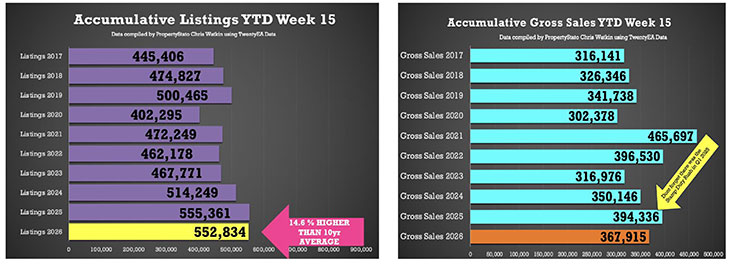
These high listings are transferring into sales, albeit not at the same rate as we saw this time last year with the Stamp Duty Land Tax holiday coming to an end, or during the heady days post people being able to move once the market opened up post the pandemic. But still very healthy figures versus pre pandemic days.
According to Zoopla:
“Supply is growing with the number of homes for sale up 6% year-on-year.
“While you may be seeing fewer casual enquiries hitting your inbox, the sales pipeline is heavily supported by committed movers. The buyers currently active in the market are highly motivated, and they’re often sitting on significant equity, utilising cash (around 25% of current sales) or moving forward with pre-agreed mortgages.”
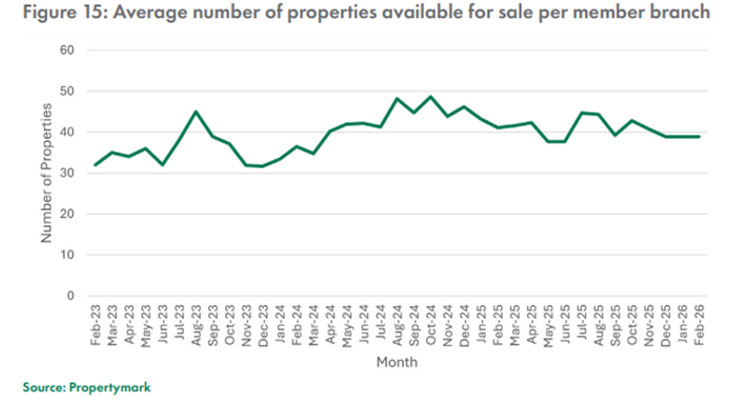
As far as stock per agent, both Propertymark and Rightmove are seeing less stock per branch than a year ago, but “the number of homes currently for sale is only 1% behind 2025, and 13% higher than in 2024.”
 Meanwhile, Propertymark’s report backs up the information from Rightmove showing stock levels remain stable over time and slightly higher than they were in 2023 and 2024.
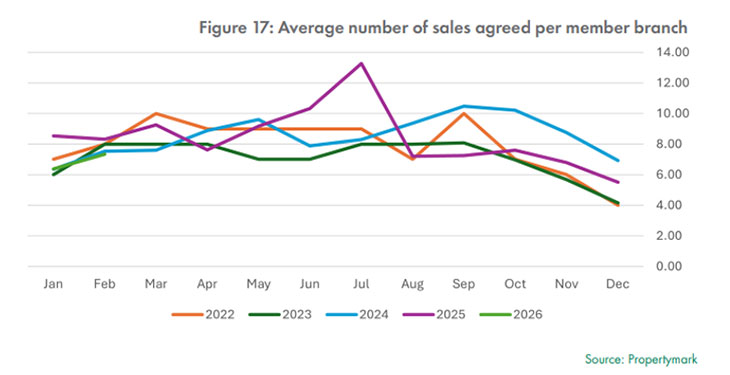
Finally, from a sales agreed perspective (although this is for February, not March when the US-Iran War started) sales agreed were looking quite healthy.
Time it takes to buy and sell
The tough part of the market, though, is the time it takes to sell a property and it’s really important that this is communicated to buyers and sellers from the outset to help manage expectations and help make sure sales are easier to hold together.
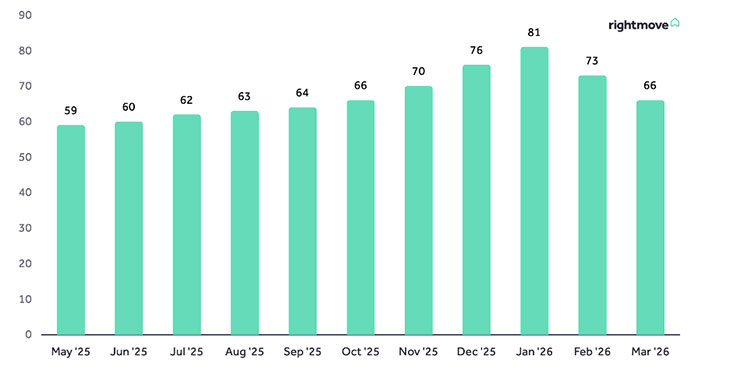
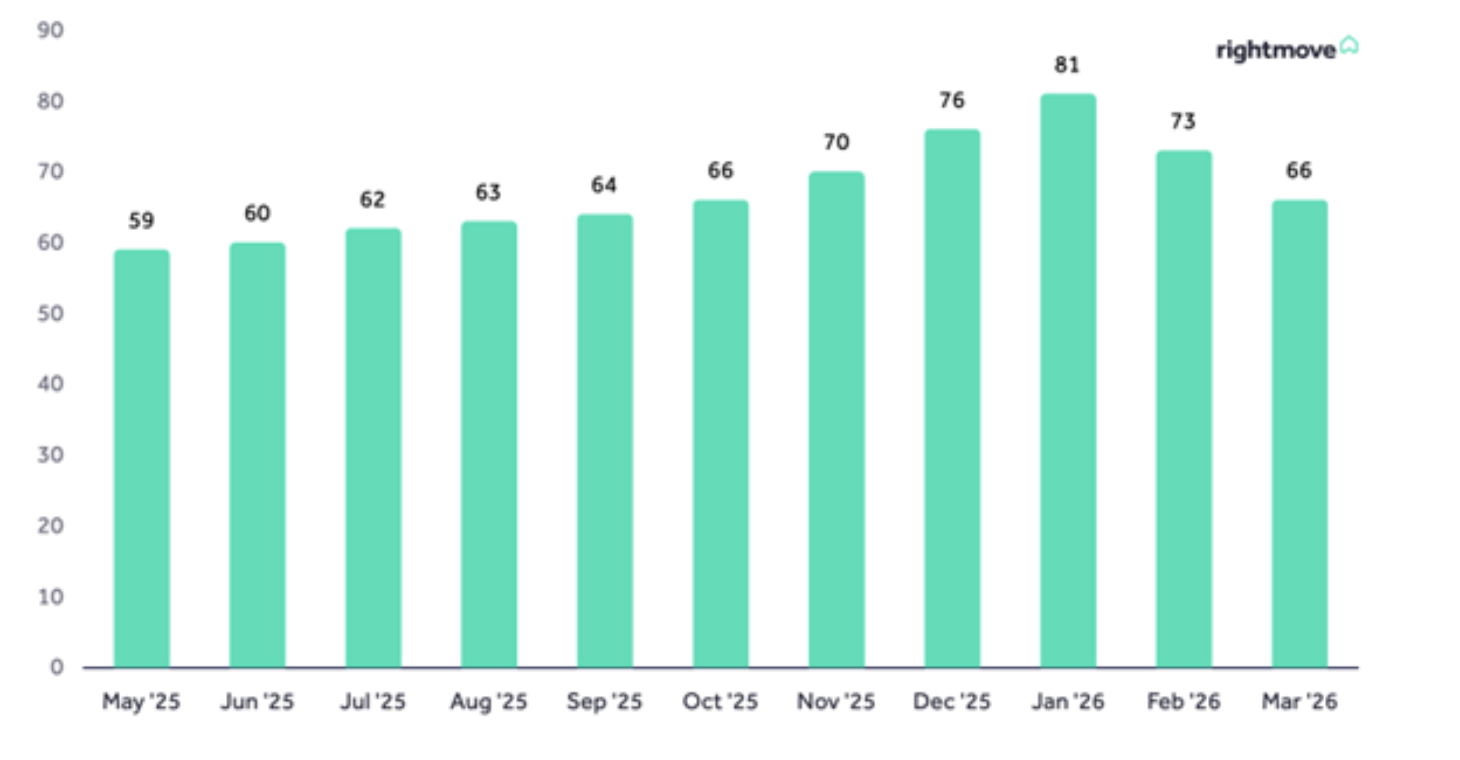
According to Rightmove: “The monthly average number of days it takes for a seller to secure a buyer in the UK. In January 2026 this was 81 days, compared with 59 days in April and May of 2025. This average gives an idea of how active the property market is, and how accurately people are pricing their properties. For example, properties that are priced too high will usually take longer to secure a buyer.”
Overall, although it’s taking a bit longer to secure a buyer, it isn’t far off the average seen in 2025.
The information from the chart from Propertymark which tracks offer to acceptance though, is a stark reminder of how much harder it has become to keep sales together and complete a home move. Having worked for seven years to try and help improve the buying and selling process, one thing I know is that delays are often blamed on agents, lenders and the legal profession.
However, these professions have had to deal with increasing demands for information, from fraud and environmental checks to ongoing economic shocks and even a worldwide pandemic.
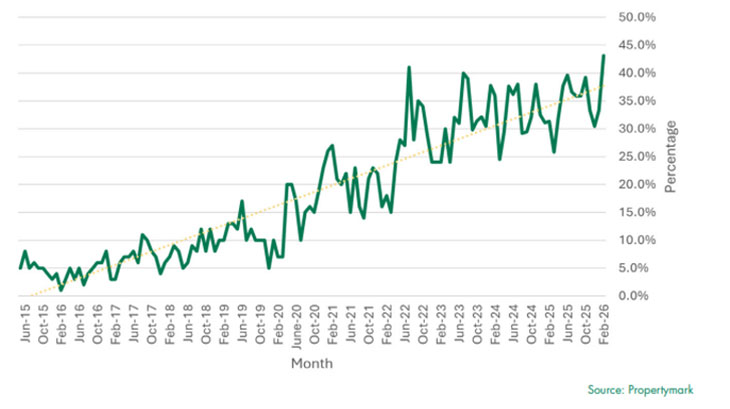
What’s clear is there are far more factors influencing longer transaction times than the efforts of the professionals who I see working incredibly hard every day to keep sales progressing.
Hopefully the awaited consultation response from the Government on buying and selling reform will help in the not too distant future to bring this timing down.
For those agents who are moving people a lot quicker than these averages, this is something that it’s worth letting people know about and highlighting on market appraisals as we all know the shorter the time it takes to buy and sell, the less likely the sale will fall through.
