Foxtons revenue and profits hit by Middle East and rental reforms
The sales and letting market has been "challenging," so far this year, says Foxtons boss Guy Gittins.
The Renters’ Rights Act, domestic political uncertainty, and Middle East tensions pushed Foxtons’ group revenue down in the first half of the year, the estate agency giant’s interim results show.
Foxtons described the half-year market as “challenging”, reflecting materially lower volumes in the sales market and short-term volatility in the lettings market following the introduction of the Renters’ Rights Act.
Group revenue was down 3% to £83.7million.
Sales revenue fell 13% annually, although this compares to the busy period of the first half of 2025 which included the stamp duty rush.
Against a challenging backdrop of continued sales market weakness and short-term lettings volatility, we continued to execute on our strategy.”
Foxtons said: “Market transaction volumes decreased, as domestic political uncertainty and conflict in the Middle East contributed to weaker consumer confidence and higher than-expected interest rates.”
Lettings revenue was flat, reflecting growth in Build to Rent and a £1.7million contribution from acquisitions.
This was offset by a £3million reversal of previously recognised, contractually due revenue from tenant-led tenancy terminations following the introduction of the Renters’ Rights Act.
In some good news for the brand, financial services revenue was up 20%, underpinned by stronger refinancing volumes, with operational upgrades driving growth in ancillary revenues and supporting resilient purchase mortgage revenue.
Profit down
Overall, adjusted operating profit was down 29% annually to £8.9million for the first half of the year.
Looking ahead, Foxtons said tenancy terminations have moderated since May and are now expected to stabilise.
The update said: “The Renters’ Rights Act is expected to create growth opportunities over the medium-term, by driving a flight to large, quality agents, increasing adoption of ancillary services, linking revenues to inflation through new annual rent reviews enabled under RRA, and accelerating consolidation in the sector.
In sales, Foxtons said buyer activity continues to be held back by weak consumer confidence and higher interest rates.
It said: “We are continuing to optimise the operating model for these lower-volume markets.”
Full year 2026 adjusted operating profit is expected to be in the range of £17million to £19million.
CHALLENGING BACKDROP
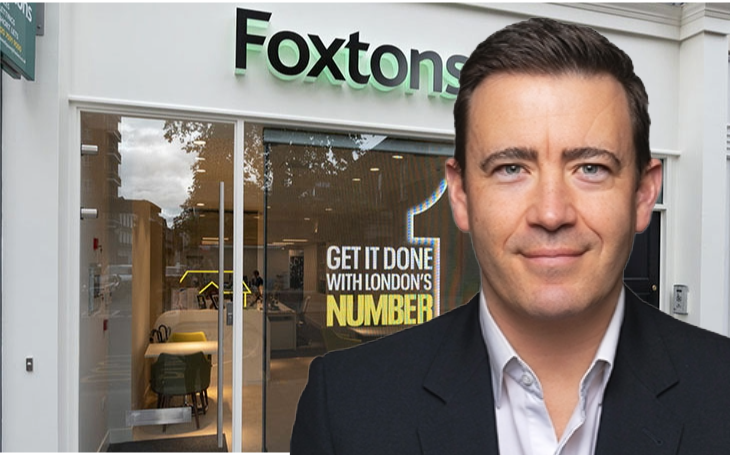
Guy Gittins, Chief Executive Officer of Foxtons, (pictured), says: “Against a challenging backdrop of continued sales market weakness and short-term lettings volatility, we continued to execute on our strategy, with our long-term focus on accelerating growth in non-cyclical and recurring lettings revenues underpinning performance through these headwinds.
“In sales, we’ve taken action to align the business with market conditions and support performance at lower transaction volumes. With 2026 likely to prove one of the lowest years for London transaction volumes on record, we urge the new cabinet to prioritise Stamp Duty reform, which remains the single biggest barrier to home moving – for first-time buyers trying to get on the ladder, for growing families and for those looking to downsize.
We urge the new cabinet to prioritise Stamp Duty reform, which remains the single biggest barrier to home moving.”
“While the Renters’ Rights Act has created a period of transition for the sector, we are already seeing encouraging early benefits, including increased demand for property management services and continued growth in Build to Rent. The underlying performance of our lettings business remained strong and we continued to execute against our growth strategy, expanding into two new complementary, high-growth markets through acquisition.
“We remain confident the Act will strengthen Foxtons’ long-term growth opportunity by increasing demand for professional agency services and accelerating industry consolidation. This is creating attractive opportunities to expand our footprint and increase market share, and we intend to build on the momentum of recent acquisitions through a pipeline of bolt-on opportunities, complemented by targeted organic investment. With our strong brand, scalable platform and a clear growth strategy we remain well positioned to create long-term value for shareholders.”