
John Lewis pulls plug on housing market plans
Retail giant says higher borrowing and construction costs have forced a retreat from residential development.

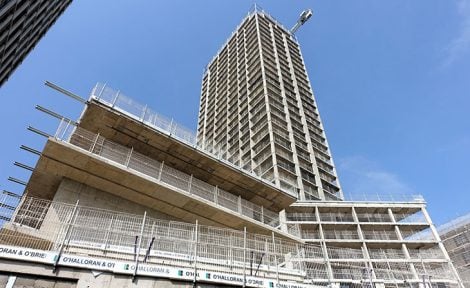
The John Lewis Partnership is closing its housebuilding business and scrapping plans for around 1,000 rental homes, five years after launching a push into build-to-rent as part of a wider diversification strategy.
The employee-owned retailer said it would withdraw from residential development and property management after existing contracts covering four buildings come to an end, citing “a fundamental shift in the economic conditions that underpinned the venture when it launched”.
Our rental property ambition was based on a very different financial environment.”
A spokesperson said: “Our rental property ambition was based on a very different financial environment: one with more stable investment returns, lower borrowing costs, and more affordable costs to build homes.”
The news is likely to come as a disappointment to ministers as they struggle to deliver on their pledge for 1.5 million new homes.

John Lewis first entered the sector in 2020 under former chair Dame Sharon White, with plans to build 10,000 build-to-rent homes over a decade as part of efforts to generate more income outside retail. Schemes progressed at sites in Bromley, West Ealing and Reading, while the business also took on management of four residential buildings owned by fund manager Aberdeen.
Zero profit
However, the housing venture did not generate a profit. The partnership said trading conditions in London’s new homes market had become increasingly difficult, adding that housing development in the capital had collapsed and that other developers faced similar pressures.
Industry figures say the decision reflects wider market challenges, including higher interest rates, construction inflation, planning delays and tighter regulation.
According to the BBC, Waitrose stores at affected development sites will continue to trade as normal during a “responsible transition out of the business”.




Given this was so far out of their core business, it is not a surprise that they found it hard work.
The Government’s idea that Build to Rent is easily going to replace small private landlords driven out of the PRS by the RRA and EPC C by 2030 is going to run slap-bang into the realities described in this story. If the deep pockets of JLP can’t make a profit or look through the current difficulties and see any reason to continue investing, you can bet other BTR providers are having the same thoughts and will be making similar decisions.
House- and flat-building in much of the UK has simply become too expensive, too loaded with taxation (S106 and CIL in particular), too burdened with expectations that the new-build industry will provide most of the country’s new social housing at zero cost to the Government, *and* max out on insulation requirements that don’t apply for the vast bulk of existing housing, *and* sort out the country’s biodiversity problem, again with no expectations on existing householders – the list goes on and on, and property development and new housing delivery is grinding to a crawl.
It’s time the Government stopped making the housebuilding industry pay for social housing, and invested itself instead, as used to be in the case between 1945-1979-ish,