
Property industry applauds Chancellor’s Stamp Duty scrapping proposal
Several high profile figures have applauded the Chancellor's plans to overhaul the property tax system and target wealthier home owners.
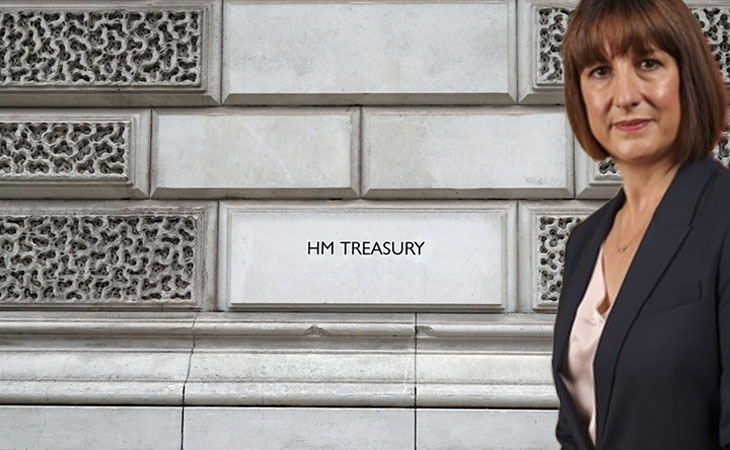
The shock news that Chancellor Rachel Reeves (main image) is planning to scrap Stamp Duty and replace it with a property tax paid by sellers has garnered much support within the property industry, which has long said the current levy stops people moving home.
Following the leak on Monday leading industry figures have echoed what many others are thinking about the mooted changes, which would effectively ‘tax the rich’ by scrapping Stamp Duty in favour of a national property tax levied when primary homes valued at over £500,000 are sold. There are also proposals being considered for a local property tax to replace the current council tax system.

Timothy Douglas, Head of Policy and Campaigns at Propertymark says: “Discussions around reforming Stamp Duty are welcome because it is a significant barrier to moving and getting people on the housing ladder.
“What’s key is that any reforms are evidence based and support first time buyers, second steppers and those looking to right size.
“Economic growth can come from reducing the financial burden of Stamp Duty which we know increases the number of transactions, but any changes must work alongside differing property prices and the dynamic nature of our housing markets across the country.”
Other industry reaction
The regional agent: Ben Quaintrell, CEO of My Property Box

“Stamp Duty has long been viewed as an unfair tax that can act as a barrier to homeownership, particularly for first-time buyers and growing families looking to move up the property ladder,” he says.
“It distorts the market by adding a heavy cost burden at the point of purchase, which can discourage people from moving. Replacing it with a fairer system could breathe new life into the housing market.”
The portal expert: Colleen Babcock from Rightmove

“Stamp Duty is a huge barrier to movement from first time buyers to downsizers,” she says.
“We recently called for an increase to the zero rate thresholds at which first-time buyers and home-movers start paying stamp duty, and backed a suggestion from one of our agent partners that stamp duty should be paid over a longer time period.
“If changes are brought in that make home-moving genuinely more affordable for people then we would welcome them, but without firm details it remains to be seen if a different type of taxation would leave property owners better or worse off in the long run.”
The national agency boss: Dominic Agace, Winkworth
 “Stamp duty reform is welcome. It is dead money in a transaction, and it limits moving home, exacerbated in the SE of England by the Osborne reforms in 2014,” he says.
“It makes sense to change it to a tax paid for by a seller as this will help move it to those realising gains, which on the face of it makes sense and could see an increase in property transactions and spur prices on.”
The London agent: Jeremy Leaf

“We are very much in favour of incorporating this tax as a substitute for stamp duty as the latter is a tax on moving,” he says.
“The idea is to try and encourage growth; as a country, we want to see improved job and social mobility. Stamp duty stops that, particularly among those on the margins, such as first-time buyers, as it is such a big investment.
“We can see the advantage in taking tax from people who have benefited from an increase in property values but the fear is that it is going to impact the vulnerable in particular.
The property laywer: Heather Powell, Blick Rothenberg

“If Stamp Duty Land Tax (SDLT) is replaced by National Property Tax, a tax paid by the seller on the sale of a home worth more than £500,000, the costs of buying a property will significantly reduce for first time buyers whose first home costs more than £300,000 and families working their way up the property ladder,” she says.
“This is likely to make it easier to move house, and thus help create a more mobile workforce, able to relocate to areas where there are jobs.”
“However the imposition of a selling tax, at a rate still to be set by the Government, is a massive disincentive for anyone looking to downsize, especially if they are managing their estate to ensure that they will not have a liability to Inheritance Tax. Why would parents volunteer to pay a Property Tax on the sale of their property, and reduce the legacy they leave their children?”
The dissenting voice: buying agent Craig Fuller

“News that Rachel Reeves is considering abolishing stamp duty and replacing it with an annual levy on homeowners, while also introducing capital gains tax on people’s main residences, is complete madness.
“It would paralyse and depress the property market, discourage people from moving, and unfairly penalise those whose homes have simply risen in value over time.
“The government should instead be adjusting the brackets to stamp duty at the lower end of the market, as it was previously, and reintroducing multiple dwelling relief. That would stimulate transactions, support first-time buyers, and restore confidence at the foundations of the market.
“However, with the market having been more challenging over the past couple of months, even the rumour of these kinds of changes could be enough to shift behaviour.
“We have offers on the table that remain unaccepted due to hesitation, and I think this may prompt more people to say ‘let’s just get on with it.’ The uncertainty alone can be enough to push people into making decisions.”




I am amazed that so many property experts are in favour of this new tax and have not understood the reasoning behind it.
Rachel is broke.
She is desperate for cash and lots of it!
She’s been looking around, but so far every attempt has failed.
Now she’s stumbled on the idea of a Property Sales Tax and suddenly has a visions of billions of £££ filling her Treasury coffers
Of course, disregarding the economics of such a tax which would increase demand for homes without increasing supply, this could have some merit, but what she is doing is creating a massive tax raid on home owners.
It will NOT be a neutral tax.
I.E. She will not simply replace the money raised from Stamp Duty to the same amount from her Sales Tax. That would defeat her objective. There will be a huge increase in tax income to the Government paid for by home owners.
That is, of course, if home owners fall into line and “cough up” and put their homes up for sale.
This is a desperately unpopular Government. Already there are serious signs of splits and by the time the legislation goes through 2029 will be drawing close.
Should Reform, or some form of coalition of the right come into power with a policy to scrap this tax when it becomes clear how many voters will be affected. And REMEMBER its being touted as coming in at £500K but everyone knows that once a new tax is created, the lower levels are ALWAYS lowered and the rates ALWAYS increased, Sellers who do not need to sell will simply hold back and all the Estate Agents currently rubbing their hands at the prospects of hordes of new buyers coming into their offices, will find fewer and fewer instructions.
This is what happened in the 1970s, for those estate agents as old as me can remember. Chancellor Dennis Healy brought in his new Development Gains Tax – 40% if my memory recalls, – a sellers tax on land sale. To ensure sellers did not hold on to their land until a change of Government came in and repealed it, they created The Land Commission to compulsorily acquire it.
Result? An absolute disaster, a hugely expensive bureaucratic monster developed, Land owner’s lawyers and surveyors ran rings around the civil servants. hardly any tax was raised and as expected the incoming Government scrapped it.
Faced with a huge sellers tax to pay to the Treasury, many home ownerscould simply delay their decision fo a couple of years with the prospect of repeal, especially if the opposition see repeal as a vote winner.
Fewer top end properties coming to the market trickles down to the first time buyers, where shortages will quickly develop.
With the prospect of estate agents commissions collapsing.
To summarise -This “reform” is simply a HUGE TAX RAID” on the property market
It would only help the property market if the tax raised was neutral and a huge number of new properties were built to meet the expected increase in demand.
Well said Jeremy ! Well said Gromit !
Let’s be careful what we wish for , let’s wait for the detail .
If someone is looking to sell their house at £500,000 and this tax is introduced, the sellers will merely add the tax to the asking price. This happens at the end of every stamp duty holiday now. Effectively the buyer is still paying the tax via inflated sales price rather than calling it a tax!
Why can intelligent people not see this tinpot government for what they are? They hate success, wealth, anyone who isn’t a scrounger, anyone that owns anything; their aim is to convert the country into a socialist state and then retire on their gold plated pensions!
…. to be replaced with something that will be worse and more costly.
Remember that this Government does not work for the benefit of the people.