Burnham’s win – property industry reaction
Ex-Mayor has overseen a major housebuilding programme in Manchester, but there are questions about how any new initiatives would be funded.

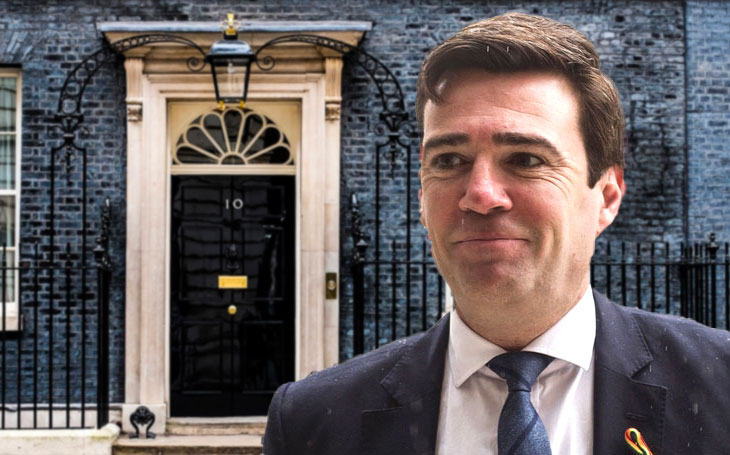
Andy Burnham’s resounding victory in the Makerfield by-election has given him a clear run at becoming Britain’s next Prime Minister, and that could have significant implications for the property industry.
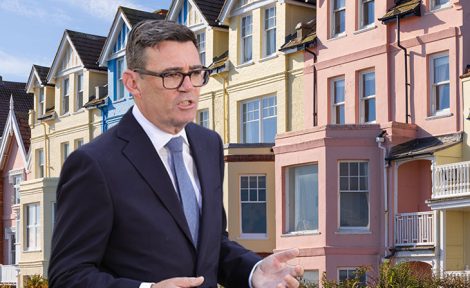
Burnham (main picture) is a reformer with an extensive track record in housing and property. During his mayoralty, Greater Manchester has attracted billions of pounds of regeneration and infrastructure investment and become one of the Britain’s strongest-performing housing markets.
Its house prices have risen 63% in the past decade, compared to London’s 7%, according to Rightmove.
Infrastructure investment
A regular theme for Burnham has been combining infrastructure investment with housing development, which he claims can unlock sites for new homes and make regeneration schemes viable.
This approach has already been successfully applied to projects such as Victoria North and Mayfield, which have delivered substantial numbers of new homes. It is also why he recently pledged to reinstate the Manchester leg of HS2.
He is also a strong supporter of devolution, repeatedly calling for city regions to have greater control over housing delivery, planning decisions, the building of social housing and regeneration funding.
Rgearding the private rented sector, Burnham – who is a landlord himself – , increased landlord fines by 43% while he was mayor. Controversially, he also called for rent controls.
At the same time, he has backed grants of up to £30,000 to help landlords improve energy efficiency and supported the city’s Good Landlord Charter.
Property taxation is another area of potential change. Burnham has shown interest in proposals to replace Council Tax and Stamp Duty with a Land Value Tax.
In addition, he has repeatedly backed plans to end the sale of new leasehold homes and strengthen protections for leaseholders.
In hock to the bond markets.”
Meanwhile, Burnham has previously unsettled the financial markets when he suggested Governments should not be “in hock to the bond markets”.
He has since sought to build bridges with them and, in the past, has used a combination of private and Government money to fund his schemes.
Burnham, however, is not yet Prime Minister, and a prolonged leadership battle could result in a period of uncertainty for both the economy and housing markets.
Industry reacts

Verona Frankish, Chief Executive of Yopa, says: “If Andy Burnham were to become Prime Minister, the property industry would likely see a strong focus on increasing housing supply and improving affordability. A significant boost to housebuilding and planning reform could create greater choice for buyers, particularly in areas where demand has consistently outstripped supply. Over time, that could help moderate house price growth and make homeownership more accessible, especially for first-time buyers.
“Burnham has also long championed regional growth and devolution. Greater investment in infrastructure and local economies outside London could provide a substantial boost to housing markets in major regional cities such as Manchester, Birmingham, Leeds, and Liverpool, supporting both demand and development activity.
“That said, political leadership is only one factor influencing the housing market. Interest rates, wage growth, economic confidence, and the availability of homes all play a far bigger role in determining property values and market activity. The key question would be whether a Burnham government could successfully combine higher housing delivery with stronger regional economic growth. If achieved, that could support a healthier, more balanced housing market, characterised by increased transaction volumes, sustainable price growth, and greater opportunities for buyers across the country.”

David Alexander, Group Executive Director of LRG and CEO of the Acorn Group, says: “Whether Andy Burnham becomes Prime Minister or not, the priorities are to build more homes, reform Stamp Duty, support aspiration and create the conditions for growth.
“The country does not need political slogans; it needs practical leadership that delivers results. If we can increase housing supply, remove barriers to moving and restore confidence, the benefits will be felt across the entire economy.”

Patrick Bullick, Former Chairman, NAEA London Region, and Owner, Stanley Property London, says: “If Burnham does manage to secure the Labour leadership and step into the role of Prime Minister, he has promised a ‘new path’. However, it is unlikely the direction of travel will be one that businesses and the taxpayer will enjoy.
“Hopefully, Andy’s left-wing disposition will mean greater expenditure on infrastructure and housebuilding. This sort of spending can drive growth, which is supposed to be this Labour Govt’s primary objective or was that the defence of the realm?”

Sián Hemming-Metcalfe, Operations Director at Inventory Base, says: “Burnham’s mayoral record suggests this is not a politician who will regard the Renters’ Rights Act as the endpoint. Greater Manchester saw a 43% rise in landlord fines under his tenure. He has backed compulsory purchase powers for properties failing decent homes standards, and in 2023, he wrote to the then Housing Secretary demanding rent control powers, explicitly naming letting agents as participants in driving rent increases.
“The risk for the sector is not any single policy but the cumulative effect of sustained intervention arriving on top of legislation that is still bedding in. Stronger enforcement can improve standards, but it does not increase supply. Rent stabilisation measures may carry political appeal, but the international evidence is consistent: without a parallel commitment to increasing housing stock, they tend to reduce availability over time. For letting agents, inventory providers, contractors and the wider property supply chain, the concern is what multiple interventions in relatively quick succession do to the volume and confidence of an already contracting market.
“Where Burnham’s agenda does align with the industry’s long-term interest is in his commitment to large-scale social and affordable housing. He has called for half a million council and social homes by the end of the decade and argued that the entirety of the government’s affordable housing funding should be directed toward social rent. If that ambition translates into delivery, it addresses the underlying supply deficit that no amount of private sector regulation can resolve on its own.
“The industry has demonstrated it can adapt to higher standards and greater accountability. What it needs now is policy certainty and a relentless focus on delivery. Because, regardless of who occupies Number 10, the housing crisis will not be resolved through regulation alone. It will be solved by building, maintaining and improving enough homes to meet demand.”

Jeremy Leaf, north London estate agent and a former RICS residential chairman, says: “Aspiration for the top job is one thing – but what is said on the hustings may not be as easy to implement when taking office.
“For a start, further political uncertainty will not be good for confidence, so please make it quick if any change is implemented and perhaps limited to the summer period, which is generally quieter for the property market anyway.
“At present, most policy proposals appear to be speculative, lacking hard data or solid commitment. However, based on Burnham’s Greater Manchester track record, we expect more control by local government and investment in affordable homes.
“He has also been a supporter of regulation of the private rented sector, but the present Government’s efforts to date have not encouraged new investment and prompted the reverse, with many landlords selling and not being replaced fast enough by larger groupings which might have otherwise professionalised the sector.
“Rent controls, as suggested, will have a similar effect – they may be popular but will hardly encourage the larger scale investment which we are crying out for.
“With regard to a Land Value Tax, recent history includes many attempts at trying to capture ‘windfall’ increases in land value partly attributable at least to public investment and/or planning, although sadly most have failed. The hardest nut to crack is arguably setting the tax at a rate which does not discourage development while at the same time incentivising the release of further opportunities.”

Mark Chick, Director, ALEP, and Senior Partner at leasehold specialist Bishop & Sewell LLP, says: “On leasehold reform, Burnham has actively backed the national Labour government’s platform to ban the sale of new leasehold flats and houses, repeatedly highlighting the need for a fairer system that better protects leaseholders. He has also worked closely alongside campaign groups and individual residents who have been impacted.
“While Burnham hasn’t said anything explicitly regarding leasehold reform during the by-election campaign, it can be expected that were he to become PM, the policy direction would remain on course. Some sector commentators have suggested that speeding up the process could give him a major positive in his first, crucial, 100 days, but that will depend on whether and when he becomes PM, and where the legislation is in its timetable when that happens.
“What isn’t in doubt is that housing is, and has been for a while, a priority for Burnham and during his time as Mayor of Manchester, he has implemented many significant policies.
“It is therefore likely that this priority will not change if he goes through the doors of Number 10, and that the housing sector in the UK could be in for some significant changes over the coming years.”

Vanessa Hale, Chief Executive of real estate industry body Real Estate:UK, says: “Andy Burnham’s Makerfield win means that we are now heading for a Labour leadership contest over the summer.
“This further political uncertainty will do little to unlock the domestic and global capital required to build the homes, infrastructure and economic growth that the country desperately needs.
“With viability challenges meaning that building activity across the country is stalled, it is imperative that we move as quickly as possible back to a more stable, predictable policy environment so that we can work together across the public and private sectors to support delivery of the Government’s commitment to deliver new homes, grow the economy and revitalise town centres.”

Lawrence Turner, Director of planning consultancy Boyer, says: “A Burnham premiership would likely mean a more hands-on approach to planning than we’ve seen under either the current Labour leadership or recent Conservative governments.
“There is little doubt that housing delivery would still be a major priority, but the focus would shift towards what gets built and who benefits. Developers could find themselves working in a system where social rent, affordable homes, better public transport links and wider community benefits carry much more political weight when it comes to planning decisions, local plans and funding.
“Perhaps one of the biggest changes would be the continued transfer of power away from Whitehall and towards mayoral combined authorities and local government. For developers, this increases the importance of understanding local and regional political priorities.
There may also be implications for land values and development viability.”
“Planning decisions may increasingly be shaped by city-region growth strategies, regeneration frameworks and transport investment, taking a stronger role in deciding where and how housing growth happens.
“There may also be implications for land values and development viability. Burnham has previously supported council tax reform and shown interest in ideas like land value taxation. While there’s little detail yet, any move to capture more of the uplift in land value for the public sector would be watched closely by landowners and developers.
“Overall, the challenge for the development sector will be navigating a more politically driven planning system, where local priorities, devolution and greater public sector involvement play a growing role in shaping what gets built and where.”