
Bank of England ratesetter backs rate hike
Raising the Bank Rate would be less risky than allowing inflation to become entrenched, says MPC member Megan Greene.
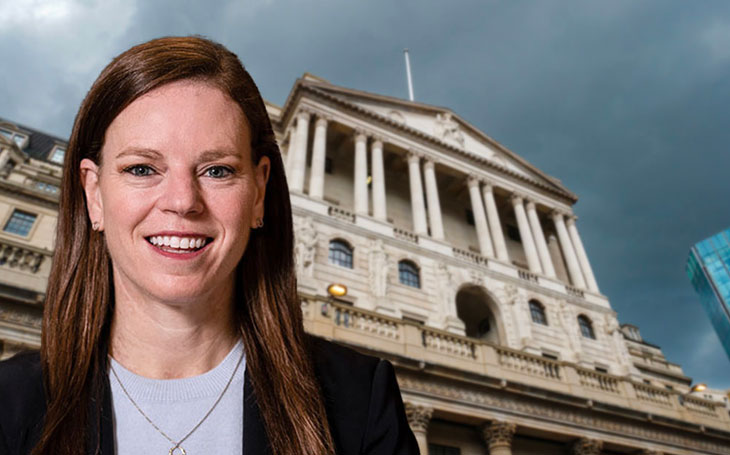
The likelihood of an interest rate rise by the Bank of England’s has increased after ratesetter Megan Greene gave her backing to calls for higher borrowing costs.
Greene (main picture) , a member of the Bank of England’s Monetary Policy Committee (MPC), says the “case for hiking rates grows as the conflict wears on” and believes “a tightening in monetary policy over the next few weeks or months may be necessary”.
Decision looming
Her comments come ahead of the Bank’s next interest rate decision on 18th June.
Greene told The Times that she considered voting for a rate rise at the MPC’s last meeting, when rates were left unchanged on an eight to one vote. Huw Pill, the Bank’s Chief Economist, was the only committee member to back an increase.
She says: “The risk of acting, even if inflation proves to be less persistent, is less severe than the risk of failing to act.”
There is a risk that households and firms come to see this as a ‘new normal’”.
She adds: “Inflation has exceeded our target in seven of the past ten years. Should inflation remain above target now, there is a risk that households and firms come to see this as a ‘new normal’ and adjust their behaviour accordingly. This would ultimately require an even bigger monetary policy response to bring inflation sustainably to target.”

Bank Governor Andrew Bailey has struck a more cautious note, saying that higher market borrowing costs had already “in effect tightened policy”, giving policymakers time to assess the impact of the conflict before making their next decision.
Concerns about rising inflation have already pushed up mortgage rates, and the housing market has slowed.
Nationwide reported the first monthly fall in house prices this year in May, with its Chief Economist Robert Gardner blaming higher energy prices and rising market interest rates for the “loss of momentum”.



Although mortgage rates will be nowhere near the 15% seen in 1989, given the mortgage value to income in 2026, perhaps any increase will trigger a similar 90’s crash..