
REACTION: Budget reveals mansion tax and higher landlord income tax
Rachel Reeves has today revealed a much-expected mansion tax and also higher income tax for landlords during her parliamentary statement.

The Chancellor has revealed during a noisy and sometimes chaotic announcenent two additional property taxes for the housing market within her Autumn Budget statement.
This includes a ‘super council tax’ for homes worth more than £2 million, which some have called a mansion tax, alongside higher taxes for landlords earning money from properties. HMRC says the mansion tax will mean a ‘£2 million mansion doesn’t pay less tax than a family home’.
This tax is expected to raise a further £400 million for Government coffers, while an extra 2% tax on property, dividend and savings income will raise some £2.1 billion.
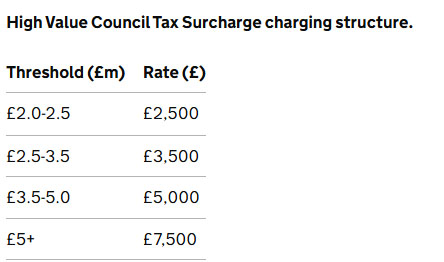 From April 2028, owners of properties identified as being valued at over £2 million will be liable for a recurring annual charge which will be additional to existing Council Tax liability. Properties above the £2 million threshold will be placed into bands (see right) based on their property value. Charges will increase in line with CPI inflation each year from 2029-30 onwards.
This will be bad news for prime estate agencies, who already face a tough year as Government measures to reform ‘non-dom’ tax rules have seen many foreign buyers rent rather than buy particularly in London.
Unhappy
Landlords including the NRLA are also be unhappy that they face more taxes following increased recent increases to Stamp Duty, and the end of tax relief on mortgage interest payments for buy-to-let mortgages.
Saying she wanted the ‘wealthiest to contribute the most’ and that ‘those with the broadest shoulders should pay their fair share’ she said a landlord earning £25,000 a year from property paid £1,200 less in tax than a comparable tenant on the same income.
Reeves said this imbalance was down to the different National Insurance rates paid by landlords and tenants but, rather than fix that problem, has raised the basic rate of income tax for landlords by 2%.
From April 2027, the property basic rate will be 22%, the property higher rate will be 42% and the property additional rate will be 47%. It will apply to landlords in England, Wales and Northern Ireland.

Conversative leader Kemi Badenoch said in reference to the extra income tax for BTL investors, following Reeves’ speech: “Hiking tax on landlords will only push up rents and push landlords out of the market – the people who will suffer are the tenants.”
Industry reaction – mansion tax
Claire Reynolds, National Head of Sales at Strutt & Parker

“The speculation alone around the Council Tax Surcharge in this week’s Budget meant we saw a restructuring of a number of deals around the £2 million mark; transactions reshaped, lotting reconsidered and main dwellings agreed at £1,999,999,” she says.
“Yet the reality of today’s announcement tells a very different story. We’ve been handed a landscape that’s far more encouraging and stable than expected.
“It is a figure that will be absorbed in the wider running costs of a home, rather than something that will dictate purchasing decisions.
“Also, compared to other global destinations the surcharge feels manageable – in America’s Palm Beach, for example, annual property charges can run into the millions.
“Confidence doesn’t usually return overnight, but this feels different. We’ve already seen instant signs of renewed momentum – several enquiries have come in today from people keen to give the green light on their sale or purchase.
Colleen Babcock, Rightmove’s property expert

“The property market needs less taxation not more, to encourage and enable movement. Today’s announcement of a Mansion Tax could lead to some distortion at the top end of the market, particularly as the implementation date draws closer. It may also have an impact across the rest of the market,” she says.
“Even if some wealthier buyers are unfazed by an additional cost, we could see some fall-throughs as others in this price bracket reconsider the long-term implication of their purchase.
“Sellers of homes priced very close to the £2 million mark may need to ask for £1.99 million to avoid putting off potential buyers. And retired homeowners who benefitted from house price inflation may face the difficult decision of whether they can afford the annual upkeep of a £2 million home.”
Iain McKenzie, CEO of The Guild of Property Professionals

“The introduction of a mansion tax on properties valued at £2 million and above from 2028 will be met with concern by many,” he says.
“It’s a part of the market that plays an important role in overall economic activity, and any intervention must be approached with caution.
“Above all, what the market needs now is stability and a clear pathway that encourages buyers and sellers to move forward with confidence. We’ll be watching closely to see how today’s announcements translate into real-world activity over the months ahead.”
Lucian Cook, Savills head of Residential Research

“After what must have been the most prolonged exercise in kite flying in the run up to a Budget, the introduction of an annual tax surcharge for properties worth over £2 million, at levels somewhat lower than many will have feared, is probably the least worst outcome for owners of prime property,” he says.
“And with the uncertainty in the run up to the budget having already impacted prices, the impact on the market will be much less severe than it would have been in the event of an open-ended mansion tax.
“Over the longer term the measures are likely to act as slightly greater incentive for older home owners to downsize and, in some cases, heavily mortgaged owners of high value homes to move to a less valuable property pushing some demand out of London into the commuter zone.
All of this, combined with the fact that some of the risk at the top end of the market has already been priced in, is likely to mean that, overall, any further impact on prices is relatively modest, although it is likely to be a further drag on the recovery of the prime market.
“However, it is likely to have a disproportionate impact on second home markets which are already dealing with an increased Stamp Duty surcharge and the doubling of council tax in most cases.”
Jason Tebb, President of OnTheMarket

“This will hit London and the South East hardest, where 80% of £2 million+ homes sit,” he says.
“The market is now being faced with distorted buyer behaviour, price stagnation at the top end, and a ripple effect across the wider market. Ironically, it could even undermine the very tax revenue it aims to raise as transactions drop in response.
“Those who will be hit hardest are retirees or long-term owners who bought their homes decades ago. Their property value may have doubled or trebled, but their pension income has not. They could now be facing tax bills that exceed their disposable income.
“The market impact may well be a “ceiling” effect just below the £2 million mark with sellers forced to reduce asking prices to make the property attractive to buyers avoiding the surcharge. This was the effect of historic Stamp Duty “ceilings” in which properties above £250k saw a straight jump from 1% to a 3% rate, so buyers were offering £249,999 on properties on the market for as much as £270k.
“Current Council Tax bands remain based on valuations from the early 90s (1991). To implement this surcharge, the Valuation Office Agency must revalue high-end properties in the context of today’s market. This is complex, subjective, and likely to lead to a massive spike in appeals and litigation from owners challenging their valuations to get under the £2 million threshold.”
Matthew Thompson, head of sales at Chestertons

“We could see homeowners rushing to sell their home before the new tax takes effect but buyers will think twice to purchase a home that will be subject to such a levy in the future,” he says.
“This could lead to more high-value properties standing empty or force sellers to drastically reduce their asking price.”
Jennie Hancock, founder of buying agency Property Acquisitions
 “There’s no doubt this measure will have a significant impact on the country homes market in the South East. Properties priced between £2 – 4 million are already struggling – I’m seeing discounts of as much as 25% for beautiful country houses that buyers would have been queuing up for just three or four years ago. Even with significant price cuts, there’s very little genuine interest,” she says.
“I expect this to worsen, creating a two-tiered market in which demand for higher-value properties falls even further, while the £1 – 1.7million price bracket becomes more buoyant.
“The one silver lining is that the tax won’t come into effect until 2028, which leaves a decent window for downsizers to make their move – and I expect many will, even if they have to take a hit on the price. Retirees on fixed incomes won’t want the burden of an additional annual bill they haven’t factored into their long-term plans.”
Ric Iannucci-Dawson, CEO of Alto

“This Budget signals a meaningful shift in how high-value homes will be taxed, and while the changes don’t come into force until 2028, the impact on confidence will be felt much sooner,” he says.
“Agents operating in the £2m-plus bracket should expect increased questions from clients around valuations, pricing and future costs, especially as council-tax revaluations begin to bite.
“For the wider sector, the message is the same: clarity and preparation matter. Landlords and homeowners will look to agents for guidance, and the agencies that use data well, to model scenarios, track valuations and explain what the changes mean in real terms, will be the ones who build trust. Today reinforces the need for modern tools that help agents give clearer, faster answers. It’s how the best agencies will stay ahead.”
Industry reaction – extra landlord tax

Ben Beadle, Chief Executive of the National Residential Landlords Association
“Despite claims of tackling cost of living pressures, the Government is pursuing a policy that the Office Budget Responsibility has made clear will drive up rents,” he says.
“Almost one million new homes to rent are needed by 2031. But this Budget will clobber tenants with higher costs while doing nothing to improve access to the homes people need.”
Eddie Hooker, CEO, mydeposits
 “As expected Reeves’ Budget goes after the higher earners in the UK or those who derive their earnings from work undertaken that is outside of the PAYE environment,” he says.
“Clearly the government feel that landlords earn their money ‘unfairly’ hence they have created a standalone tax rate that is aimed at taking more from their pockets than ‘working people’.
“Is this decision based on their desire to penalise individuals who have inherited property which they then let out and who, in governments opinion, ‘have not earned it’?
“But this new hike catches all private landlords whether you have saved money to purchase the property (at which point you will already have paid income tax) or not.
“Are they saying, ‘sell the property and go and get a normal job’ and you will earn more of your income?
“Because that is what it feels like and that is what many landlords will actually do, thereby reducing stock and adding further scarcity of property and choice for tenants.”
Adam Jennings, head of lettings at Chestertons

“Increasing income tax for landlords could have dire consequences on the rental market,” he says.
“More landlords could decide to sell up which will result in fewer available rental properties and leave more renters struggling to find a property within their budget.”
Ryan Etchells, Chief Commercial Officer at Together

“It seems that landlords dodged the rumoured imposing of National Insurance on their income in the budget,” he says.
“However, the taxman will still take a sizable bite out of their incomes due to Reeves’ rise in income tax rates for sole trader landlords who hold properties in their own names.
“Landlords have been hammered with increasing tax and regulation over the last few years thanks to previous policy changes. Regulatory changes as well as the Renters Rights Bill means there will be more pain for landlords to contend with.
“All this will inevitably result in higher rents from next year onwards, which could force landlords to sell up altogether if they can’t make the numbers stack up, worsening the UK’s rental crisis.”
Aneisha Beveridge, head of research, Hamptons

“The bigger surprise was the increase in property income tax rates – adding further pressure on landlords who own property in their personal name,” she says.
“Those operating through limited companies will remain unaffected, but for individual landlords who make up the bulk of the market and who are already squeezed by higher borrowing costs and previous tax changes, this could accelerate the trend of investors exiting the market. Over time, that risks reducing rental supply and pushing rents higher.”



This so called Mansion Tax is a sop to her backbenchers, it won’t come to pass. Firstly it goes out to consultation for implementation in 2028, in the budget of 27 she or her successor will announce the economy is doing well so it is no longer needed, it raises only £400 M and will help her London MPs get re elected.
Clear case of Discrimination, exactly what this government claim to try to prevent in the RRA. But Hypocrisy is de rigueur for this lot.