
housing crisis
-
Housing Market

Office-to-resi changes made permanent
Changes to permitted development rights enabling offices to be converted in to residential dwellings are to be made permanent, as part of a wider package of Government measures to address the housing crisis the Housing and Planning Minister Brandon Lewis has announced. In moves unveiled under the Housing and Planning Bill, the temporary change introduced in 2013 and due to expire on 30th May 2016 will become permanent after 4,000 conversions were given the go-ahead between April 2014 and June this year. The Housing Minister made clear that the new permitted development rights will also permit the demolition of office buildings and new buildings for residential use as well as enabling the change of use of light industrial buildings and laundrettes to new homes. Furthermore, those who already have permission will have three years in which to complete the conversion that will end the “potential uncertainty for developers” caused by the current regime. The rights will, however, be subject to limitations and prior approval by the Local Planning Authority, full details of which are yet to be provided. Planning specialists at Daniel Watney LLP have welcomed the move designed to give housebuilding a boost, but added that it wants to…
Read More » -
Housing Market
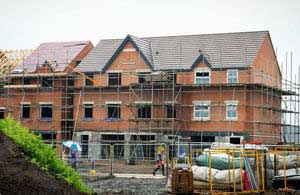
Government aims to deliver 1m new homes
The Government announced this week that it wants to deliver 1 million new build homes in England by 2020, in an effort to tackle the growing housing crisis. The mounting supply-demand imbalance in the market is driving up both property prices and rents across many parts of the country, with new research suggesting that the average price of a residential property Britain could reach a whopping £300,000 by the end of the year, if price growth in the property market continues at its existing pace. Rightmove’s latest House Price Index revealed that the average price of a home hit a new national high of £294,834 in September, owed mainly to a lack of housing stock coming on to the market. Miles Shipside (left), of Rightmove, commented, “High demand, lack of suitable supply, and increasingly stretched affordability are leading to some extremes in market forces in different sectors and parts of the country.” The National Housing Federation estimated that 974,000 new homes were needed between 2011 and 2014 to meet demand, and in reality that figures looks likely to rise. Housing Minister Brandon Lewis said this week that the Government is determined to deliver 1 million new homes during the course…
Read More » -
Housing Market
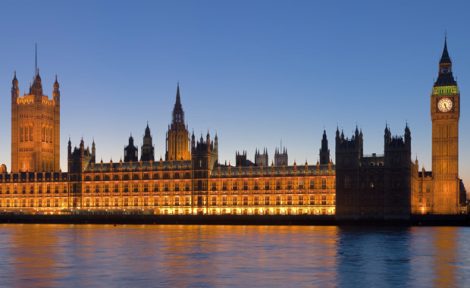
MPs to tackle the housing crisis
The All-Party Parliamentary Group (APPG), which is being chaired by Conservative MP James Cartlidge, has four vice-chairs: Helen Hayes, Lord Best, Stephen Pound and former Housing Minister, Mark Prisk. The group intends to produce an initial set of recommendations to Government on how to boost house building in the UK later this year. Cartlidge said, “Housing is increasingly becoming one of the most critical policy challenges facing local and national Government, and with a Housing Bill pending, it is likely to become more political and controversial. “In this context, a cross-party Parliamentary group focused objectively on the national policy challenge of housing offers a vehicle for taking the debate forward in a way that is both positive and constructive. Having spent my working life in the shared ownership housing sector, I am acutely aware of the challenges facing first time buyers, particularly in London. Equally, as a rural MP, I recognise the need for development to be sustainable. Ultimately, there are a whole raft of complex issues in housing and planning today but I hope that our APPG can make a real contribution to the debate.” Issues relating to housing were one of the hottest topics of the recent General…
Read More » -
Housing Market

Town planning expert slams Right to Buy scheme
Giving housing association tenants the right to purchase their homes will do nothing to solve the UK housing crisis but instead is aimed at targeting new Tory voters, a Birmingham City University expert has warned. Alister Scott, Professor of Environment and Spatial Planning at Birmingham City University, describe the Government’s plans to extend Right to Buy discounts to 1.3 million housing associations as a “double whammy and bad news for the provision of social housing”. The Government announced new measures in the Queen’s Speech to Parliament last week, giving tenants the Right to Buy their homes while requiring councils to sell off high-value properties and invest the proceeds into building affordable ones. But Professor Scott pointed out that history has shown that the replacements of new homes will not keep up with the losses of housing associations stock and high price stock of council housing, and that the spatial impact of where these properties are lost will be significant and will worsen the housing waiting lists. Professor Scott (right) also highlighted other Government initiatives that seem destined to fail. He commented, “David Cameron’s recent pre-election pledge for 200,000 new discounted houses is what I would call a ‘Ryanair approach to…
Read More » -
Housing Market
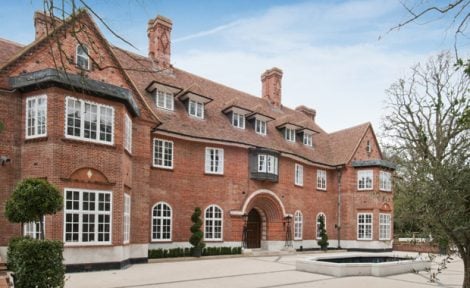
Lib Dems reiterate Mansion Tax ambition with Election manifesto
The Liberal Democrat party has placed housing at the heart of its election manifesto, revealing plans to introduce a £100 cut in council tax for 10 years for people who insulate their home, as well as confirming that it plans to introduce a ‘mansion tax’ – originally a Liberal Democrat policy – on residential properties worth £2 million or more. Homes worth between £2 million and £2.5 million would face an annual mansion tax of up to £2,000 a year, under Liberal Democrat plans. Nick Clegg (left) confirmed the Lib Dems had scaled back the policy and it would now raise only £1 billion – considerably less than the £1.7 billion initially proposed. Mr Clegg commented, “It is less than originally mooted but as we have worked up the idea, looked at what we think is reasonable and fair, we think this is a reasonable and fair way of doing it and shouldn’t scare the horses.” The Labour Party has also proposed its own mansion tax, which would see properties valued between £2 million and £3 million paying £250 a month or £3,000 a year. The party is yet to set out details of higher bands. The Lib Dems’ manifesto,…
Read More » -
Housing Market

House building sector could be hit by political uncertainty
There could be a fall in house building levels from next year as a consequence of political uncertainty which could cause a lagged effect, according to the Construction Products Association (CPA). The CPA this week announced that construction output is set to increase by 5.5 per cent this year, but will slow to 4 per cent in 2016 and 3.4 per cent in 2017, due to uncertainty relating to Government policies, such as Help to Buy. The lag between construction contracts and work on the ground means that construction activity in 2015 probably will not be impacted by the election until next year, since the majority of work for the year has already been planned. “Construction output is forecast to increase 5.5% in 2015, which is more than double the rate of growth for the UK economy, due to growth in the three key sectors of construction; private housing, commercial and infrastructure,” said Dr Noble Francis, Economics Director. “Over the following two years, however, construction output is forecast to be adversely affected by the UK’s most uncertain election in more than 40 years.” Although fewer homes are being developed than the country requires annually, private house building growth is forecast…
Read More »
