
housing market
-
Housing Market

Residential transactions rise again
Residential property sales in the UK have exceeded 100,000 per month for a fifth month in succession with purchasers taking advantage of low mortgage borrowing rates. The latest official transaction data from HMRC reveals that the provisional seasonally adjusted UK property transaction count for October 2015 was 105,490 residential and 10,160 non-residential transactions. However, sales still remain significantly below the monthly tally of almost 150,000 recorded at the height of the property boom in 2006. This means residential purchases in October fell month-on-month by 0.2 per cent but on a 12 month basis rose by 6.3 per cent comparedwith the 99,290 recorded in October 2014. “In October 2014, the residential market cooled slightly following a busy summer – but this year the market shows little sign of slowing down,” said Brian Murphy (left), Head of Lending at Mortgage Advice Bureau. “Demand from potential buyers remains high, with many taking advantage of the excellently priced mortgage rates available on the market,” he added. Despite a slight correction in property transactions on a monthly basis, the UK housing market remains “head and shoulders above a year ago”, as buyers take advantage of a wave of “low interest rates and attractive mortgage products”,…
Read More » -
Housing Market

View from the top
Each month we visit three agents across the country to discover what is happening in their businesses and local markets. This month we visit West Sussex, Salford and South East London.
Read More » -
Housing Market

Government Spending Review
George Osborne has today declared that he plans to “end the crisis of home ownership in our country.” Great news. To do this, The Chancellor is to double the housing budget to £2 billion a year and build 400,000 new homes across the country. “We are the builders!” yelled Mr Osborne above the parliamentary hubbub. He was talking about infrastructure when he said that, but it also applies to his housebuilding plans. A new building bonanza will be funded by public money, with developers channeled into building starter homes for hard working families (Mr Cameron’s favourite sector). The Chancellor is also mindful of the importance of ‘young hardworking families’ as he has now decided to rein back his proposed cuts to tax credits, softening the blow by delaying implementation of those deeply unpopular cuts. He is, however, capping Housing Benefit for new tenancies. The funding for housebuilding will be split into several parts; £2.3 billion directly to developers (ever thought you were in the wrong business?) to ‘encourage’ them to build 200,000 starter homes. That’s £11,500 per house. These homes are designated as being for ‘those aged under 40.’ Tough luck if you are just 41 and not yet been…
Read More » -
Housing Market
Static lending rates may fuel house prices
Residential property prices in the UK will almost certainly continue to rise next year after the Bank of England implied the first interest rate rise may not happen before 2017, according to Savills. With borrowing costs set to remain low, the company forecasts that UK home prices will rise by an average of 17 per cent over the next five years, led by gains in the South East of the country, with an increase of 21.6 per cent, while properties in the North East will appreciate by only 12 per cent over the period, Savills said. The forecasts are based on interest rates staying below 4.5 per cent, but it is now expected that the base rate may only increase to 0.75 per cent in around 2017. “If interest rates rise too quickly, mainstream house price growth will be quickly be curtailed,” said Lucian Cook (left), Head of UK Residential Research for Savills. “On the flip side, if rates remain low for too long, there is a risk that prices will rise too far, creating affordability issues further down the line.” Property prices in London, which have increased more than other parts of the UK in recent years, are expected…
Read More » -
Housing Market

House prices set to rise
Residential property prices look set to increase by an average of £60,000 over the next five years, hitting more than £320,000 in 2020, according to Cebr, the Centre for Economics and Business Research. The economic forecaster expects the average price of a home in the UK to reach £263,000 this year, up 5.6 per cent on last year, but believes that the market offers further room for growth of 3.5 per cent in 2016, with further annual price rises of in the region of 4 per cent in the four years that follow. If accurate, these price hikes will take the average price of a UK home to £321,600 during 2020 – £58,600 more than the average residential property price in 2015, according to Cebr. Nina Skero, CebrEconomist and main author of the report, believes that capital growth will be primarily fuelled by a growing “reduction in the number of properties being put on the market” as a result of low levels of housebuilding, as well as other factors such as an ageing population and the rising cost of moving up the property ladder. He commented, “The price gap between a first-time home and a larger family home has skyrocketed…
Read More » -
Housing Market

First-time buyer home prices soar
Home prices for first-time buyers are continuing to rise because of high demand from buy-to-let investors for properties typically acquired by those purchasing their first home, says Rightmove. New data supplied from the property portal reveals that the average asking price for residential properties currently coming on to the market has increased by 5.6 per cent over the past year to a new high of £296,549, but sellers of typical first-time-buyer homes are now asking 9.6 per cent more than this time last year. The average asking price of houses and flats with up to two bedrooms has increased by over £8,000 to £184,676, Rightmove said, making it harder for first-time buyers to save up enough money for a deposit. The report states that home prices are being driven higher by growing demand from buyers, particularly buy-to-let investors, and that a lack of properties coming onto the market was creating greater competition for purchasers, particularly first-time buyers. Rightmove added that the volume of first-time homes coming up for sale had dropped by 8 per cent on October 2014. The buy-to-let market has gone from strength to strength in recent years, reflecting the fact that a growing number of people are…
Read More » -
Housing Market
UK property sales hit 16-month high
Residential property sales have improved across the UK, reaching a 16-month high in September, the latest index report from RICS has revealed. It was the fifth month in a row that agreed sales rose, with the greatest increases over the month witnessed in the North, East Anglia and Scotland. According to RICS, this was the sixth consecutive month that the number of new buyer enquiries has increased, supported in part by less stringent mortgage lending conditions, with 18 per cent more chartered surveyors reporting a rise in demand. Despite the increase in activity levels, the report also identified a lack of new instructions, which has fallen in 13 of the past 14 months, for continuing to hold back sales growth. “Activity is now picking up which is encouraging, but unless the stock being sold is replenished there is a limit to how sustainable this modest improvement in market turnover will prove to be. And, unfortunately, the indications are that we are locked in a cycle where the lack of available properties on agents’ books is itself deterring some potential vendors from thinking about putting their own property on the market,” said Simon Rubinsohn (left), RICS Chief Economist. RICS forecast that…
Read More » -
Housing Market
Osborne vows to build more new homes
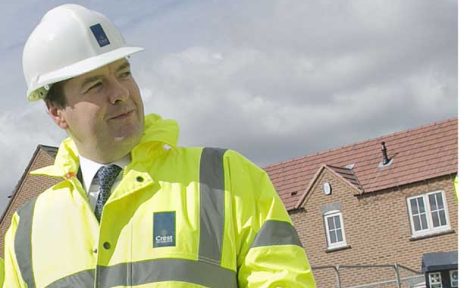
George Osborne used his party conference speech in Manchester this week to reaffirm the Conservative policy toward housing. The Chancellor George Osborne during his speech to Conservative Party conference in Manchester described the Tories as “the builders” with a plan for a prosperous future for working people. The Chancellor announced plans to sweep away planning rules delaying house building on brownfield sites this autumn in a bid to boost the number of new build homes being delivered by developers across the UK. The Government has also pledged to spend an extra £5 building on housing schemes, as well as other projects, and has set up a new independent national board to review spending priorities across various sectors, including house building. Mr Osborne told the conference in Manchester, “Building doesn’t come easy and especially when it comes to new homes and infrastructure that the country needs. “We are going to get many more homes built for families to buy, we’re sweeping away planning rules on brownfield sites, this autumn we will direct our housing budget towards new homes for sale. “We will give housing association tenants the right to buy. We’ve had enough of people who own their own home lecturing…
Read More » -
Housing Market

Housing market is at ‘crisis point’
The supply of residential properties for sale has slumped to its lowest level for 11 years, stoking fears that the growing housing shortage will continue to dive up home prices. Fresh data released by the National Association of Estate Agents (NAEA) reveals that the volume of properties available to buy per estate agent branch fell to 38 in August, down 31 per cent on July’s 55. This is the lowest level of supply recorded since January 2004, when 38 properties were also available. August also saw a dip in the number of house-hunters registering with agents, with an average of 408 applicants registered per member branch, compared to 462 in July, owed in part to the fact that many people were away on their summer holidays. Mark Hayward (left), Managing Director of the NAEA, said, “We’ve been banging the drum about the dwindling supply of housing for a while and this month’s report reiterates what we’ve been saying – there simply aren’t enough houses to match demand and we’re reaching crisis point. “There are now eleven house hunters fighting after every available house which isn’t sustainable.” The data also shows that the number of sales completed in August rose by…
Read More » -
Housing Market

First-time buyer activity hits pre-recession high
There was a sharp increase in the volume of first-time buyers in the UK in July, as the prospect of a rise in mortgage borrowing costs encouraged more young purchasers to acquire their first home. The latest First Time Buyer Tracker index from Your Move and Reeds Rains reveals that the number of first-time buyers reached their highest level in July since the recession, paying £161,985, on average, which is 8.9 per cent higher than in the corresponding month in 2014. Overall, there were 29,700 sales of residential properties to first-time purchasers in July, up 4.9 per cent month-on-month. This is in spite of the fact that the average first-time buyer now requires a deposit of £27,975, which is up 10 per cent compared with July 2014’s figure of £25,429. While rising deposit costs may have deterred some prospective purchasers in recent months, increasing real wages have enabled some first-time buyers “to shoulder the short term burden of a slightly higher deposit” to spare the risk of losing out on a good mortgage deal, according to Adrian Gill (left), Director of estate agents Your Move and Reeds Rains. He added, “This month’s particularly high transaction rate is also partially due…
Read More »