Government Spending Review
It's swings and roundabouts for property – Housing budget doubled, Stamp Duty rises on Buy to Let and second homes....
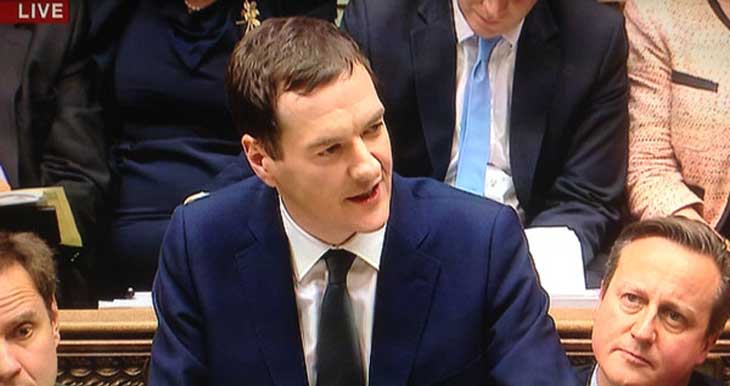 George Osborne has today declared that he plans to “end the crisis of home ownership in our country.” Great news. To do this, The Chancellor is to double the housing budget to £2 billion a year and build 400,000 new homes across the country.
“We are the builders!” yelled Mr Osborne above the parliamentary hubbub. He was talking about infrastructure when he said that, but it also applies to his housebuilding plans.
A new building bonanza will be funded by public money, with developers channeled into building starter homes for hard working families (Mr Cameron’s favourite sector). The Chancellor is also mindful of the importance of ‘young hardworking families’ as he has now decided to rein back his proposed cuts to tax credits, softening the blow by delaying implementation of those deeply unpopular cuts. He is, however, capping Housing Benefit for new tenancies.
The funding for housebuilding will be split into several parts; £2.3 billion directly to developers (ever thought you were in the wrong business?) to ‘encourage’ them to build 200,000 starter homes. That’s £11,500 per house. These homes are designated as being for ‘those aged under 40.’ Tough luck if you are just 41 and not yet been able to buy. The lucky ones will receive a 20 per cent discount and the homes will have a maximum value of £250,000 outside London and £450,000 in London.
£4 billion will be allocated to build 135,000 shared ownership homes, so that people can afford to ‘buy’ a home and then buy more shares as they can afford to.
As this shows, the Government focus is clearly on home ownership, Mr Osborne said, “I am clear, in this spending review we choose housing. Above all we choose homes that people can buy.”
“For there is a growing crisis of home ownership in our country. We made a start in the last Parliament, and with schemes like Help to Buy the number of first-time buyers rose by 60 per cent.
“But frankly we need to do much more. Today, we set out our bold plan to back families who aspire to buy their own home.”
A Help to Buy hand
The Government is also widening the Help to Buy Scheme so that it will be open to all households earning less than £80,000 (£90,000 in London).
Londoners will get extra help with a new London Help To Buy scheme, following campaigning by the London Mayoral ‘hopeful’ Zac Goldsmith.
The Right to Buy is also being pumped up – tenants in five housing associations will be able to buy their homes ‘from midnight tonight.’
The bad news
The bad news is that he is launching a higher rate of stamp duty – 3 per cent above usual levels – for second homes and Buy to Let properties. (There had to be some bad news, but it will, says George, raise £1billion by 2021.) This rate does not apply to any corporate development or investment.
Other housing tenures…
As he said, The Chancellor (and the rest of the team) is hooked on home ownership, so maybe he hasn’t been listening. However, another announcement was the construction of 10,000 new homes to rent at a rental value that allows the tenant to save for a deposit while they rent. Which is great, but a drop in the ocean of demand for flailing savers.
Finally, 8,000 specialist homes are to be built for older people or those with disabilities.
In other matters, readers will be delighted to hear that we now have a “permanent pothole budget.” We can all sleep well tonight.
Industry comment
Jeremy Blackburn, RICS Head of Policy, said, “A push towards affordable home ownership should not come at the expense of affordable homes for rent. If cities such as London are to thrive, we need to ensure that housing can be provided for all of its workforce – home ownership can only go so far and even shared ownership may prove too expensive for some. We would like to see the Chancellor incentivise affordable homes for rent in both public and private sectors.
“Government must fire up councils, public bodies and housing associations to build across all residential sectors in order to deliver the functioning housing market that we need – and deserve – as a society.
“George Osborne is essentially subsidising one sector of the housing market over all others, in an area that already benefits from significant Government funding. Although the announcement is on the face of it encouraging for certain sectors, the devil will be in the detail.”
Richard Donnell, Hometrack’s Research Director said, “The Starter Homes scheme, even with its 20% discount, will simply not reach the most unaffordable markets in southern England. Our analysis of the Starter Homes programme shows that 78 local authorities will fall below the maximum value caps for the scheme – these areas account for a fifth of all housing starts nationally in the last year. 57 local authorities in London and the South East will not be viable for Starter Homes with the balance in the East and South West.”
“The Government has looked to shared ownership to open up the pool of demand in these most unaffordable markets. Shared ownership enfranchises many more households into home ownership. Our analysis for London shows that shared ownership with a sales value of £435,000 enfranchises 860,000 households into home ownership on incomes of between £50,000 and the £90,000 cap.”
But these policies maintain current house prices, “The fundamental problem remains that house prices are being maintained at current unaffordable levels. Buying our way out of the housing crisis is not a viable long term option given the scale and variety of market forces at play across the housing market – we need to wean the new build market off demand side subsidies and deliver a land market that enables new supply. The devolution and city region policies can deliver the long term answer to the low house building problem.“
Alison Platt, Chief Executive of Countrywide plc, said, “The announcement of the Chancellor’s housebuilding ambitions are a welcome step forward in the process of redressing the chronic housing shortage we face today. Expanding the starter homes programme to include shared ownership will see more options for struggling first time buyers.
“The proposed changes to the planning process will lower the height of the hurdle that planning presents for developers, we think this will help get more homes built, which is what we need.
“While pursuing home ownership is certainly part of the route to a healthier housing market, the government needs to recognise the tide of structural changes fueling the growth of the private rented sector. The growing private rented sector needs support, with incentives for creating quality stock and effective regulation to encourage great landlords.”
Any views? Email [email protected]
Pic courtesy BBC News