
Flat owners win key court ruling over ‘nuisance’ gawpers
Owners of apartments overlooked by Tate Modern's viewing gallery have won key case in Supreme Court that will affect property developers.
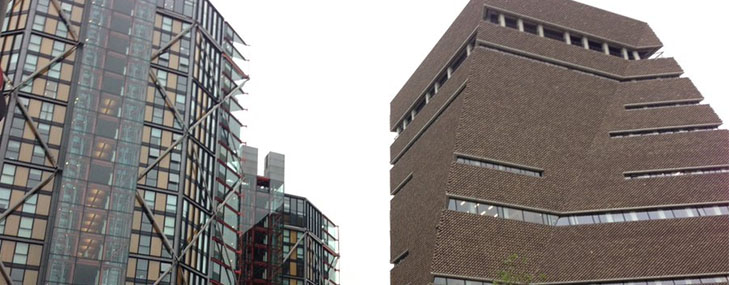
The Supreme Court has decided in favour of flat owners overlooked by an observation deck within London’s Tate Modern gallery in a ruling that will have far-reaching ramifications for property developers.
This follows a long-running battle during which the apartment owners had claimed that this ‘overlooking’ constituted a nuisance and interfered with their use and enjoyment of their property.
Judges at the Supreme Court have now overruled an earlier decision by the Court Appeal, which had found in favour of Tate Modern.
The dispute has been running for over six years following the completion of the museum’s Blavatnik Building extension in 2016 (main picture)
500,000 visitors
Since then, visitors to its viewing gallery, which number of half a million every year, can see straight into many of the rooms within the Neo Bankside residential block just 34 metres away.
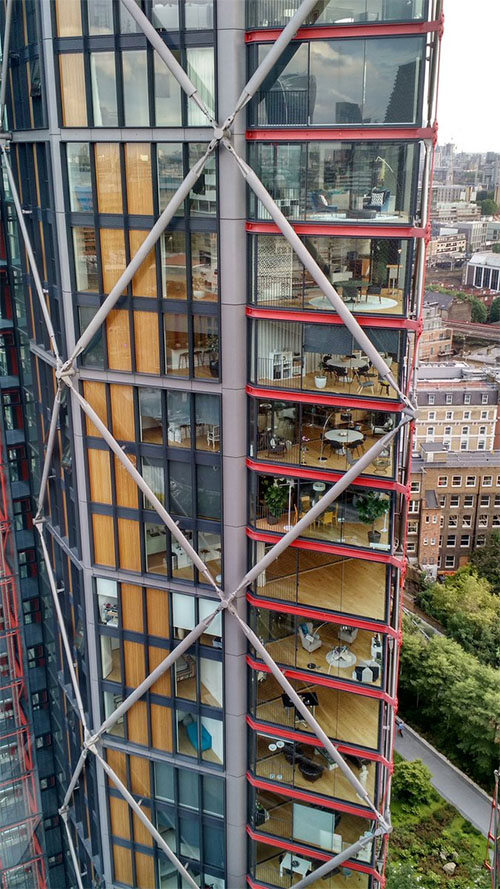 Its well-heeled inhabitants, who each paid up to £4 million for their apartments, launched a legal action to stop the ‘nuisance’ of tourists gawping at them and taking pictures and videos, many of which have ended up on social media (see right).
The viewing gallery is open all day, 7 days a week and provides a clear and uninterrupted view of the flats.
Neo Bankside’s leaseholders therefore sought an injunction to prevent the Tate from permitting people to view their flats from the viewing gallery, and have now won.
The principle of the decision is that the law of nuisance seeks to prevent substantial interference with the ‘ordinary enjoyment of land’ and the Supreme Court found that a line had been crossed by the near constant visual intrusion in this case.
Exceptional
Judges said the viewing gallery was a particular and exceptional use of the Tate’s land and not an ordinary incident of the use of the land as an art museum. As a result, the use of the viewing gallery in this way constituted a nuisance.
“In the short term, the case is likely to be misunderstood as having been decided on the grounds of ‘privacy’”, says Thomas Freeman Senior Associate Solicitor in the Real Estate Disputes Team at Irwin Mitchell said.
“There are likely to be many people concerned about the use of neighbouring land or its proposed development who will seek to rely on it.
“However, the case was concerned the law of nuisance and not privacy.”
Nuisance
The Judgement is clear that the ordinary use of land, including for ordinary instances of overlooking or development, will not constitute a nuisance.
Freeman says the case is important because the Supreme Court has re-stated the law of nuisance.
In doing so, it has rejected the notion that there is a ‘reasonable user’ test, or that the ‘reasonable use’ of land in all the circumstances will provide a defence to claim in nuisance.
“Rather, the questions of whether the interference is substantial, and whether it emanates from an ordinary use of the land or not, are of paramount importance,” he adds.
Pic credits; @GeorgOehler/Twitter and @angelabuntnews/Twitter






Court of Appeal trying to side with the ‘establishment’ ! – surprise, surprise ! – not
I hope the claimants got ALL their costs from the Court of Appeal case refunded.
And what’s to happen to the Judges at the Court of Appeal, who’s decision has found to be wrong, flawed by a Higher court ? – will it go on the Judges Annual Staff Appraisal ‘ tries hard but must do better ‘ ? No, thought not.
The Judiciary is an expensive game, paid for by Tax-payers in which the staff can’t loose, only either of the parties seeking justice [sic]