Keir Starmer resigns – industry reaction
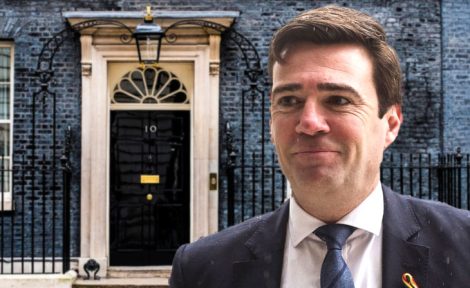
Keir Starmer has resigned in an emotional speech outside of Number 10 this morning.
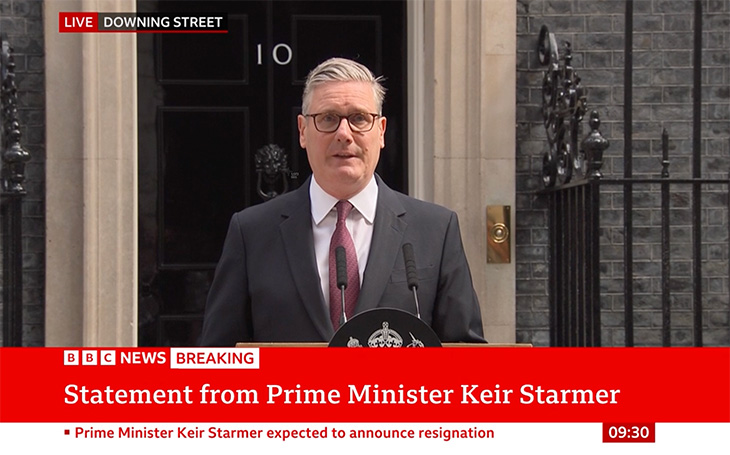
Keir Starmer has resigned in an emotional speech outside of Number 10 this morning.
It means there have been seven Prime Ministers in ten years.
And it is the third time in four years that a prime minister has announced their plan to leave office due to a lack of support.
Andy Burnham
His resignation follows Andy Burnham’s win at the Makerfield by-election last week.
It paves the way for Burnham to become the country’s new Prime Minister.
Under Labour’s rules, a leadership contest is triggered if one challenger can get nominations from 81 MPs.
It is understood that this is a threshold that Andy Burnham would easily reach given his popularity.
Any other contender – such as Wes Streeting – would also need to meet the same threshold.
The timetable for a vote by party members would be then set by the ruling National Executive Committee, and the winner would then become Prime Minister.
If there is no contest, Burnham could be the country’s new Prime Minister within a matter of weeks.
Starmer said he will remain as Prime Minister until his successor is appointed.
Market confidence
The resignation means a new cabinet, including another housing minister. There has been a total of 17 different housing ministers since 2010.
Charlotte Kennedy, Chartered Financial Planner at Rathbones, says: “A departing prime minister rarely changes your finances overnight, but political upheaval can create uncertainty that affects markets, confidence and expectations.
“While Andy Burnham appears to be in pole position to take the helm, whoever ultimately takes power will inherit the same difficult fiscal backdrop and quickly discover there are no easy wins. Sluggish growth, stretched public services and strained public finances mean difficult choices have been deferred, not avoided.

Tom Bill, Head of UK Residential Research at Knight Frank, says: “Andy Burnham’s victory in the Makerfield by-election will ignite a wave of speculation about what happens next.
“His emphatic win in the north-west England constituency will encourage Labour MPs to believe he is the answer to their electoral malaise. A leadership contest could follow, or alternatively a more orderly transition if cabinet ministers apply enough pressure on Keir Starmer to step aside.
“If he becomes Prime Minister, pleasing everyone will be impossible.
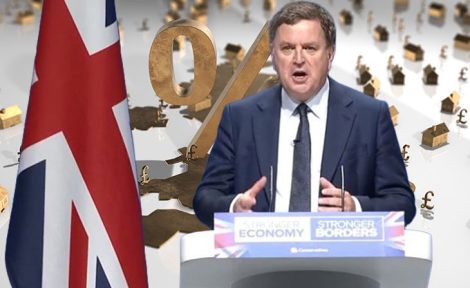
“What does that mean for the property market? It won’t be a top priority but a move to tax the asset rather than the transaction appears to be on Burnham’s radar. He supports a proposal by campaign group Fairer Share, which wants to replace Stamp Duty and council tax with a levy equivalent to 0.48% of a property’s value.”
Market stability

Meanwhile, Jeremy Leaf, north London estate agent and a former RICS residential chairman, says confidence and stability needs to be returned to the property market.
He said: “I am sure what Andy Burnham and Keir Starmer could agree on is the importance of additional activity in the housing market, which is not only good for property but the wider economy in view of its multiplier effect.
“The key element which has been holding back activity has been lack of confidence and instability. After a promising start, unfortunately Starmer seems to have lost touch with what people on the ground want and need from their housing.
“What we are looking for is the shortest possible handover of power to reduce that instability and transition towards a more growth-orientated agenda where prospective owners and tenants can more readily aspire to homeownership and better rentals. Unfortunately, the lack of direction has prompted too many people to sit on their hands rather than getting on with their lives when it comes to their properties.”
Rising rates

Adam French, Head of Consumer Finance of Moneyfactscompare.co.uk, says: “Money markets had already begun pricing in fresh political uncertainty after last week’s by-election results, with gilts and swap rates rising by around 10 basis points and holding at those levels.
“As a result, Sir Keir Starmer’s resignation has prompted a fairly muted response so far, with the effects already largely reflected in funding costs.
“Episodes of political volatility tend to push up borrowing costs as investors demand a greater premium for perceived risk. Much will now depend on the fiscal policies put forward by the future Prime Minister, particularly their approach to taxation and public spending.”
Positive investment

Paul Rickard, Chief Executive of Pocket Living, says: “In the coming weeks much will be written about the legacy of Sir Keir Starmer as Prime Minister, but for the housing and development sector his Government was one that finally grasped the need for a radical reform of the planning system and the political imperative of building new homes.
“While challenges around viability and broader economic headwinds have made the latter increasingly challenging, we can start to see the positive impacts of planning reform starting to emerge.
“In seeking to build upon this, we would urge that Sir Keir’s successor continues to focus on addressing the barriers to get Britain building, as well as maintaining a positive investment climate for all types of housing.”

Adam Jennings, Head of Residential at Chestertons, says: “Sir Keir Starmer’s resignation marks yet another chapter in a prolonged period of political instability for the UK, with the country set to have its seventh Prime Minister in a decade.
“In the short term, we may see property sellers and buyers adopt a ‘wait and see’ approach until there is greater clarity on the direction of government policy, particularly around housing, planning reform and the broader economy.
“The devil will very much be in the detail in the coming weeks – not only in terms of who succeeds Sir Keir Starmer, but also the priorities they set out and the speed at which they are implemented.
“This latest uncertainty has arrived at a time when activity typically begins to slow ahead of the summer holidays, so there will be hope across the industry that a resolution is reached well before the busy autumn and pre-Christmas market.
“The priority for any incoming Prime Minister will be to provide a stable and consistent policy environment that supports investment, encourages development and gives buyers the confidence to make long-term decisions.”
Political agenda

Nathan Emerson, Chief executive of Propertymark, says: “Housing must remain at the heart of the political agenda. Landmark reforms continue to progress through Westminster, and they must deliver on their promises.
“We have seen some of the most significant changes to the rental sector in over 30 years with the implementation of the Renters’ Rights Act, alongside a commitment to build 1.5 million new homes to meet growing demand.
“Meeting future housing requirements requires clear political ambition and consistent leadership, especially as we embark on further reforms to the home buying and selling process.
“Propertymark will continue working closely with the UK Government to help deliver positive change for current and future generations. However, concentrating on the ‘here and now’ and ensuring consistency must be the core priority as any leadership transition proceeds.”
Trevor Abrahmsohn, of Glentree International: says: “We are entitled to be confused by Starmer’s self-congratulatory monologue about how much he has done for the UK economy. You would think that it would be his acceptance speech for winning a second electoral term instead of crowning an ignominious exit, having been booted out of the job after only two years and trailing behind him the worst approval ratings of any former Prime Minister.
“The coronation of Burnham would be a great pity rather than a contest with others since we will only find out what policies he has in mind for the UK when it’s too late.
“If he departs from the fiscal rules and Labours 2024 manifesto promises by raising direct taxation, the Bond markets will not like it.
“It seems as though attacking the rich to extend the politics of envy is a happy pastime for him and his cohorts and coming down the road for the upper middle classes will be a tsunami of pernicious taxation such as wealth tax, parity of Capital Gains and Income Tax, tightening of Inheritance Tax and I suppose a posse of fiendishly clever fiscal changes trying to make the poor rich by making the rich poor.
“The ‘have to buy’ will still buy, but the ‘like to buy’ will be gone and even more buy-to-let landlords will sell up and go home”.