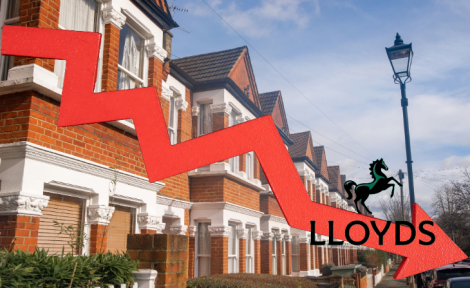
House price growth slides to two-year low
Nationwide’s House Price Index shows the housing market struggled for growth in the build-up to the Budget.

House price growth has slowed to its weakest rate since January 2024, Nationwide data shows.
The latest Nationwide House Price Index shows annual house price growth slowed to 0.5% in October, from 0.8% a month before.
Growth was flat on a monthly basis. This puts average UK house prices at £273,566.
Market activity and house price growth have slowed in recent months, in part reflecting the uncertain economic backdrop.”
Commenting on the figures, Robert Gardner (pictured), Nationwide’s Chief Economist, says: “Market activity and house price growth have slowed in recent months, in part reflecting the uncertain economic backdrop.
“Geopolitical tensions remain high, with the conflict in the Middle East exerting upward pressure on energy prices, fanning inflation concerns.
“This in turn has led to mounting financial market expectations of Bank Rate increases, which have maintained upward pressure on the market interest rates which underpin mortgage pricing.”
Forward-looking indicators suggest further softness in the near term. Gardner says.
He adds: “Surveyors report that new buyer enquiries remain weak. Moreover, consumer sentiment dipped noticeably in October, with households becoming less confident about the outlook for the general economy as well as their own financial situation in the year ahead
“Once the energy shock fades, there are good reasons to believe the market will regain momentum. The broader economy has proven surprisingly resilient to date, with annual economic growth accelerating in recent quarters. Employment is holding up well, as are real incomes, while household balance sheets are solid, with debt levels still close to 20-year lows relative to household disposable income.
“Moreover, the improvement in housing affordability seen over the past two years has been only partially unwound as a result of higher market interest rates, as income growth has continued to outpace house price growth by a wide margin.”
Industry reaction

Iain McKenzie, Chief Executive of The Guild of Property Professionals, says: “October’s Nationwide figures underline the importance of realistic pricing in an increasingly competitive housing market. With annual house price growth slowing to 0.5% and no monthly movement, sellers can no longer rely on general market appreciation to do the hard work for them.
“Buyers are facing higher borrowing costs and increased pressure on household budgets, making them more discerning about both the properties they view and the prices they are prepared to pay. Zoopla’s latest figures reinforce this shift, with agreed sales down 7% year on year over the last four weeks, while the number of homes available for sale has increased by 7%. That gives buyers greater choice and puts the onus firmly on sellers to stand out.
“Importantly, this doesn’t mean homes aren’t selling. Properties that attract a buyer are taking an average of 44 days to sell nationally, broadly in line with a year ago. The difference is that buyers are less willing to compromise on price.
“The market is still moving, but sellers need to recognise that buyers have options. An ambitious asking price can cost valuable time and ultimately lead to reductions. A well-considered valuation, supported by local market knowledge and a clear sales strategy, will give properties the best chance of securing serious interest and achieving a successful sale.”

Nicky Stevenson, Managing Director of Fine & Country, says: “The latest Nationwide figures reflect a housing market that is becoming increasingly sensitive to affordability pressures. With factors such as ongoing geopolitical tension, higher borrowing costs and expectations of a potential base rate hike, it is expected that some of wind will be taken out of the sails.
“Buyers remain active, but they are increasingly cautious and selective about where they spend their money. The run-up to the Budget will also have contributed to some hesitation, with many movers understandably waiting to understand whether any announcements would affect their financial position or moving plans. Now that the Budget is behind us, we may see some of that pent-up demand return as buyers and sellers have greater clarity.
“However, this is not a market without opportunity. People still need to move for a variety of reasons, and well-priced, desirable properties continue to attract interest. Much will depend on how mortgage pricing and the wider cost of living evolve over the coming months. For now, realistic expectations and sound advice will be key to keeping transactions moving.”

Amy Reynolds, Head of Sales at Richmond estate agency Antony Roberts, says: “Mortgage rates have risen far faster than anyone expected since the spring, and buyers have changed how they behave. People are choosing to borrow less and are cautious about moving.
“Anticipation as to what might be in the Budget undeniably slowed the market down. Finally, we have some certainty, but a reduction in stamp duty would have been a real help and while a cut to the mansion tax threshold has been parked for now, fear of what else might come along to squeeze ordinary people has put the brakes on a market that was already slow. With a rate rise expected next week, fixed-rate mortgages are unlikely to fall before Christmas, so December will be even quieter than usual.”

Jason Tebb, President of OnTheMarket, says: “The continued softening in annual house price growth suggests needs-based buyers proceeding with their moves are price sensitive and negotiating hard.
“Market resilience is still evident, despite wider geopolitical issues creating uncertainty, along with higher mortgage costs. The Bank of England’s decision to hold interest rates throughout this year has helped affordability and confidence, but there are fears that rising inflation may finally force its hand at next week’s meeting, with the first rate rise this year.
“The Budget delivered targeted support for first-time buyers but there wasn’t much else of consequence to really boost activity in the market. That said, softening prices should assist with housing affordability as income growth continues to outpace house-price growth, which in turn could boost momentum as we move into the spring.”