House price growth slowed in July, says Nationwide
The slowdown in house price growth reflects an uncertain economic outlook, explains Robert Gardner, Nationwide's Chief Economist.
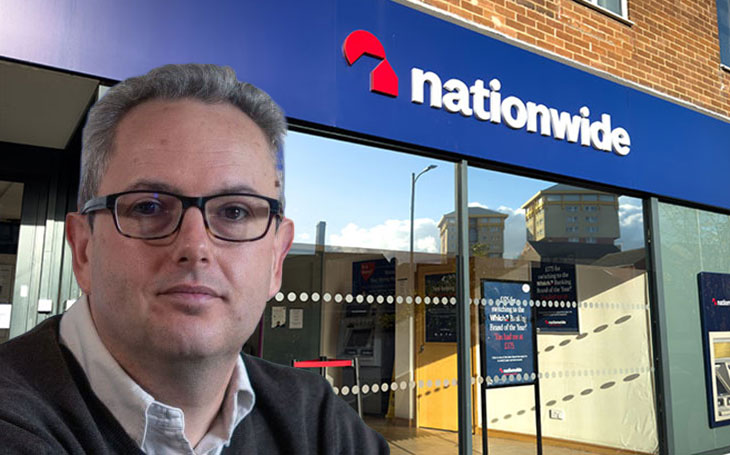
House price growth slowed in July as people avoided moving home amid high mortgage rates and concerns about future tax hikes.
The figures from Nationwide Building Society show that the average price of a home in Britain currently stands at £277,542, up 1.8% on a year ago.
Annual growth slowed compared to June, when property values increased 2.2%.
Market activity and house prices have remained soft in recent months, in part reflecting the uncertain economic backdrop.”
Nationwide attribute the slowdown in growth on an uncertain economic outlook.
Robert Gardner, Nationwide’s Chief Economist, says: “Market activity and house prices have remained soft in recent months, in part reflecting the uncertain economic backdrop.
“Geopolitical tensions remain high, with the conflict between Iran and the US again exerting upward pressure on energy prices and market interest rates in recent weeks.
Industry reaction

Amy Reynolds, head of sales at Richmond estate agency Antony Roberts, says: ““In our offices, prices remain flat with sensible offers being accepted. There are more sellers than buyers, but sellers aren’t panicking – asking prices are coming down, but a lot of that is simply initial overpricing meeting the time it takes to find the market level.
“There’s definitely a point where owners simply won’t move at today’s numbers, and we’re seeing that more and more. It’s like a game of chicken – who moves first, the buyer or the seller?”

Mark Harris, chief executive of mortgage broker SPF Private Clients, says: “Flat monthly house prices suggest those who are transacting are not willing or able to pay over-the-odds but are taking advantage of this buyers’ market and negotiating accordingly.
“Although some lenders have increased their mortgage rates in recent days, the Bank of England’s steady approach to interest rates, keeping base rate at 3.75% this year, should instill some calm after a period of considerable volatility.
“Borrowers are taking nothing for granted though as the continued high cost of living strains affordability. Many are taking the sensible approach of securing mortgage rates several months in advance of when they need them for peace of mind.”

Tom Bill, head of UK residential research at Knight Frank, says: “A combination of higher mortgage costs and uncertainty around property taxation has kept demand in check this summer.
“The slowdown is presumably why Andy Burnham needed to rule out replacing Stamp Suty with a land value tax this week although the annual game of ‘guess the tax rise’ is not over for the property market after the Prime Minister repeated his predecessor’s line about ‘difficult decisions’ in the Budget.
“Mortgage rates are almost as high as they have been since the start of the Middle East conflict but while the Bank of England turned more hawkish this week, holding rates still appears the most likely approach during the second half of this year.”

Jason Tebb, President of OnTheMarket, says: “Average property values were flat on a monthly basis as focused, price-sensitive buyers negotiate, while sellers realise they will struggle to sell over-ambitiously priced homes when there is more stock to choose from.
“Despite the impact of renewed hostilities in the Middle East on inflation and subsequently interest rates, stalling the expected downwards momentum of base rate this year, the resilience of the market is evident.
“The signs are that the market has steadied itself and buyers and sellers are getting on with it. The Bank of England’s decision to hold interest rates again yesterday for the fifth consecutive meeting is having a steadying effect, suggesting a calm, considered approach with no need to panic.
“Mortgage rates are edging upwards, which may increase affordability concerns for buyers in the short term but those who need to move are doing so regardless and are just negotiating harder on the price they are prepared to pay.
“Inactivity isn’t an option for many, even if a new Prime Minister brings another level of uncertainty. What we do know is that Andy Burnham is instinctively interventionist and housing is where we will feel it first. For our sector, the likely picture is more regulation on the rental side and a real push on supply that will take years to show up in the numbers.”

Nathan Emerson, Chief Executive of Propertymark, says: “Steady house prices reflect a housing market that continues to find balance despite ongoing economic and political change. A combination of constrained housing supply, changing borrowing costs and varying levels of buyer demand continues to influence market conditions, while the national figures mask significant regional variation across the UK.
“Yesterday’s interest rate decision, with rates remaining unchanged, provides greater certainty for borrowers and allows prospective buyers to plan with a clearer understanding of future mortgage costs.
“The next priority should be greater policy certainty. As the new Prime Minister develops his housing agenda, clarity around taxation, housing supply and long-term reforms will help reinforce confidence across the market. Stability in policy is every bit as important as stability in interest rates.”

Iain McKenzie, Chief Executive of The Guild of Property Professionals, says: “The latest Nationwide figures reflect a market where buyers have more choice and are taking a measured approach to their purchasing decisions.
“In the current market, realistic pricing has become more important than ever. Buyers are well informed, have plenty of options available and are willing to negotiate, meaning sellers who continue to price based on yesterday’s market are finding their properties sit unsold for much longer. In contrast, homes that are priced correctly from the outset continue to attract interest and secure sales.
“While affordability pressures remain, the market itself is proving remarkably resilient. Mortgage approvals have edged higher, signalling that confidence is gradually returning, and there remains a steady flow of buyers who need to move regardless of wider economic conditions. Success in today’s market is less about chasing headline house price growth and more about aligning expectations with current market realities.”

Nicky Stevenson, Managing Director of Fine & Country, says: “House price growth remains subdued, but the market is still holding steady in a way that is sustainable to both buyers and sellers.
“Annual growth easing to 1.8% shows that the market has lost some of the momentum we saw earlier in the year, but a small monthly rise suggests there is still underlying resilience. Buyers are active, but they are taking their time and weighing up affordability carefully before committing.
It is no surprise that some buyers have paused for breath while they wait for a clearer picture on mortgage pricing and household costs.”
“The wider backdrop has been doing a lot of the work here. Higher energy costs and shifting expectations around interest rates have all tested confidence in recent weeks. It is no surprise that some buyers have paused for breath while they wait for a clearer picture on mortgage pricing and household costs.
“In many parts of the country, our agents are seeing that the activity is still there, so long as homes are priced in line with local demand and buyers feel they are getting fair value.
“July can also be a more measured month for the property market, as the intensity of the spring season gives way to the summer holiday period. That can make activity feel quieter on the ground, but it does not mean demand has gone away.
“What matters now is whether inflation continues to ease and gives lenders more room to compete on mortgage pricing. If borrowing costs become more predictable, that should help rebuild confidence among buyers who are ready to move but have been waiting for more certainty.”