Liability for search results
...but what if a search fails to mention land earmarked for a new town, asks Katrine Sporle, The Property Ombudsman?
 This case concerns a dispute referred to The Property Ombudsman (TPO) from a buyer, concerning the search provider’s alleged failure to disclose a planning application for a new town in the vicinity of the property she purchased.
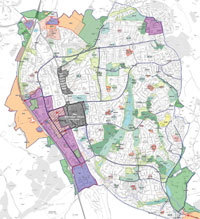 During the conveyancing process in connection with her purchase, the buyer’s solicitor instructed the search provider to commission a local authority search.
The search highlighted that there were a number of minor planning applications within 750 metres of the property, all of which were listed on the report. The report also highlighted additional planning policies relevant to the area around the property, adopted by the local District Council.
The buyer alleged that the search was misleading and failed to mention the plans for a new town in sufficient detail.
Importantly, this included a local plan document which had been put out for consultation prior to the complainant’s purchase. The purpose of a local plan, once adopted, is to enable local councils to determine where future development takes place and guides future planning applications submitted to them.
The local plan identified the land north of the property as being for housing and transport use, and specified that this would be intended to accommodate a new town and associated infrastructure for around 6,000 new homes.
THE ISSUE
The buyer said that she understood that specific permission had been granted for a few dwellings north-east of the property; these were the minor applications shown on the search. However, she did not realise the implications of the proposed new town as the search only referred to the local plan. The buyer explained that she thought that the proposed new town was some distance from the property she was buying. The buyer only realised the implications, and location, of the new town, after she had completed on the purchase when she was asked to attend a local meeting about planning proposals on land immediately adjacent to the property. The buyer criticised the search provider saying that the search should have been far clearer as to the extent and exact location of, the proposed new town; it was not two miles away but rather her property would border the boundary of the town. This misunderstanding had occurred as the local plan had set out all areas designated as being considered for housing development, but had not specified in detail which specific areas would be utilised.
INVESTIGATION
The buyer alleged that the search was misleading and failed to mention the proposals for the new town in sufficient detail. She considered that the search provider should financially compensate her for the fact that, at some point in the future, she considered that she would find it difficult to sell the property which, she believed, would invariably drop in value.
The complainant said the search failed to disclose in detail the proposals to allow a new town to be built north of the property, but rather only referred to the local plan.
In this investigation, the Ombudsman took into account the relevant parts of the Search Code. Under Paragraph 2 of the Code, the search provider was expected to act with integrity, and carry out the search with due skill, care and diligence. This includes accurately reporting the most up-to-date available information and risks associated with the property from the sources consulted. This also meant providing complete search results based on a search of all legitimate, commercially and readily available sources (that is, a physical examination of public records; a response from an official entitled to provide the information; their own current records; or commercially available data).
OUTCOME
Having looked at all the evidence provided, the Ombudsman was satisfied with the following:
- The search provided enough information to allow the buyer to discover that a significant degree of development would be taking place both north of the property.
- Both the residential and non-residential planning applications listed in the report made reference to the ‘New Community’ and the designated land use.
- The fact that the local plan was referred to would have given the buyer (or her solicitor) further opportunity to investigate the extent of the proposed development and that it was, in reality, a proposed new town. As previously stated, the purpose of a local plan is to enable local councils to determine where future development takes place and guides future planning applications submitted to them.
On page seven of the search it was clearly stated to the buyer and her solicitor that they “may wish to research these documents independently” to see if issues relating to the local plan were relevant to the property.
The Ombudsman was satisfied that an accurate local search was provided in accordance with Paragraph 2 of the Search Code. The complaint was therefore not supported and no award in compensation was made.