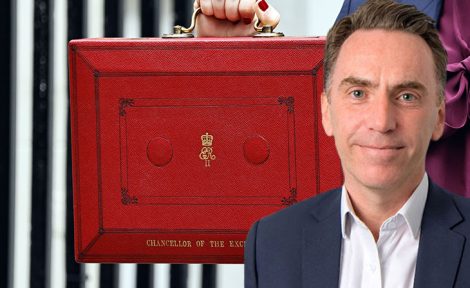
Best and worst Autumn Budgets for the property market revealed
Prime London buyers favour stability when it comes to the Autumn Budget, research by Beauchamp Estates has revealed.

Autumn Budgets under Prime Minister (PM) Boris Johnson and Chancellor Rishi Sunak consistently had the most positive impact on London property market sales, research suggests.
The findings were revealed in research by Beauchamp Estates after looking into which Autumn Budgets under various prime ministers and chancellors have generated the best and worst impacts on the London property market.
The analysis shows that the market lost confidence in Prime Minister Theresa May and Chancellor Philip Hammond, temporarily tanked under Liz Truss and Kwasi Kwarteng and struggled under Labour’s Keir Starmer and Rachel Reeves.
Domestic UK and international buyers of property in London like political, economic and taxation certainty.”
The data analysis has also quantified the impact of Government leaks and mixed messages around the Autumn Budget, claiming it generates a drop in sales in the London property market of between 5% and 17%.
The research looked at all house and apartment sales for homes sold for values above £5million and in excess of £10million across Prime Central London (PCL) in the four months prior to, and the four months following, the Autumn Budgets of 2015, 2017 and each year from 2021 to 2025.
Cameron and Osborne
In 2015, under PM David Cameron and Chancellor George Osborne, fresh from winning outright the General Election that May, the volume of £5million-plus London property market sales rose by 30%, from £951.7million worth of properties sold (105 deals) in the four months prior to their Autumn Budget to sales worth £1.24billion (114 deals) for the four months following the 2015 Autumn Budget.
In 2015, at the very top of the London market, post-Budget sales above £10million rallied most strongly, with the volume of sales rising by 65% with £425.5million worth of sales (25 deals) in the four months pre-Budget and £700million (35 deals) post-Budget.
Beauchamp Estates suggests the top end of the London property market lifted after the 2015 Autumn Budget because buyers were rushing to complete before the additional 3% Stamp Duty surcharge on additional homes, announced in that Budget, came into force on 1st April 2016.
May and Hammond
In 2017, the impact of the Autumn Budget on the London property market under PM May and Chancellor Hammond was far more muted.
Post-Budget the volume of sales above £5million-plus rose by just 15% (the rise 50% less than that enjoyed under Cameron/Osborne) from £826.7million worth of sales (85 deals) pre-Budget to £948.5million of sales (97 deals) post-Budget.
Under the May/Hammond 2017 Budget sales at the very top of the London property market dipped. The number of sales for homes valued above £10million dropped by -10%, from 29 deals pre-Budget to 26 deals post-Budget, the volume of sales by value flatlined, with a rise of just 2% from £469.1million of deals pre-Budget to £477million of sales post-Budget.
Beauchamp Estates say this loss in confidence in the London property market by buyers, particularly international investors, is because May had called an early election June 2017.
This resulted in a hung Parliament and the Conservative Party loosing its overall majority and being forced to lead a minority government. Buyers dislike political and economic uncertainty and are more attracted to invest in London real estate when the country is led by a strong and stable Government able to drive change through a good majority in the House of Commons, the prime agent says.
Johnson and Sunak
Beauchamp Estates says optimism returned to the London property market upon the “always upbeat” Johnson becoming Prime Minister in 2019, working alongside Chancellor Sunak.
In 2021 under Johnson, the volume of £5million-plus London property market sales rose by 26%, from £1.32billion worth of properties sold (144 deals) in the four months prior to their Autumn Budget to sales worth £1.66billion (165 deals) for the four months following the 2021 Autumn Budget.
The very top end of the property market also rallied after the 2021 Autumn Budget with the volume of £10million-plus property sales rising by 32% from £656.8million worth of sales (42) deals pre-Budget and £865 million of sales (47 deals) post-Budget.
In 2022 the London property market temporarily tanked after the fiasco of the September “Mini-Budget” under PM Truss and Chancellor Kwarteng and their unfunded tax changes.
London property sales dropped by 24% with 177 homes sold pre-Budget and 135 post-Budget.
The Truss “Mini-Budget” still generated a flurry of sales above £10million. The volume of £10million-plus sales rose by 40% with £738.4million (44 deals) pre-Budget to £1.03 billion (50 deals) post-Budget.
Truss and Kwarteng
Beauchamp Estates says the market chaos caused by Truss and Kwarteng triggered a rise in established centi-millionaires and billionaires exiting the London, replaced by a new younger generation of ultra-wealthy purchasers in their mid-20s to early 40s taking advantage of the value provided by London real estate where prices had dropped by 19% between 2014 to 2022.
Sunak and Hunt
In 2023, the Autumn Budget under PM Sunak and Chancellor Hunt helped to “steady the ship” in terms of the London property market, but sales still declined. The volume of £5million-plus sales slipped by 5% from £1.46billion worth of sales pre-Budget (147 deals) to £1.39billion (137 sales) post-Budget.
At the top end of the market, the volume of £10million-plus sales also declined by 12%, from £805.6million worth of sales (47 deals) pre-Budget to £706million (37 deals) post-Budget.
Starmer and Reeves
Around the 2024 Autumn Budget – the first under Labour PM Starmer and Chancellor Reeves – there were significant drops in sales. The number of £5million-plus properties sold dropped by 16% from 148 deals pre-Budget to 124 deals post-Budget, the overall value of deals slipping from £1.42 billion to £1.4billion.
The £10million-plus homes market saw the biggest declines, with the number of sales falling by 25% from 51 pre-Budget to 38 post-Budget.
Beauchamp Estates says the 2024 decline in sales was due to Conservative rather than Labour policies.
These included the abolition of UK non-dom tax regime in the Spring 2024 Budget.
Around the Autumn 2025 Budget, the general PCL market continued to be slow. The volume of sales by value rose by 14%, from £1.1 billion to £1.26billion worth of sales, but the number of deals fell by 17% from 116 sales pre-Budget to 96 sales post.
Only the ultra-prime market – sales above £10million – has been buoyant, with the volume of deals by value rising by 68% with £496million worth of sales, at 27 deals, pre-Budget and £833million at 34 deals post-Budget.
Beauchamp Estates say the wave of top end deals is because global wealth views the London market as providing exceptionally good value-for-money with prices at least 24% down on their 2014 peak.
In summary, looking back at past Budgets Beauchamp Estates say that the top three biggest negative impacts on the London property market have been George Osborne increasing the Stamp Duty rate, the Liz Truss “mini-budget” and Jeremy Hunt abolishing the non-dom regime.
Looking ahead to Chancellor John Healey’s first Autumn Budget this week, Beauchamp Estates suggests that the ending of Stamp Duty could enable London property sales volumes to rise by between 20% to almost 30%.
Jeremy Gee, Managing Director of Beauchamp Estates says: “Our detailed analysis of the Autumn Budgets over the past 11 years clearly shows that domestic UK and international buyers of property in London like political, economic and taxation certainty.
It is not tax that stops a buyer moving. It is a buyer not knowing what the tax will be that kills a sale.”
“It is our firm belief that it is not tax that stops a buyer moving. It is a buyer not knowing what the tax will be that kills a sale. Over the past few years, the leaks and mixed messages that circulate for months before each Budget have left buyers and sellers paralysed by fear of the unknown, and the market simply pauses until after the Budget and sales decline.”
“We would like to see the Labour Government rule out any wealth tax, leave the Mansion Tax threshold at £2million and consider real, viable alternatives to Stamp Duty where, in our opinion, top rates have cut transactions rather than increased tax revenue. Realistically, we expect Stamp Duty to be left untouched and some changes to Capital Gains Tax. The best properties, if they are correctly priced, are still selling. What the market needs is for the Government to have the confidence to plan beyond the next Budget.”