
REACTION: Bank of England raises rates to 14-year high
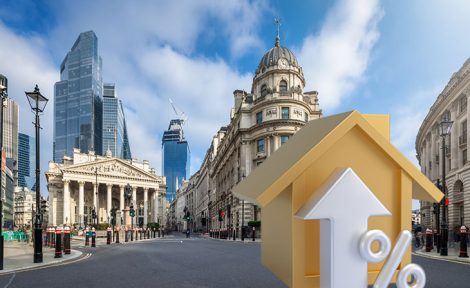
The Bank of England today raised interest rates to 4% - a 14-year high and the 10th consecutive raise - making rates their highest since 2008 as double digit inflation continues to bite.

The Bank of England today raised the base rate from 3.5% to 4% – a 14-year high and the 10th consecutive raise – making rates their highest since 2008 as double digit inflation continues to bite.
While most borrowers are already fixed into mortgage deals some 2.2 million are thought to be exposed to rate rises and more than a million are forecast to renew fixed-rate deals later this year.
Meanwhile Nationwide reported yesterday that house prices in the UK fell again in January, sliding for the fifth month in a row.
INFLATION
The Bank of England says that while global consumer price inflation remains high it is likely to have peaked in the UK as well as in other advanced economies.
“Many central banks have continued to tighten monetary policy, although market pricing indicates reductions in policy rates further ahead,” the MPC, which is headed up by Governor Andrew Bailey (main pic), said.
“Given the lags in monetary policy transmission, the increases in Bank Rate since December 2021 are expected to have an increasing impact on the economy in the coming quarters.
“The Committee has voted to increase Bank Rate by 0.5 percentage points, to 4%, at this meeting. Headline CPI inflation has begun to edge back and is likely to fall sharply over the rest of the year as a result of past movements in energy and other goods prices.
“However, the labour market remains tight and domestic price and wage pressures have been stronger than expected, suggesting risks of greater persistence in underlying inflation.
“Looking further ahead, the MPC will adjust Bank Rate as necessary to return inflation to the 2% target sustainably in the medium term, in line with its remit.”
GLOOM
However despite the gloom some long-term money deals have already started to fall. Just this week Virgin Money launched a sub 4% 10-year fixed rate deal.

Nathan Emerson, Chief Executive of Propertymark, says: “We of course are seeing challenges within the market as the cost of people’s mortgage payments are in some cases a lot higher than they have been traditionally used to.
“However, due to the demand for homes continuing to outweigh the number of properties available, this is fuelling a more stable market.
“With Banks stress testing people’s finances for many years, arrears and repossessions aren’t drastically increasing and we are therefore seeing a levelling out of the market and a return to more normal levels of housing transactions.”
INDUSTRY REACTION
Yesterday the Federal Reserve raised rates 0.25% while later this afternoon the European Central Bank will also make its interest rate decision, with many pundits forcasting a 0.5% raise too.
Those directly impacted by the change will know all about it in their repayments.”

Jeremy Leaf, north London estate agent and a former RICS residential chairman, says: “The effects of the Bank of England’s base rate decision have seemingly been discounted by many homebuyers and sellers who are on fixed-rate deals which don’t expire for some time yet.
“But don’t get me wrong, those directly impacted by the change will know all about it in their repayments.
“The impact on house prices has been a reminder that negotiations can be tough if transactions are to happen as prospects are not exactly rosy.
“While another base-rate rise is unwelcome, more attention is being focused on two- and five-year fixed-rate mortgages, which thankfully have started to fall. This will bring much-needed stability and confidence to take on debt, despite continuing worries about the economy.”
The base rate is fast becoming a financial football.”
Financial football

Nick Leeming, Chairman of Jackson-Stops, says: “The base rate is fast becoming a financial football in which both the government and Bank of England are trying desperately to avoid an own goal.
“Today’s interest rate rise has been widely expected, demonstrating the Bank of England’s commitment to curb inflation and settle wider economic markets. The bigger question mark is whether this is the last significant rate rise for some time, enough to put inflation on a downward trend.
“The market will be hoping that rates now sit around this point for the immediate term, or until economic growth picks up, to allow mortgage markets to lean back into growth.”
At this rate we’ll be back to the depths of the financial crisis in short order.”

Marc von Grundherr, Director of Benham and Reeves, says: “Achieving the heights of a 4% borrowing rate would have been seen as fantastical a year ago yet we have now reached it, the highest since 2008. We all know what 2008 is synonymous with and at this rate (pun entirely intended) we’ll be back to the depths of the financial crisis in short order.
“Just as overseas property buyers are returning to the capital after a near three year hiatus, those wanting to do so via a UK mortgage are facing an increasing financial obstacle and with even further pressure on house prices as a consequence.”
Another bank rate hike that will see potential homebuyers crying in their avocado sandwiches.”

James Forrester, Managing Director of Barrows and Forrester, says:“Another bank rate hike that will see potential homebuyers crying in their avocado sandwiches.
“It’s hard to understand how the government’s quest for growth can be squared with these ridiculous and all too regular jumps in bank rate. The two are totally at odds with each other and today’s announcement is further confirmation that Andrew Bailey’s hand doesn’t know what Jeremy Hunt’s is doing.
“The economy needs a boost as does the housing market and this obvious confusion amongst our so-called leaders is doing nothing to drag us back to being an economic leader in the world. We’re in danger of becoming a global white elephant economically and it’s frankly embarrassing.”
Prices are holding and in some cases exceeding expectations.”

Alex Lyle, Director of Richmond estate agency Antony Roberts, says: “The £1.5 million-plus house market remains relatively resilient to rising interest rates although admittedly we are not registering the same volume of new buyers as this time last year.
“Overall though, prices are holding and in some cases exceeding expectations, as a significant percentage of buyers within this section of the market do not require mortgage finance. We have seen three sealed bids since the start of the year, with two leading to record-breaking off-market sales. Both were cash buyers.
“The market for properties sub-£1m is much less active and less secure. Given that it’s the tenth rise in a row and we are already working with a smaller pool of buyers, this latest rate rise will not be helpful to the market.”
We’re not quite out of the economic woods yet.”

Chris Hodgkinson, Managing Director of House Buyer Bureau, says: “This latest rise in bank rates may well be the last as inflation is said by many economists to have peaked.
“This will be welcome respite for homeowners with a variable rate mortgage in particular and notwithstanding that some 70% of mortgage holders are on fixed rates in any case and remain somewhat unaffected by the Bank of England’s enthusiasm to make borrowing more expensive.
“Whilst we have seen rate turbulence affect housing market sentiment resulting in softer prices in recent months, we can now expect a more stable, normal market in the latter part of this year.
“We’re not quite out of the economic woods yet, however there is certainly room for more optimism compared to the latter part of 2022.”
Another cost that homeowners will need to factor into their monthly budgets.”

Tim Bannister, Rightmove property expert, says: “Today’s 0.5% rise in the Bank of England base rate is another cost that homeowners on a tracker mortgage will need to factor into their monthly budgets when the full rate rise is passed on.
“It’s likely that many of those on a tracker mortgage will still be on a lower rate than most current fixed-deals even with this increase, so we’re unlikely to see any rush to fix from this group just yet, although with the gap between tracker and fixed rates narrowing it may prompt more people to see what’s on offer in the coming weeks.
“For those considering taking out a fixed mortgage deal soon, the good news is that this increase was widely expected by the financial markets and will have likely been factored into their plans. This means that we may see fixed-rate mortgage deals continue to edge downwards in the first half of this year, as some stability and calm continues to return to the markets.”
This will further exacerbate increasingly stretched affordability and is bound to affect confidence.”

Jason Tebb, Chief Executive of OnTheMarket, says: “This 50 basis-point rise, taking rates to 4%, was widely expected by the money markets given double-digit inflation, even though it is slowly edging downwards.
“However, the tenth rate rise in as many meetings will further exacerbate increasingly stretched affordability and is bound to affect the confidence of the average property-seeker.
“The housing market continues to rebalance in terms of supply and demand, yet serious buyers and sellers continue to engage with each other despite rising interest rates and the higher cost of living.
“With buyers potentially having even less buying power after today’s announcement, making sure properties coming to market are priced well is crucial.”
The cumulation of 10 successive rate rises is significant.”

Mark Harris, Chief Executive of mortgage broker SPF Private Clients, says: “While 4% may not be the peak for base rate, it is unlikely to be far off.
“Fixed rates are influenced by future base-rate movements and therefore not directly linked to what is decided this week.
“Indeed, the pricing of fixed-rate mortgages, which soared after the mini-Budget, continues to drift downwards, with 5-year fixes available from just above 4%. It’s unlikely to be long before we see 5-year fixes cheaper than base rate.
“Those on base-rate trackers will find their mortgage rate increase by 50 basis points. A borrower with a £250,000 repayment mortgage on a 25-year term and a pay rate of 3.5% will see that rise to 4%, with monthly payments rising from £1,252 to £1,320.
“The cumulation of 10 successive rate rises is significant. A borrower with a £250,000 mortgage on a tracker pegged at 1% over base rate will have seen their monthly payments rise from £954 in December 2021, when base rate rose from 0.1% to 0.25%, to £1,461 today.
“With a variable-rate deal, the link between the lender’s variable rate and base-rate moves are less transparent. The lender may decide to pass on none, some, all or even more than the base-rate rise.
“Buyers who believe fixed rates will continue to fall may wish to consider a variable/tracker rate product with no early repayment charges, moving onto a fix should rates become more palatable. However, if you can’t afford to be wrong – that is, if rates were to rise, you would struggle to pay your mortgage – then a fix would be the sensible.”
Hopefully, this is now the top of the tightening cycle.”

Dominic Agace, chief executive of Winkworth, says: “Hopefully, this is now the top of the tightening cycle, with one more smaller increase expected before a cut later in the year.
“The interest rate had become detached from many people’s mortgage costs after the mini-budget and with fixed rate mortgage costs reducing this year and with private sector wage settlements at 7%, property affordability is improving.
“This has been reflected in a brighter then expected start to 2023, particular in cities amidst the return to work and in the flats market, being driven by increasing rental costs.”
It’s almost impossible to remember that the Bank of England base rate stood at just 0.1% in December 2021.”

Adrain Anderson, Director at Anderson Harris, says: “The cost-of-living crisis continues and 2023 will most likely see households face some of the most challenging conditions for living standards on record.
“The question now is will the Bank of England base rate stay at this level or rise further, peaking at around 4.25% or 4.50%? And then how long it will have to stay at these levels to ensure inflation is under control? It’s a fine balancing act.
“It’s almost impossible to remember that the Bank of England base rate stood at just 0.1% in December 2021.
“Some 1.8 million mortgage holders will see their fixed rate deal finish in 2023 and are yet to feel the impact of rising interest rates.
“These homeowners, along with the estimated twomillion on variable rate deals are likely to have a mortgage shock and face a significant increase in their payments at the same time as most of their other outgoings have increased markedly.”
Today’s rates increase will extend this period of market correction.”

Andy Sommerville, Director at Search Acumen, says: “With interest rates now at their highest level since 2008, the rising cost of borrowing is significantly shifting the dynamics of the commercial and residential property markets.
“New Bank of England data shows mortgage approvals have fallen by 23% and we saw 8% decline in commercial transaction volumes through 2022, as the increased cost of capital put pressure on investors, ultimately kick starting a period of price correction across most sectors.
“Today’s rates increase will extend this period of market correction as property owners and investors have to contemplate rising costs, the impacts of persistently high inflation on occupier demand, and the prospect of declining valuations.”
Both prospective buyers and sellers may think twice about their home-moving plans.”

Simon McCulloch, Chief Commercial and Growth Officer at Smoove, says: “The Bank of England’s decision to raise rates today puts further strain on people facing an already challenging property market.
“Those on tracker mortgages or people soon approaching the end of their current mortgage deal are going to see a jump in their monthly repayments, which will place added pressure on the many borrowers already feeling the effects of high inflation.
“For first-time buyers, the most recent hike may also cause any immediate plans to enter the property market to be postponed.
“While an intrinsic shortage of housing stock will continue to uphold house prices, both prospective buyers and sellers may think twice about their home-moving plans in the short term.”
Not all members of the Monetary Policy Committee agreed with this.”

Simon Webb, Managing Director of Capital Markets and Finance at LiveMore, says: “This is the tenth consecutive base rate rise taking it to a 14 year high of 4%.
“But not all members of the Monetary Policy Committee agreed with this as seven voted for a 0.5% rise and two wanted no increase.
“This reflects the uncertainty around the economy such as when inflation will come back down to more palatable levels, and when and if we are going into a recession.
“Mortgage borrowers on trackers and those with fixed rates due to mature will once again be impacted by this rise.
“However, the market and lenders have priced this rise in so product rates should remain steady and have been coming down this year.”
Consumers are already preparing for more tough times ahead.”

Tomer Aboody, Director of lender MT Finance, says: “Borrowers will be hoping that this latest rate rise will be one of the last to come in quick succession.
“With Rishi Sunak’s government pushing to halve inflation by the end of the year, it is not unreasonable to question whether there could be an even bigger stimulus for the property market in the form of a possible reduction in interest rates from next year.
“One thing’s for sure, consumers are already preparing for more tough times ahead while they wait for some relief from aggressive rate rises.”
This is miles away from the now distant days of a sub 1% environment.”

Jonathan Samuels, Chief Executive of lender Octane Capital, says:“Another month, another escalation of the Bank of England’s current stance on raising borrowing costs. This is the tenth consecutive rise from our friends in Threadneedle Street and miles away from the now distant days of a sub 1% environment.
“That said, one hopes that all of the blood has now been squeezed from the stone and that rates have peaked. Surely it’s time that we focus on investing in business growth now that inflation seems to be tamed at last?”
Rising interest rates have major consequences for the housing market.”

Avinav Nigam, Co-founder of real estate investment platform, IMMO, says: “This increase in interest rates was expected given the pace of inflation.
“Rising interest rates have major consequences for the housing market. There is an immediate increase in the cost of mortgages for the circa 2 million borrowers on variable-rate mortgages, which could mean an increase in the supply of properties for sale, with negotiating power shifting to buyers.
“That said, a significant reduction in property prices is not anticipated since demand for homes is strong and growing. Higher interest rates alongside labour and material price inflation mean that building new homes is getting harder and more expensive. Many projects are being paused, reducing future supply.
“Higher rates further reduce aspiring homebuyers’ ability to afford to purchase a home, reducing demand. The result of this is more demand for rental housing, and therefore a greater need to put time, money and effort into improving our private rental sector housing stock.
“The institutional investors we work with tell us that as interest rates rise, investing in and improving rental housing makes even more sense commercially and socially.”
There are solid indications that inflationary pressures are reducing.”

Andrew Gething, Managing Director of MorganAsh, says: “With a clear mandate to reduce inflation it is no surprise to see the half-point hike announced today. There are solid indications that inflationary pressures are reducing, so there is a fair chance this increase will not need to be repeated.
“While it is painful for mortgage borrowers, we need to put in perspective the very low rates the mortgage market has enjoyed were unsustainable, and hoping they will return to such low rates is unrealistic.”
“With every successive rate rise, consumer vulnerability becomes an even bigger factor. The heavy burden of higher mortgage payments will stretch borrowers and force many to make difficult compromises, particularly when it comes to protection and insurance. With Consumer Duty just months away, the FCA has rightly identified a significant shortcoming in preparation by firms to measure vulnerability and monitor customer outcomes.
“As more consumers potentially display vulnerable characteristics, firms must place greater emphasis on their monitoring and data strategy. Not only is it essential in protecting customers and ensuring fair value but delivering good outcomes as required by Consumer Duty. All the above have been identified as key areas of focus for firms by the FCA.
“Recent bad press on the treatment of vulnerable consumers by the energy sector should be taken as a warning that pressure may well come from the consumer as well as the regulator.”
No doubt lenders will be jockeying for business.”

Adam Oldfield, Chief Revenue Officer at Phoebus Software, says”“Today’s increase was not wholly unexpected, even though two members would have preferred the rate to remain at 3.5%.
“Although global inflation remains high the latest figures in the UK show that perhaps inflation is starting to level out.
“So, it will be interesting to see whether the bank uses the next meeting to increase the base rate again to the predicted peak of 4.5%, in line with previous announcements from the governor.
“For the housing market it will be the headlines of an ‘increase in the base rate’ that most would-be house buyers, and those remortgaging, that will see first.
“Whether or not mortgage lenders are automatically raising their rates it may be enough to cause a further knock in confidence, which could stall the market further.
“We have heard that more house-hunters have registered interest in January, so demand is picking up. It just depends on how people perceive another hike in the base rate and how badly they need to move.
“No doubt lenders will be jockeying for business, which may see the recent spate of fixed rate reductions continue.”






Wholly unnecessary increase that will exacerbate the problems; how does adding to people’s outgoings deal with increasing wage demands? One-trick pony policy – and a blinkered one at that.