Bank of England reveals latest interest rate decision
The Bank of England's Monetary Policy Committee has made its latest move amid rising inflation and continuing economic uncertainty.
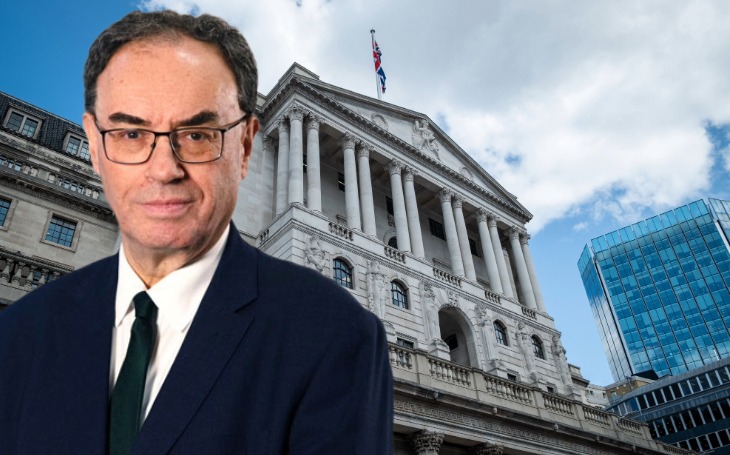
The Bank of England has held interest rates in what may be a blow for borrowers hoping for cheaper mortgages any time soon.
The Bank’s Monetary Policy Committee (MPC) voted to freeze the cost of borrowing at 3.75%.
MPC members voted by a majority of 6–3 to maintain Bank Rate at 3.75%. Three members voted to increase it by 0.25 percentage points, to 4%.
It comes as Bank of England Governor Andrew Bailey (pictured) and the MPC remain concerned about inflation staying high at 3.1% and swap rates rising, which has already prompted mortgage lenders to hike mortgage rates.
Most analysts had expected another hold but the Fed’s decision to raise rates in the US this week had prompted speculation that the UK central bank could follow.

Neil Louth, Group Executive Director, at LRG and Chief Executive of Acorn Group, says: “Today’s decision to keep Bank Rate at 3.75% provides a welcome window of stability ahead of the Budget on 28 October and the Bank’s next decision on 5 November, in advance of which the markets are increasingly pricing in the possibility of a rise.
“The clearest sign of resilience is that people with a genuine reason to move are still transacting. Families need more space, parents move for schools and older homeowners want to downsize. People cannot put their lives on hold indefinitely and we continue to see active buyers and sellers entering the market for those reasons. We are also seeing early signs of some landlords returning where corrected prices are creating better long-term value.
“Mortgage costs are only one side of the equation. The price paid for the property matters just as much. In prime central London, values are approximately 24.5% below their 2014 peak and around 50% lower after inflation. Mortgage rates can change when buyers refinance, but the price agreed for a property cannot. For buyers who can manage the repayments and take a longer-term view, this represents some of the best relative value available for more than a decade.”

Verona Frankish, Chief Executive of Yopa, says: “Another hold may feel like more of the same, but for homebuyers, it will at least provide some predictability.
“The market has already shown it can function with rates at their current level and, for serious buyers, certainty over what they can afford is arguably more important than trying to second-guess when the next cut might come.”
 Jeremy Leaf, north London estate agent and a former RICS residential chairman, says: “The decision to leave rates unchanged, which seemed fairly straightforward a few weeks ago, is now a little trickier. A rise in interest rates is becoming increasingly likely and now sooner rather than later.

Nathan Emerson, Chief Executive at Propertymark, says: “When considering the wider economic pressures currently in focus, it is positive news to see the Bank of England’s Monetary Policy Committee take the decision to maintain the base rate at 3.75%.
“With a backdrop of continued global unease, many aspects of the housing market have become substantially more subdued than normal, with consumers rightly acting with a greater degree of caution before committing to longer-term and high-value borrowing.
“It will be a case of closely watching what might be announced in the Autumn Budget next month, particularly concerning housing and what support may be offered to first-time buyers, for example.”

Jason Tebb, President of OnTheMarket, says: “As expected, the Bank of England kept base rate at 3.75 per cent for another month.

Iain McKenzie, Chief Executive of The Guild of Property Professionals, says: “The Bank of England’s decision to hold rates at 3.75% for a sixth consecutive meeting will come as little surprise, but the latest inflation figures underline just how difficult the path back to the 2% target remains.
“For the housing market, the key concern is that higher inflation and rising swap rates feed through into mortgage pricing, putting further pressure on purchasing power at a time when affordability is already stretched. That could make the autumn market more subdued than the seasonal pickup we would normally expect, particularly in higher-value areas where the impact of mortgage costs is magnified.
“That said, we are seeing early signs of buyers returning to the market as people get back into their normal routines after the summer. There is demand, but buyers are likely to remain highly price-conscious, taking advantage of the choice available to them.
“With transactions in July already 2% lower than the previous month, the combination of affordability constraints and elevated borrowing costs means a meaningful recovery in activity is likely to depend on greater stability in the mortgage market.”

Nicky Stevenson, Managing Director of Fine & Country, says: “The Bank of England’s decision to hold rates at 3.75% comes at a time when inflation continues to move further away from its 2% target, adding further pressure to an already closely watched property market this autumn.
“There are early signs of renewed activity as buyers and sellers return to normal routines after the summer, but the market remains firmly price-sensitive. Mortgage costs are still weighing on affordability, while buyers have a high level of choice and can afford to be selective.
“In this market, optimism is not a pricing strategy. Getting the pricing and positioning right from day one will be critical. Homes that are priced realistically can still attract attention from motivated buyers, but properties that start too high risk sitting on the market while competing stock continues to build.
“It is about recognising where buyers are today. In a market where affordability is under pressure, realistic pricing is increasingly the difference between generating meaningful interest and becoming another property that buyers scroll past.”