House prices edge up despite political chaos
While the pace of house price growth is small, it is the direction that has surprised many commentators given Britain's political uncertainties.
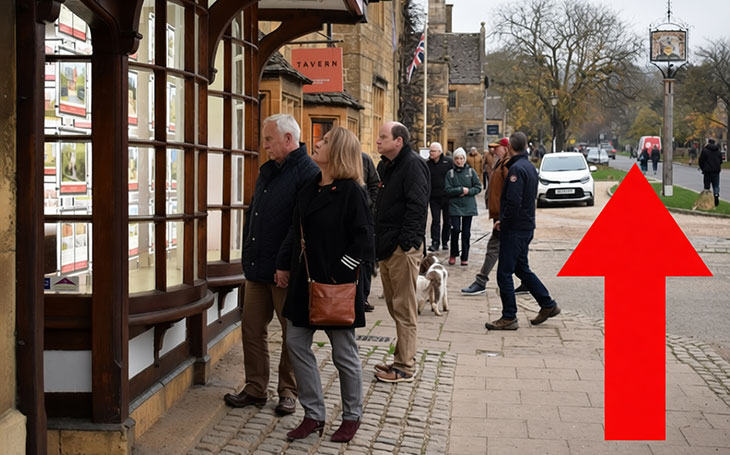
House prices rose in June, for the first time since February – despite the political chaos, new figures have revealed.
Lloyds revealed that values edged up 0.2% last month compared to the previous month, and have increased 0.6% compared to a year ago.
It means the average value of a home in Britain currently stands at £299,330.
The newly named Lloyds House Price Index takes over from the Halifax House Price Index after the Halifax brand was axed.
While the pace of growth is small, it is the direction of house prices that has surprised many commentators given the global and domestic uncertainties – including the resignation of Kier Starmer on 22nd June.
Household confidence
Lloyds suggested that the slight increase could be attributed to a fall in mortgage rates, and and improving household confidence.
Amanda Bryden, Head of Mortgages at Lloyds, says: “Recent price trends continue to reflect wider economic uncertainty, including the impact of global events on inflation and interest rate expectations.
“While affordability remains stretched for many buyers, mortgage rates have eased from their recent highs, offering some encouragement to those considering a move.
“While latest industry data shows the number of new mortgage approvals dropped in May, this wasn’t unexpected given the spike in rates seen earlier this year, and we’d expect to see activity recover assuming borrowing costs continue to fall.”
First-time buyers
The first-time buyer figures from Lloyds will be of particular interest to agents.
Lloyds said annual price growth for this group had increased 0.8% in June, up from 0.3% in May, with the average first-time buyer property currently costing £240,433.
Bryden adds: “Looking ahead, we expect the housing market to continue moving at a measured pace.
“Lower borrowing costs should provide some support for demand, though affordability constraints remain an important factor.
“The outlook for house prices will depend largely on inflation continuing to ease and household confidence gradually improving.”
The outlook for house prices will depend largely on inflation continuing to ease and household confidence gradually improving.”
Industry reaction

Nathan Emerson, CEO of Propertymark, says: “When taking a broad view of the property market and the wider economy, it is encouraging to see average UK house prices deliver growth, both month on month and year on year.
“However, with Bank of England data showing mortgage borrowing has fallen for a second consecutive month, it will be important to keep close check on how this affects house prices over the summer.
“While consumer confidence remains relatively stable, the coming months will be key to monitor as the economy looks to hopefully strengthen.
“Across the summer, attention will also likely turn to new political leadership and what a change in Prime Minister could mean for the property sector. Housing remains central to economic growth and must be a priority across all nations within the UK.”

Jason Tebb, President of OnTheMarket, says: “Those who need to move continue to buy and sell homes. Affordability concerns remain but easing mortgage rates are helping, as borrowers adapt to shifting market conditions.
“Political uncertainty and challenging economic conditions continue to form a backdrop, but the resilience of the market and the needs-based buyers and sellers who have no choice but to proceed, is evident.
“With average house prices edging upwards, buyers and sellers are adopting a pragmatic outlook and adjusting expectations.
“For those hoping to get on the ladder for the first time, this is a more encouraging market to work with, free from boom and bust, with prices which are not running away with themselves and pricing would-be buyers out further.”

Jeremy Leaf, north London estate agent and a former RICS residential chairman, says: “Property prices have held up surprising well, bearing in mind continuing concerns about the impact of war on the cost of living and energy prices, as well as mortgage rates in particular.
“However, we are finding reluctance of some owners to recognise the new market realities of reduced confidence and difficulty of generating offers is holding back transactions.
“Now, political uncertainty is providing another excuse for buyers and sellers to sit on their hands. Speculation about tax undermines willingness to take on debt so the sooner Andy Burnham is confirmed as prime minister and we know where costs are likely to be changed the better.”
Gareth Lewis, deputy CEO of specialist lender MT Finance, says: “From a lending perspective, we are seeing valuers cautious on price while buyers are looking for a steal and prepared to negotiate hard.
“After a strong start to the market this year, we are now seeing the ramifications of an interest rate environment which has become unstable again, and the impact this is having on transactions.
“Volatile funding rates are the real issue at the moment; while everything pointed towards a lower interest rate environment at the start of this year, the impact of war in the Middle East has since changed this outlook.
“The housing market urgently needs some Government stimulus to encourage activity. Removing Stamp Duty would give a significant boost to the number of housing market transactions – after the deposit, Stamp Duty is the biggest outlay when buying a home.
“It isn’t just a big hit for those at the lower end of the market but impacts buyers at every level.
“If you are moving up the ladder and looking at what you can afford to buy, the whacking great stamp duty cost is inevitably going to limit how far you can stretch yourself.
“In terms of the land value tax that has been suggested as a replacement, an annual cost is something people would get used to over time whereas a one-off hit, like stamp duty, is much harder to budget for.”

Tom Bill, head of UK residential research at Knight Frank, says: “House prices are going sideways and transactions are falling as the result of higher mortgage rates since the start of the Middle East conflict.
“The good news is that geopolitical risks are subsiding as both sides move gradually towards a ceasefire and mortgages are edging lower.
The bad news is that domestic political risks are rising and various trial balloons about changes to property taxation are being floated for the third consecutive year, which will keep a lid on activity and prices this summer.”

Marc von Grundherr, Director of Benham and Reeves, says: “The housing market has demonstrated remarkable resilience over the past year, with house prices remaining broadly stable despite ongoing economic uncertainty and affordability pressures.
“Today’s figures suggest that the market is moving in a positive direction. While affordability pressures remain a challenge, buyers have adapted to the current interest rate environment and remain committed to moving when the right property becomes available.
“Greater stability in mortgage pricing has also helped improve confidence, supporting healthy levels of demand and creating a solid foundation for continued market stability and transaction activity over the months ahead.”

Iain McKenzie, CEO of The Guild of Property Professionals, says: “The return to monthly house price growth is an encouraging sign that the market continues to demonstrate resilience despite a challenging economic backdrop.
“Buyers remain cautious, but we’re seeing confidence gradually improve as inflation remains relatively contained and expectations for interest rates have become more stable.
“A steady Bank Rate has given lenders greater confidence to compete, and we’ve already seen mortgage pricing begin to edge down, which will improve affordability and borrowing power for many households.
“While buyers are taking more time to make decisions and remain highly price sensitive, the fundamentals of the market remain sound. Life events such as growing families, relationship changes and relocations continue to drive transactions regardless of wider economic uncertainty.
“At the same time, the increased supply of homes means buyers have more choice than they’ve enjoyed for some time. That creates a more competitive environment for sellers, making realistic, evidence-based pricing essential. Homes that are priced correctly continue to attract strong interest, while those chasing yesterday’s values are finding buyers less willing to stretch.”

Managing Director, of Fine & Country, says: “The housing market found a little more stability in June, with Lloyds reporting its first rise in house prices for four months.
“A monthly increase of 0.2% is modest, but that is no bad thing in the current climate. Buyers are still navigating affordability pressures and a shifting mortgage market, so steady movement is healthier than sharp jumps that risk pricing more people out.
“Confidence has been tested by global uncertainty, energy costs and changing expectations around interest rates, but lower borrowing costs are starting to offer some encouragement to those considering a move.
“That said, this is still a cautious market. Mortgage approvals softened in May, which tells us some buyers paused as rates rose earlier in the year. However, if borrowing costs continue to ease, we expect some of that activity to return as households regain confidence in what they can afford.
“It is also encouraging to see first-time buyer prices showing stronger annual growth, as demand at the entry point of the market is vital for keeping chains moving. When first-time buyers are active, it supports confidence further up the ladder. That should be kept in mind as the government consults on its proposed First Time Buyer ISA.
“On the ground we are seeing that buyers are active but selective, and sellers need to understand where demand really sits locally. If mortgage pricing continues to improve, the second half of the year should see a steadier flow of committed movers.”