Uncertainty and higher mortgage rates dampen buyer demand, RICS reports
Housing market still in the grip of headwinds stemming from the crisis in the Gulf, says RICS analyst, Tarrant Parsons.

Higher mortgage rates and uncertainty linked to the conflict in the Middle East are continuing to dampen buyer demand across the housing market, RICS’ latest survey reveals.
It found new buyer enquiries remained firmly negative at a net balance of -34%, although this was a slight improvement on March’s -40% reading. Agreed sales also stayed weak at -36%, while near-term sales expectations fell to -32%.
Surveyors also reported growing pressure on house prices, with the headline price indicator slipping to -34% from -25% the previous month. London, the South East, East Anglia and the South West recorded the greatest downward pressure, while the North West and North of England continued to post marginally positive readings, and prices were still rising in Scotland and Northern Ireland.
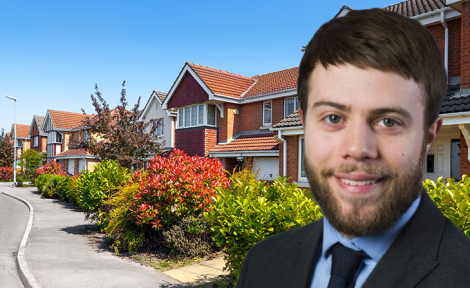
Tarrant Parsons (main picture), Head of Market Research & Analysis at RICS, said: “April’s results show a housing market still in the grip of macro headwinds stemming from the Middle East conflict.
Until there is a clearer path for inflation and borrowing costs, activity and sentiment look set to remain subdued.”
“Recent warnings from the Bank of England that interest rate rises may be required to tackle renewed inflation, driven by elevated oil prices and disrupted supply chains, underline the challenging environment facing buyers.”
He added: “Until there is a clearer path for inflation and borrowing costs, activity and sentiment look set to remain subdued, particularly across southern England and London where affordability pressures are most acute.”
Near-term price expectations also remained weak at -38%, while twelve-month price expectations slipped to +5%, the flattest reading since late 2023.
You can read the full report here.
Industry reacts

Tom Bill, head of UK residential research at Knight Frank, said: “After mortgage costs were pushed higher by the Middle East conflict and associated energy price shock, the prospect of a new government to the left of Keir Starmer brings its own inflationary concerns and has squeezed buyers further.
“Those sitting on mortgage offers that predate the conflict are keen to transact, but downwards pressure on prices will increase as offers lapse in the coming months. We expect minimal UK house price growth of 1.5% this year, but that depends on how events in the Middle East and at Westminster play out.”

Tomer Aboody, director of specialist lender MT Finance, says: “A combination of higher mortgage rates, lack of confidence in the government, global conflicts and the soaring cost of living are having a negative impact on the housing market, as both buyers and sellers alike think twice about making a move.
“The South East and London markets are feeling the brunt of this, due to the higher price point for buyers, with affordability even more of an issue.”

Jeremy Leaf, north London estate agent and a former RICS residential chairman, says: “Market activity was previously supported not only by wage growth outpacing house prices but by mortgage offers obtained at more advantageous rates before the war in Iran began.
“However, now those elements are beginning to unravel as hostilities persist, concerns about near-term interest rates and inflation are proving more relevant. The result is buyers and sellers are reverting to cautious mode. The amount of stock available – particularly of flats – means buyers find themselves in a strong position.
“Fortunately, relatively few previously-agreed sales are falling through, though we are seeing more re-negotiations and price reductions as the need-to-move sellers try to achieve their aims.”