Southern landlords face up to £22k tax hit
Wealth manager Rathbones is warning landlords against relaying on property rental income for their retirement.

Landlords in the South East are set to be worst hit by tax changes on rental income, research suggests.
From April 2027, landlords will pay four percentage points more tax on property income than they do today, following increases announced across the past two Budgets.
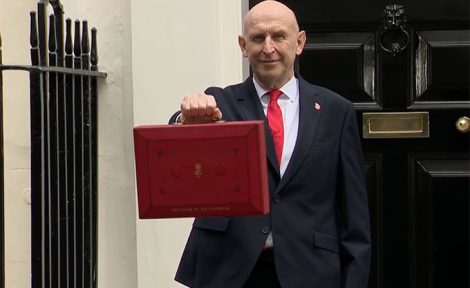
Chancellor John Healey confirmed in his Autumn Budget that income tax rates on rental income will rise from 20% to 24% for basic rate taxpayers, 40% to 44% for higher rate taxpayers and 45% to 49% for additional rate taxpayers.
The landlord squeeze is tightening from all directions and Southern England is particularly exposed.”
New calculations by wealth manager Rathbones illustrate how that squeeze could build over time across southern England.
Based on average rents, the four-percentage-point increase could mean £22,109 more tax over 25 years for landlords in the South East and £19,234 more in the South West, assuming rental income rises by 2% annually.
The South East faces the highest illustrative tax increase of any English region outside London, and a greater impact than the neighbouring East of England, where the equivalent 25-year figure is £19,956, according to the research.
Landlord squeeze
Faye Church (pictured), Head of Rathbones’ Guildford office, says: “The landlord squeeze is tightening from all directions and Southern England is particularly exposed.
“With more than 150 pieces of lettings legislation estimated to navigate alongside rising tax and costs, being a landlord has become increasingly demanding. We’re hearing from clients considering cutting their portfolios or selling up altogether.
“But today’s landlord squeeze risks becoming tomorrow’s renter squeeze. If landlords sell up or feed higher costs through into rents, aspiring homeowners across the South could find themselves paying more each month while having even less left over to save for a deposit.”
Smaller landlords hit hardest
The change could be particularly significant for small private landlords who rely on property income in retirement.
Rathbones highlights Government research found almost a third, at 31%, of private landlords surveyed in England are small-scale retired landlords, typically owning one or two properties and viewing their portfolios as investments to supplement retirement funds.
Church adds: “For a generation of retirees, bricks and mortar have become an important part of the retirement income mix. Some invested in buy-to-let during their working lives, while others acquired property through inheritance and use the rental income to supplement pensions and savings.
“Owning an additional property can make someone look asset-rich on paper, but that doesn’t necessarily mean they’re cash-rich in retirement. For some, rent helps bridge the gap between pension income and everyday spending, so a higher tax take could be felt well beyond the wealthiest landlords.”
The findings reinforce Rathbones’ 2026 Don’t Bet the House research, which warns against relying too heavily on property to fund retirement.