Mortgage senior: ‘Let’s end this empty homes madness’
Martese Carton, Director of Mortgage Distribution at Leeds Building Society, says a national strategy on empty homes could be one of the solutions to our housing supply crisis.

Everyone agrees that we need to build more homes. But addressing supply is not just about building more new houses it’s also about looking at how we can make more use of our existing stock.

The housing market does not function effectively – according to the latest census data published earlier this month, around 70% of all owned properties are now under-occupied. Empty nesters are disincentivised from down-sizing while stamp duty is a major barrier for families wishing to move up the housing ladder.
AVAILABLE
The net result is a lack of typical first-time buyer homes available to buy.
Providing people with good housing really matters. Homeowners are less likely to live in overcrowded or damp conditions, they move home less often and are more likely to feel they belong in their community. This is good for children growing up as it leads to better outcomes in health, education, and social mobility.
The maddening thing is that the UK is not utilising its existing housing stock.”
The maddening thing is that whilst the speed of building new properties continues to fall, the UK is not utilising its existing housing stock. The number of homes across England which are standing empty – currently around 670,000 – shows no signs of reducing.
ACTION
But rather than getting more of these properties back into circulation, research by national campaigning charity, Action on Empty Homes, showed that in 2022 the number of long-term empty homes in England (those properties which have been empty for over six months) continued to rise and now totals 248,633 – well above the 2016 low point of 200,145 long-term empty properties.
So, what can be done to improve our existing housing stock? Re-purposing and retrofitting our existing housing stock should be a key government priority.
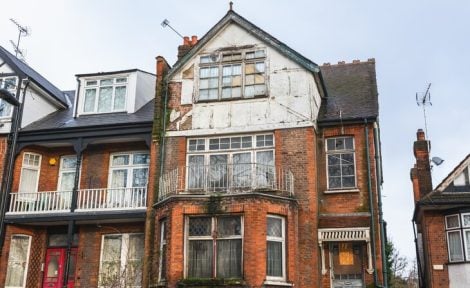
Empty homes come in all shapes and sizes. They include derelict homes as well as homes that just need some slight renovation. But they also include new build flats which have been purposely left untenanted. Some of these empty homes are in a bad state of repair but many are also in a reasonable condition.
UPGRADES
In a lot of cases some basic upgrades are all that required to get the house back into use. Recent estimates show that the average empty home only needs around £20,000 spending on it to make it habitable once again.
There is a growing sense that these empty properties should provide some of the solutions to the housing shortage.
There are neighbourhoods throughout the country with large clusters of empty homes. Historically these areas included properties which under previous legislation had been earmarked for demolition.
Legislation changed preventing demolition, resulting in large numbers of properties remaining empty. Tackling empty homes in these areas would certainly help local regeneration and could be part of wider neighbourhood initiatives.
STRATEGY
In February, Action on Empty Homes will be holding their annual National Empty Homes Week.
They are calling for a new national strategy on empty homes along with the creation of a national fund to support councils in bringing tens of thousands of long-term empty homes back into use through a locally focused programme of grants and loans.
The interesting point is that this is not new. We have had a national empty homes fund before and it was highly successful, breathing new life into thousands of empty properties and helping regenerate numerous neighbourhoods.
Perhaps it could be one of the possible solutions to our current housing supply crisis?
Martese Carton is Director of Mortgage Distribution at Leeds Building Society.