Turn web traffic into landlord enquiries – not just clicks
Nelly Berova reveals seven steps for turning a letting agent's high performing website traffic into landlord instructions.
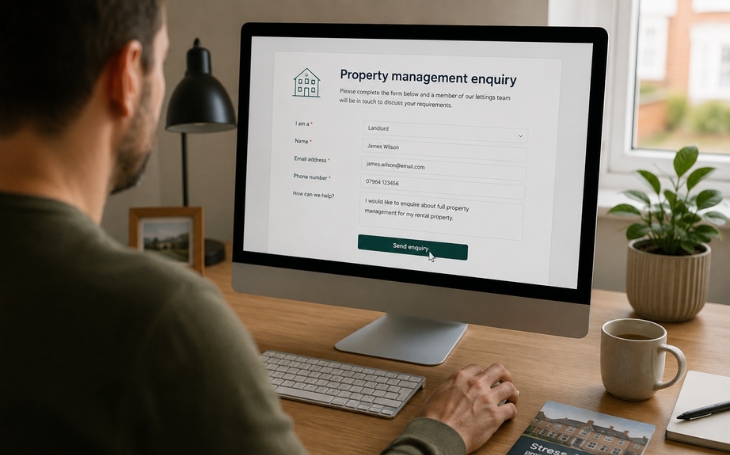 What makes a successful website? Your first reaction might be one that gets lots of traffic, but that isn’t necessarily the case. If you’re wondering why your busy website isn’t bringing you new landlords, we look at what you might be doing wrong – and how to correct it.
Our analysis shows that most letting agent websites get some level of traffic – people arriving from the property portals, Google, social media, email campaigns and more – but these visits aren’t generating new landlord enquiries. We’ve looked at the high-performing letting agent sites – and their success isn’t down to traffic – it’s about what happens next.
Step 1: Attract the right traffic
The best agents don’t just chase volume. They purposefully attract the visitors with the intent to become future landlords. If you’re wondering how they could possibly know – this is where SEO-driven content comes in.
If you want to get potential customers to visit your site, you need optimised pages that talk directly to landlords in your area about the things they want to know – “How much rent can you achieve in central Manchester?” or “Is Clapham a good place to invest?” for example.
Create pages that target the searches landlords are making in your area.”
Create pages that target the searches landlords are making in your area, with the content that answers their concerns – about rental yields, demand for property, tenant profiles etc. The people asking these questions are far more valuable to you than a generic visitor.
Your blog content is also crucial to drawing in the right landlords. As with your area pages, base your content around real-world landlord concerns, “New rental regulations explained” or “Should I set up a limited company for buy-to-let?”.
This type of content attracts the right organic traffic. It also positions you as an expert among people just starting their search. By the time they are ready to commission an agent, you’re already the trusted option.
Step 2: Give a reason to convert
Most websites can’t wait to jump customers to the “Book a valuation” stage. We’re all for prominent calls to action (CTAs) but many landlords aren’t ready for that yet.
Top-performing agencies capture interest earlier with attractive offers. These could be a well-executed instant valuation tool, a complete guide for landlords to download, checklists, market reports, yield calculators, etc, etc. They work because they offer value before they ask for something in return.
Step 3: Capture the lead
High volume traffic means nothing if you don’t use it to capture data about who is visiting so you can keep the conversation going. Do this with short simple forms to elicit landlord contact details.
Placement is everything, so create multiple opportunities to click “get a valuation” – as pop ups, within posts and as sticky headers. Make sure landlords understand what happens next – and, above all, optimise your pages for mobile.
Step 4: Nurture the landlord
Even at this stage, most agents fail to stay in touch, losing their carefully captured leads to a competitor. High-performing agencies build simple nurture systems, which use a sequence of emails to build trust.
This could include market updates, landlord tips, news about regulatory changes or, best of all, targeted content based on their interests. This matters because many landlords convert weeks or months later – not instantly.
Step 5: Use retargeting to stay visible
Most website visitors won’t convert on the first visit but if you don’t retarget them, they disappear. Retargeting shows your ads to previous visitors, when they are elsewhere on the web. It reinforces your brand and brings customers back to you when they’re ready.
If you don’t retarget them, they disappear.”
Tag lines like “Still thinking about letting your property?” or “See how much rent your property could achieve,” can place you front of mind at a crucial moment.
Step 6: Turn content into conversion funnels
The best agencies don’t treat blogs and area pages as isolated content; they turn them into funnels that take leads on a journey to conversion.
Say a landlord searches, “Rental yields in Nottingham”, and lands on your optimised blog or area page. They’ll read your local insights with data that builds trust.
At this point, you offer them a data-packed report to download in return for their email address, which allows you to continue to nurture them.
Step 7: Use AI to optimise and scale conversions
AI is increasingly used to improve both SEO and conversion rates. Leading agencies are using it in many ways – from generating local landlord content to powering chatbots for instant enquires or analysing user behaviour to optimise pages.
Don’t miss out on the opportunities new technology presents to get the most from your website traffic.
In today’s market, the agents winning more landlords aren’t necessarily the ones with the heavy traffic. Most estate agency websites are passively waiting for someone to make an enquiry but the best sites actively guide visitors towards becoming landlord leads. They’re the ones that attract the right visitors, capture their details, nurture them over time and stay visible until they’re ready to sign up.
Get this right and your website stops being a glorified brochure and starts becoming your most reliable source of new landlords.
Need help? Got a question? Visit www.artdivision.co.uk.