
Spicerhaart branch in Norwich ticked off by advertising watchdog
Advertising Standards Authority told firm to remove advert after complaint from member of public.
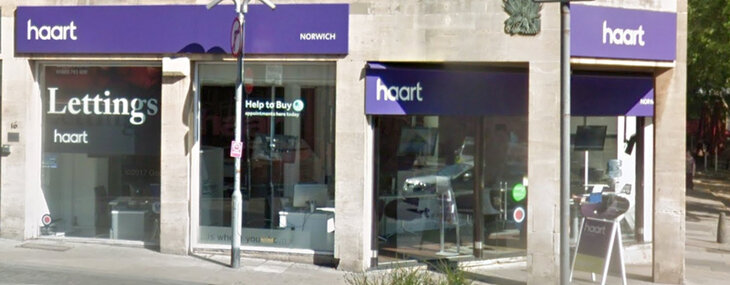
Spicer Haart Norwich got a small rap on the knuckles from the Advertising Standards Authority (ASA) after it mistakenly advertised a property with a garage – when there was none.
One eagle-eyed member of the public spotted the gaffe and reported the firm to the ASA which took swift action.
A spokesman for the ASA says: “A property listing on the company’s website stated that a property included a garage.
We received a complaint that the ad was misleading as the property did not include a garage.”
“We raised these concerns with the advertiser and they removed the ad in question.”
A source familiar with the situation adds: “What happens in these circumstances is that we approach the advertiser with the nature of the complaint and they agree to amend it and we reach an informal conclusion and no further action is taken.”
A spokesperson for Spicerhaart says: “A review of the documentation held by the Land Registry indicates that it was correct to describe the property as having a garage and that whilst some confusion had previously arisen owing to an error in the original lease of the property this was corrected by 2004.
“We understand that the prospective purchaser of the property has proceeded with the purchase. Any information provided to us regarding the property was supplied to the conveyancers acting for the vendor and purchaser.
“At Spicerhaart we always work hard to ensure we provide the highest standards of training and resolution and that we always represent properties accurately.”
CODE OF PRACTICE
Section 3 of The Property Obudsman Code of Practice for Residential Estate Agents states that when advertising for new business you must not use unfair methods.
It also adds advertising material should be in accordance with the Advertising Standards Authority’s (ASA) Codes and must be truthful, not misleading and fully explain who the message is from, its purposes and how the consumer’s interest can be followed up.
The ASA can also take the Consumer Protection from Unfair Trading Regulations 2008 into account when it rules on complaints about marketing communications that are alleged to be misleading.


