Mortgage rates to fall but more pain to come, think tank warns
Financial markets expect the Bank Rate to peak at nearly 5% in November but interest rates are expected to move much more slowly on the way down than on the way up.
Average mortgage rates are to start falling this year as the Bank of England comes to the top of the current rate cycle unless problems in the banking sector worsen significantly, research from the Resolution Foundation suggests.
But the think-tank warns that doesn’t mean the pain of higher mortgage payments is over.
PAIN TO COME
In its latest Macroeconomic Policy Outlook research paper Resolution Foundation senior economist Simon Pitaway says: “The prevalence of fixed-rate deals means that two-thirds of the pain is still to come.
“Relatively few households are on variable-rate deals that immediately benefit from falling rates, and many households have yet to come off their fixed-rate deals that were secured at historically low rates.”
Financial markets expect that Bank Rate will peak at nearly 5% in November.
But interest rates are expected to move much more slowly on the way down than on the way up – with Bank Rate expected to fall by just 1.25% in the three years after its peak to reach around 3.5% towards the end of 2026.
REMORTGAGE IMPACT
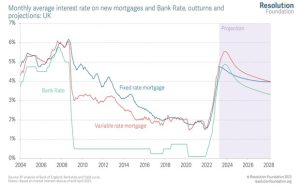 This is projected to leave the average rate on new mortgages at just over 4%, a level not seen in more than a decade (see graph).
And Pitaway says that despite interest rates nearing their peak, only half of the households that will eventually be impacted have been impacted so far and only a third of the mortgage pain they will collectively bear has been felt.

He adds: “We estimate that – in aggregate – annual mortgage bills have increased by £4.2 billion since the Bank started raising rates, with around £8 billion more to come in the next few years, and over £5 billion of that being felt in the next year.
“When that mortgage pain does arrive as households remortgage it will be significant, with annual mortgage bills rising by £2,300 on average for the 1.6 million households with expiring fixed-rate deals in the coming year.”