Leasehold property prices slide amid legal and financial concerns
Research suggests buyers are steering clear of leasehold flats due to tough lending criteria and delayed reforms.
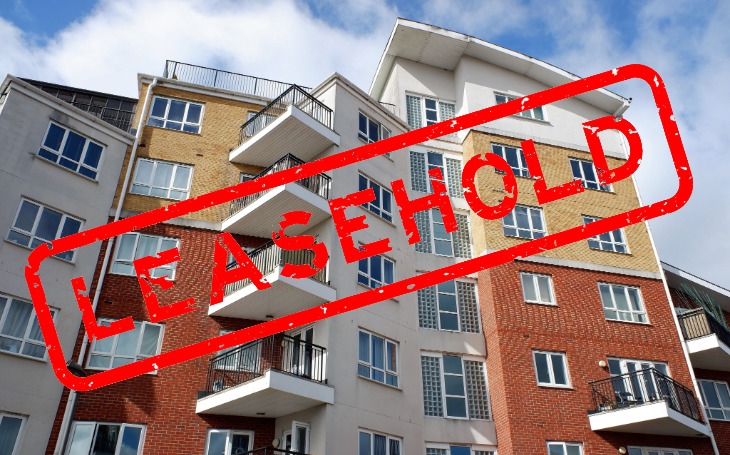
A divide has opened up in the housing market, with the value of freehold houses continuing to climb while leasehold flats actively lose value.
Analysis of the latest Land Registry data up to June 2026 reveals that flats and maisonettes are the only property type in Britain experiencing negative growth, falling by 2.27% year-on-year to an average of £216,246.
During a five-year period, flat values have depreciated by 1.56%, leaving owners trapped in depreciating assets that they may be struggling to sell while the rest of the market enjoys double-digit equity growth. The analysis shows that almost nine in ten leasehold flats are sitting on the market for more than six months.
We are seeing transactions stall on a daily basis because of delayed leasehold reforms.”
Conversely, the demand for space and freehold security has driven up the value of houses across the board.
Semi-detached properties lead the market with a 3.16% year-on-year increase, reaching an average of £285,618. Terraced houses follow closely, up 2.76% to £240,147, while detached homes have risen 1.98% to £463,547.
Andrew Boast, Chief Executive of SAM Conveyancing, which conducted the research, warns that the depreciation of flats is a direct consequence of mounting legal, legislative, and financial pressures on leaseholders.
He says: “The fall in value across the leasehold sector is mirrored exactly by the rise in headaches for owners and prospective buyers.
“We are seeing transactions stall on a daily basis because of delayed leasehold reforms and the sheer complexity of Building Safety Act compliance, ground rent clauses, lease terms and mortgagee protection clauses. Buyers are no longer just looking at the asking price, they are actively factoring in the legal risks and future liabilities.”
Finance fears
He suggests that the tightening of lending criteria has also severely impacted the flat market, making conveyancing more complex than ever.
Boast adds: ”Lenders are heavily scrutinising ground rent terms and insisting on strict mortgagee protection clauses.
”When you combine this with aggressive freeholder controls, escalating service charges, and unresolved cladding liabilities, many flats are becoming borderline unmortgageable without significant legal remediation. It is no surprise that buyers are pivoting toward the security and autonomy of a freehold house.”