Calls for 5% Stamp Duty threshold to change, saving £12.5k
The 5% Stamp Duty band between £250,000 and £925,000 is proving to be a "disincentive to move", claims Zoopla's Richard Donnell.
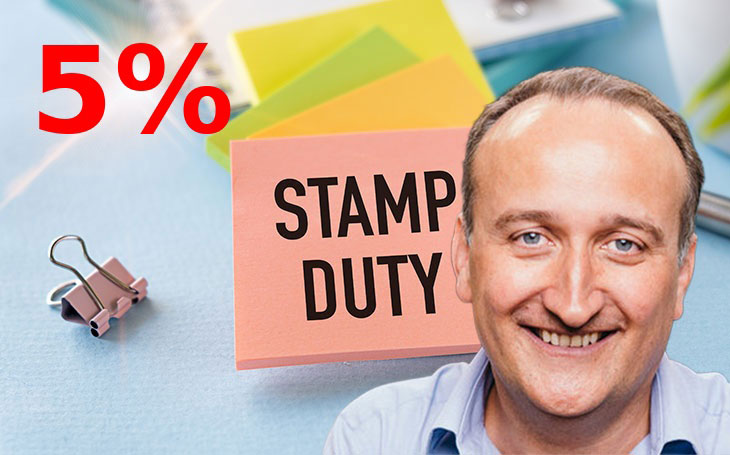
Pressure is intensifying on the Government to change Stamp Duty, with new calls to increase the 5% threshold to £500,000.
Richard Donnell, Executive Director at Zoopla, says this change would help average buyers in southern England with moving costs.
These moving costs can run into tens of thousands of pounds – particularly in London and the South East, where values tend to be higher – with Stamp Duty being responsible for a large chunk of that amount.
For example, on a property priced at £600,000, the Stamp Duty currently comes in at an eye-watering £20,000.
At £500,000, the Stamp Duty alone stands at £12,500. Other fees, including solicitor’s fees need to be added to the final moving costs bill.
Richard Donnell, Executive Director at Zoopla said: “The 5% Stamp Duty band between £250,000 and £925,000 hits a lot of average buyers of averaged priced homes across southern England, taking the Stamp Duty paid up to 3%-5% of the homes value.
The numbers add up and are a disincentive to move.”
“These people aren’t buying million-pound homes, but the numbers add up and are a disincentive to move.
He adds: “One option for Stamp Duty reform is to increase the threshold for the 5% rate to say £500,000, saving people up to £12,500.”
Stamp duty of 5% is currently paid on the portion of the property value between the portion from £250,001 to £925,000. Separate rates are applicable to first-time buyers and those buying a second property.
Stamp Duty reform
Donnell’s comments follow the Conservatives reiterating their pledge last week to abolish Stamp Duty if they return to power.
Shadow Chancellor Sir Mel Stride set out the pledge in a speech at last week’s Propertymark One annual conference.
He claimed the move would stimulate the housing market and help to boost housebuilding by as much as 25% – the equivalent of 200,000 homes in the next five years.
London estate agent and former RICS Residential chairman Jeremy Leaf welcomed the move, but questioned why the party hadn’t acted during their 14 years in power.
He said: “Stamp Duty may be an excellent revenue raiser but the way the tax is levied means it has become a burden on job and social mobility, compromising economic efficiency and reducing liquidity.”