MARKET: Property sales down 25% but ‘not all bad news’ – HMRC
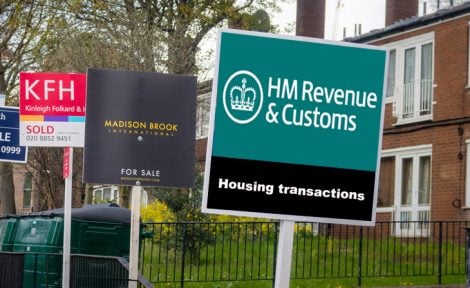
The latest figures from HMRC show a downturn in property transactions from last year, but some improvement in monthly totals.

New property transaction figures from HMRC reflect the cooler market with sales down a quarter on last year.
There was though an upturn in some of the figures between April and May, despite the effect of rising mortgage rates on the housing market.
The provisional non-seasonally adjusted estimate of the number of UK residential transactions in May was 74,360, 25% lower than May last year, but 10% higher than April this year.
And the seasonally adjusted figure for May was 80,020, 27% lower than May 2022, and 3% lower than April 2023.
More offers
London estate agency Chestertons saw 5% more properties coming onto the market, and 3% more buyer enquiries in May compared to April.
The agency also registered 10% more offers being made by prospective buyers in May than in April, and 13% more homeowners started preparing to put their property up for sale.

Matt Thompson, head of sales at Chestertons, says: “Many buyers paused to reassess their options at the end of last year, and have sat on their hands while watching what the market does.
“Although interest rates have continued to rise, there has not been the big price correction that many commentators forecast, and we are now seeing cautious confidence returning to the market with more buyers offering on properties and more sellers coming to the market.”
Industry reaction

Tom Bill, head of UK residential research at Knight Frank, says: “Volatility in the lending market has led to hesitation among buyers and sellers, and while they are playing the guessing game of how much higher the Bank of England will push rates, sentiment will remain weak.
“Buyers find it difficult to plan as budgets get recalculated, and there is uncertainty over what happens next to property values, which means sensitivity around asking prices has become acute,” he says.
“Transaction volumes will come under growing pressure given how much higher mortgage costs are compared to 18 months ago, and we expect a 10% decline in UK house prices, spread over this year and 2024.”

Jeremy Leaf, north London estate agent and a former RICS residential chairman, says: “The downwards trend in transaction numbers continues, partly highlighted by the strong numbers prevailing at this time last year.
“Transactions always provide a more accurate reflection of market health than property prices.
“Mortgage upheaval and inflation concerns have meant fewer buyers and more protracted negotiations, which is resulting in fewer transactions.”

Mark Harris, CEO at mortgage broker SPF Private Clients, says: “Transaction numbers continue to come under pressure in the face of higher interest rates and the cost of living.
“Swap rates, which underpin the pricing of fixed-rate mortgages, continue to rise. As a result, lenders are still repricing their fixed rates upwards, so borrowers coming up to remortgage or looking for a new deal would be wise to seek advice from a broker and consider securing a rate sooner rather than later.”

Nick Leeming, chairman of Jackson-Stops, says: “We find ourselves in a committed market, one where transactions will continue to complete and is dominated by buyers that have clear intentions of moving.
“A more subdued economic environment has meant that while transactions are continuing to take place, those not forced to move are waiting for the dust to settle, keeping the pace much more balanced between the volume of buyers and sellers.”
 Jason Tebb, CEO at OnTheMarket, says: “Transaction numbers, often regarded as a more useful indicator of the health of the housing market than house prices, dipped again in May after falling in April on a seasonally-adjusted basis.
“Volatility can’t be ruled out going forwards as inflation proves to be more stubborn than originally forecast.
“With the potential for further interest rate rises and lenders pulling their mortgages and repricing upwards, borrowers are likely to have concerns around affordability.”